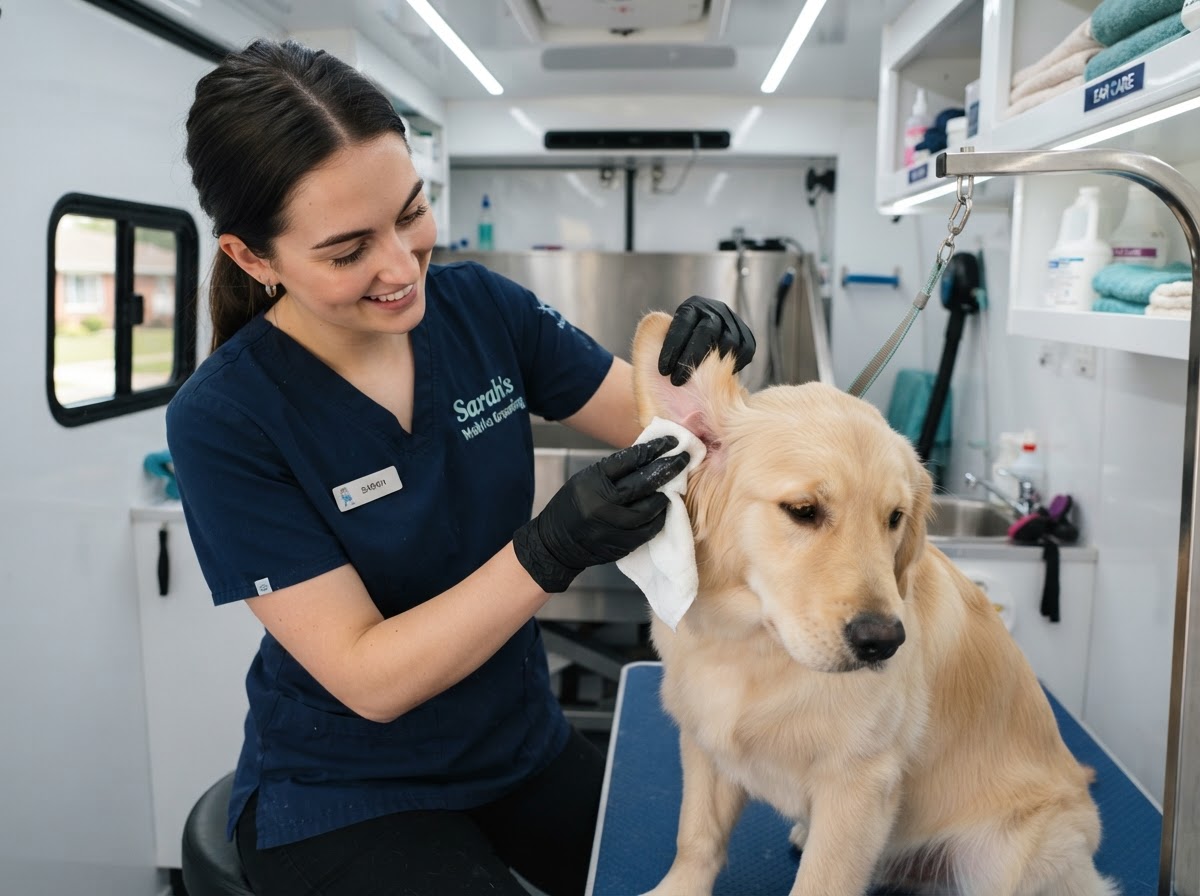
When Ear Cleaning Isn't Enough: Signs Your Pet Needs a Vet
Routine ear cleaning keeps healthy ears tidy, but some signs mean your pet needs more than grooming can provide. Redness, odor, discharge, head shaking, and scratching suggest an ear condition that needs your veterinarian. This guide covers what to watch for and when to call.
Routine ear cleaning during grooming keeps healthy ears tidy and comfortable. But some signs mean your pet needs more than grooming can provide — they indicate an ear condition that needs your veterinarian's diagnosis and treatment. This guide covers what to watch for, when routine cleaning isn't enough, and when to call your veterinarian. Recognizing the signs early helps your pet get prompt, appropriate care.
The signs to watch for
Certain signs indicate an ear condition rather than routine wax accumulation. If you notice any of these, your pet needs a veterinarian, not just grooming cleaning:
- Redness or inflammation in the ear
- Swelling of the ear flap or canal opening
- Discharge — yellow, brown, or bloody
- A bad odor from the ear
- Persistent head shaking or tilting
- Scratching at the ears or rubbing them against furniture
- Pain or whimpering when the ears are touched
- Dark, coffee-ground-like debris (possible ear mites)
- Scabs or crusts around the ear
These signs suggest an infection, ear mites, allergies, or another condition that needs veterinary diagnosis and treatment. Routine grooming cleaning won't resolve them — the underlying cause needs to be identified and treated by your veterinarian.
Why routine cleaning won't address these
Routine ear cleaning removes surface wax and debris from the outer ear. It keeps a healthy ear tidy. But an ear infection, ear mites, or inflammation involves the ear canal and sometimes the deeper structures of the ear — areas that surface cleaning doesn't reach and conditions that cleaning alone doesn't resolve. The cause needs to be identified and treated.
An ear infection, for example, may need prescription ear drops to clear the bacteria or yeast causing it. Ear mites need specific anti-parasitic treatment. Allergies affecting the ears need a broader allergy management plan. Cleaning the outer ear doesn't address these causes. Your veterinarian diagnoses the issue and prescribes the appropriate treatment.
Ear mites
Ear mites are tiny parasites that can infest a pet's ears, causing intense itching, dark debris that looks like coffee grounds, and head shaking. Ear mites are more common in cats but can affect dogs too. If you suspect ear mites — especially the dark, coffee-ground-like debris — see your veterinarian for diagnosis and treatment.
Ear mites need specific anti-parasitic treatment from your veterinarian. Grooming cleaning can remove some of the debris, but it doesn't kill the mites. Without treatment, mites persist and continue to cause discomfort. Your vet can confirm mites with an ear exam and prescribe the right treatment.
When head shaking is a concern
Occasional head shaking can be normal — a pet may shake their head after bathing or if a bit of debris is in the ear. But persistent, frequent head shaking is a sign of an ear issue. If your pet is shaking their head repeatedly or tilting it to one side, it suggests discomfort in the ear — possibly an infection, a foreign body, or another condition. See your veterinarian.
A head tilt can also indicate a middle or inner ear issue, which is a veterinary concern. Don't ignore persistent head shaking or a head tilt — both warrant a veterinary exam to identify the cause.

What to do if you notice signs
If you notice any of the signs above, contact your veterinarian. Describe what you're seeing — redness, discharge, odor, head shaking, scratching — and how long it's been present. Your vet can examine the ear, diagnose the issue, and recommend treatment. Don't wait — ear conditions can worsen and cause increasing discomfort.
If you have a grooming visit scheduled, you can still mention what you're seeing to the team — they can note their observations. But don't rely on grooming cleaning to address the signs. See your veterinarian for diagnosis and treatment, and resume routine grooming cleaning once the condition is resolved.
After veterinary treatment
Once your veterinarian has diagnosed and treated the ear condition, follow their instructions for any prescribed drops or medication. Complete the full course of treatment even if the signs improve. Once the condition is resolved, routine grooming ear cleaning can resume as part of regular grooming visits.
If your pet has recurring ear issues, talk to your veterinarian about an ongoing management plan. Some pets — those with allergies or floppy ears — are prone to recurring ear problems. Your vet can recommend a maintenance routine to help prevent recurrences, and the grooming team can align routine cleaning with that plan.
Questions to ask your veterinarian
- What's causing my pet's ear issue?
- What treatment do you recommend?
- How long should my pet use the treatment?
- Is there a maintenance routine to prevent recurrences?
- When can my pet resume routine grooming ear cleaning?
- Are there signs I should watch for in the future?
Routine ear cleaning keeps healthy ears tidy, but redness, odor, discharge, head shaking, and scratching are signs that cleaning isn't enough. Recognize the signs, call your veterinarian for diagnosis and treatment, and resume routine grooming once the condition is resolved.
Quick questions
Ready to groom your pet?
Book an appointment or request a personalized quote with Fluffy Crew.