What Is a De-Shedding Grooming Treatment?
De-shedding is one of the most requested grooming treatments, but there's confusion about what it does. It manages loose coat — it doesn't shave the dog, permanently stop shedding, or remove every hair. This guide explains what de-shedding is, what to expect, and what to ask.
De-shedding is one of the most popular grooming treatments, especially for double-coated breeds and heavy shedders. But there's significant confusion about what it actually does. De-shedding is a coat-care treatment that manages loose, shed-ready hair — it's not shaving the dog, it doesn't permanently stop shedding, and it doesn't remove every hair. This guide explains what de-shedding is, how it works, and what to discuss with the grooming team.
What de-shedding means
De-shedding is the process of removing loose, shed-ready hair from the coat before it falls out around your home. Dogs shed naturally — it's how they replace old or damaged hair with new growth. Double-coated breeds shed heavily, often seasonally, when the undercoat releases large amounts of hair. De-shedding targets that loose hair, removing it in a controlled way during a grooming visit rather than letting it shed onto your floors and furniture.
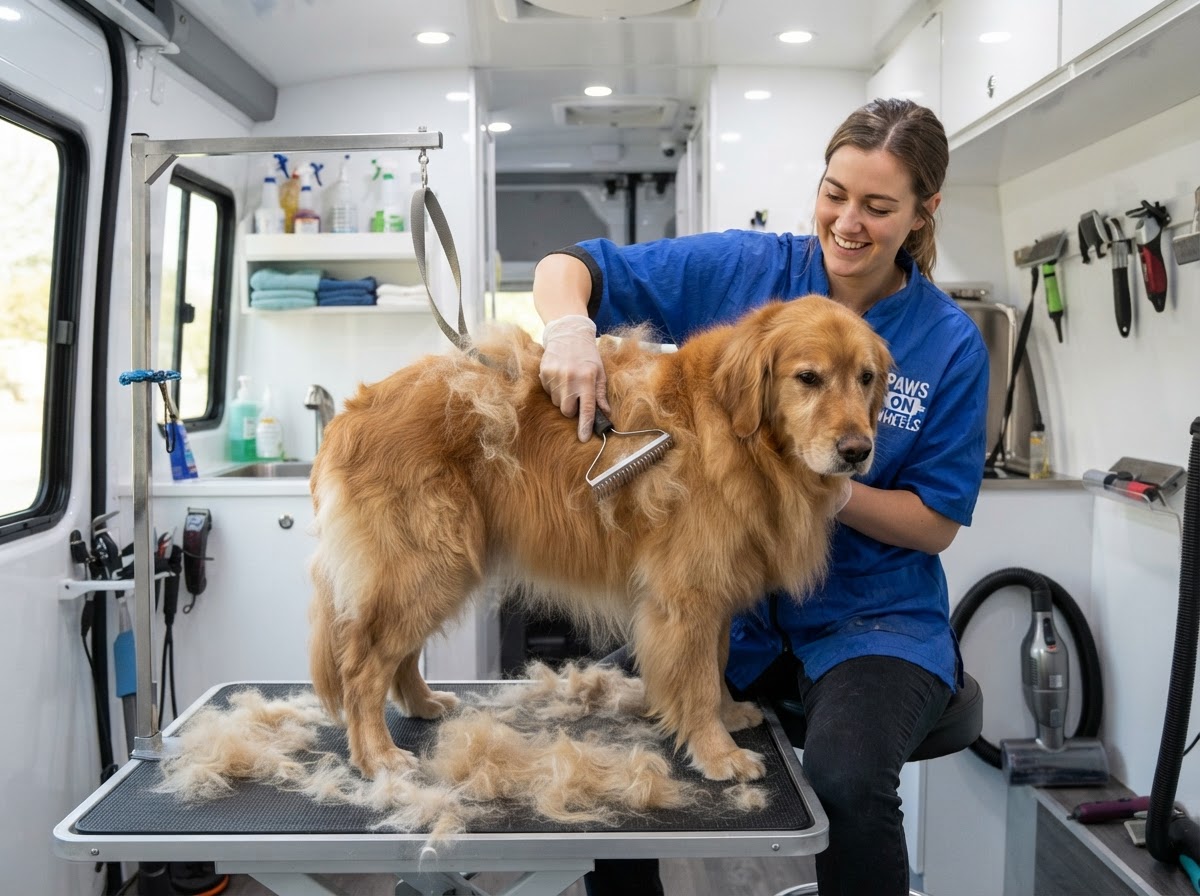
The treatment typically involves a thorough bath with products that help loosen the shed coat, followed by drying techniques that blow out loose hair, and then brushing and tools designed to capture the remaining loose undercoat. The goal is to remove as much shed-ready hair as possible in one session. It's coat care, not a medical treatment.
What de-shedding is not
Several misconceptions surround de-shedding. First, de-shedding is not shaving — the coat length isn't significantly changed. The treatment removes loose hair from within the coat; it doesn't cut the coat short. Second, de-shedding doesn't permanently stop shedding. It removes the hair that's ready to shed now, but the coat continues its natural shedding cycle and new hair will shed in the future.
Third, de-shedding doesn't remove every hair — it targets the loose, shed-ready hair, not the healthy growing coat. Fourth, de-shedding is not a treatment for medical hair loss. If your dog is losing hair due to a skin condition, allergy, or illness, that's a veterinary concern, not a grooming treatment. Grooming manages normal shedding; it doesn't diagnose or treat medical conditions.
Coat assessment
Before a de-shedding treatment, the team assesses your dog's coat. Different coat types shed differently: double-coated breeds shed heavily from the undercoat; single-coated breeds shed less but still lose some hair; curly coats may trap shed hair within the curls rather than dropping it. The assessment helps the team plan the right approach for your dog's specific coat.
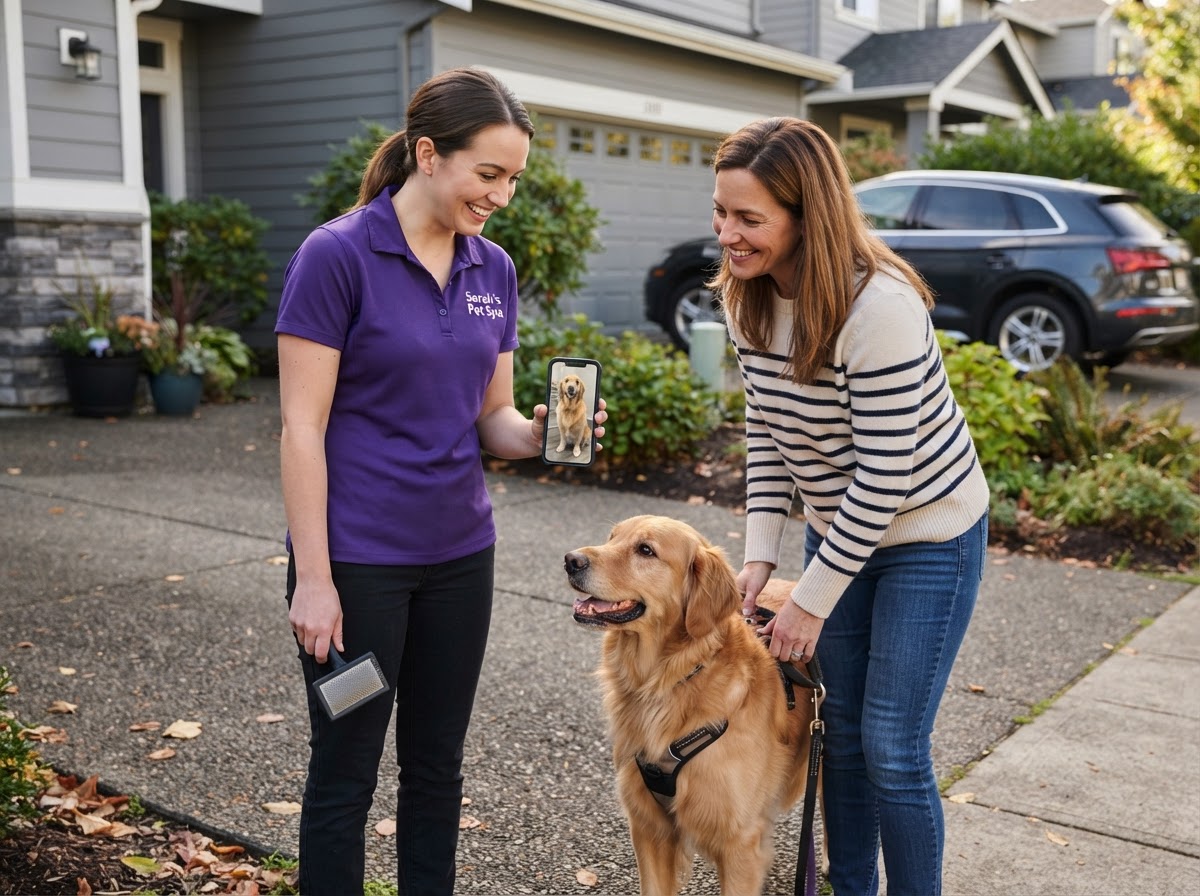
Share your observations about your dog's shedding. When does your dog shed most? Have you noticed seasonal shedding patterns? How much loose hair do you see around the home? This information helps the team understand what you're dealing with and plan the treatment accordingly.

Which dogs benefit most
De-shedding is most beneficial for heavy shedders — typically double-coated breeds like retrievers, shepherds, huskies, and similar coats. These dogs release large amounts of undercoat, and de-shedding can remove a significant volume of loose hair in one session, reducing the amount that sheds around your home for a period afterward.
Single-coated and lighter-shedding dogs also shed but less dramatically. De-shedding can still help manage their loose hair, but the visible difference may be less dramatic than for a heavy double coat. Discuss with the team whether de-shedding is worthwhile for your dog's coat type and shedding level.
What to expect during the treatment
A de-shedding treatment typically starts with a bath using products that help loosen the shed coat. The coat is then dried with techniques that blow out loose hair — this is often where the most visible shedding occurs, as the loose undercoat releases. Finally, the coat is thoroughly brushed with tools designed to capture remaining loose hair.
The process is thorough and can take time depending on the coat's density and how much loose hair is present. Your dog receives one-on-one attention throughout. If your dog is sensitive to the noise of the dryer, mention it — the team can discuss the approach.
Realistic expectations
De-shedding reduces the amount of loose hair that sheds around your home for a period after the treatment — but it's temporary. The coat continues its natural shedding cycle, and new hair will become loose and shed in the following weeks. The duration of the effect depends on your dog's breed, coat type, and the natural shedding cycle.
For heavy seasonal shedders, de-shedding during peak shedding periods can make a significant difference. Regular de-shedding treatments can help manage ongoing shedding year-round. Discuss a schedule with the team based on your dog's shedding patterns.
De-shedding vs. a haircut
De-shedding and a haircut address different things. A haircut changes the length and shape of the coat. De-shedding removes loose hair without significantly changing the length. For a heavy shedder, you might want both — a trim to manage the coat length and de-shedding to reduce the loose hair. Discuss which is right for your dog, or whether both are appropriate.
For double-coated breeds, de-shedding is often more appropriate than a short haircut. Shaving a double coat short isn't always advisable — the topcoat protects the skin and regulates temperature. De-shedding manages the shedding without removing the protective topcoat. Ask the team which approach is right for your double-coated dog.
Questions to ask about de-shedding
- Is de-shedding suitable for my dog's coat type and shedding level?
- How much loose hair can I expect to be removed?
- How long will the effect last before the coat sheds again?
- How often should I schedule de-shedding for my dog?
- Should my dog get de-shedding, a haircut, or both?
- What products and tools will be used during the treatment?
De-shedding is a valuable coat-care treatment when you understand what it does. It manages loose coat — it doesn't stop shedding permanently or replace veterinary care for medical hair loss. Discuss your dog's shedding with the team to plan the right approach.
Quick questions
Ready to groom your pet?
Book an appointment or request a personalized quote with Fluffy Crew.