What De-Matting Means in a Grooming Appointment
Mats are tight, tangled clumps of hair that pull on the skin and can be uncomfortable or painful. De-matting is the process of addressing them. But not every mat can be brushed out, and the right approach depends on several factors. This guide explains what de-matting means and what to discuss with the team.
Mats are one of the most common coat problems groomers encounter. A mat is a tight tangle of hair that has clumped together, often close to the skin, where it pulls on the skin with every movement. De-matting is the process of addressing these tangles — but the approach depends on the mat's location, how tight it is, the coat's condition, and your pet's comfort. This guide explains what de-matting means and what to discuss with the team.
What mats are
A mat forms when loose hair tangles and clumps together instead of being shed or brushed out. The tangle tightens over time, especially in areas with friction — behind the ears, under the legs, around the collar, and on the haunches. As the mat tightens, it pulls closer to the skin, where it can cause discomfort, restrict movement, and even trap moisture and debris against the skin.
Mats are most common in curly, long, and double coats that aren't brushed frequently enough. Curly coats like poodles and doodles are particularly prone to matting because the curls trap loose hair. Long coats mat when not brushed through to the skin. Even short coats can mat in friction areas if not maintained. Regular brushing is the best prevention.
What de-matting means
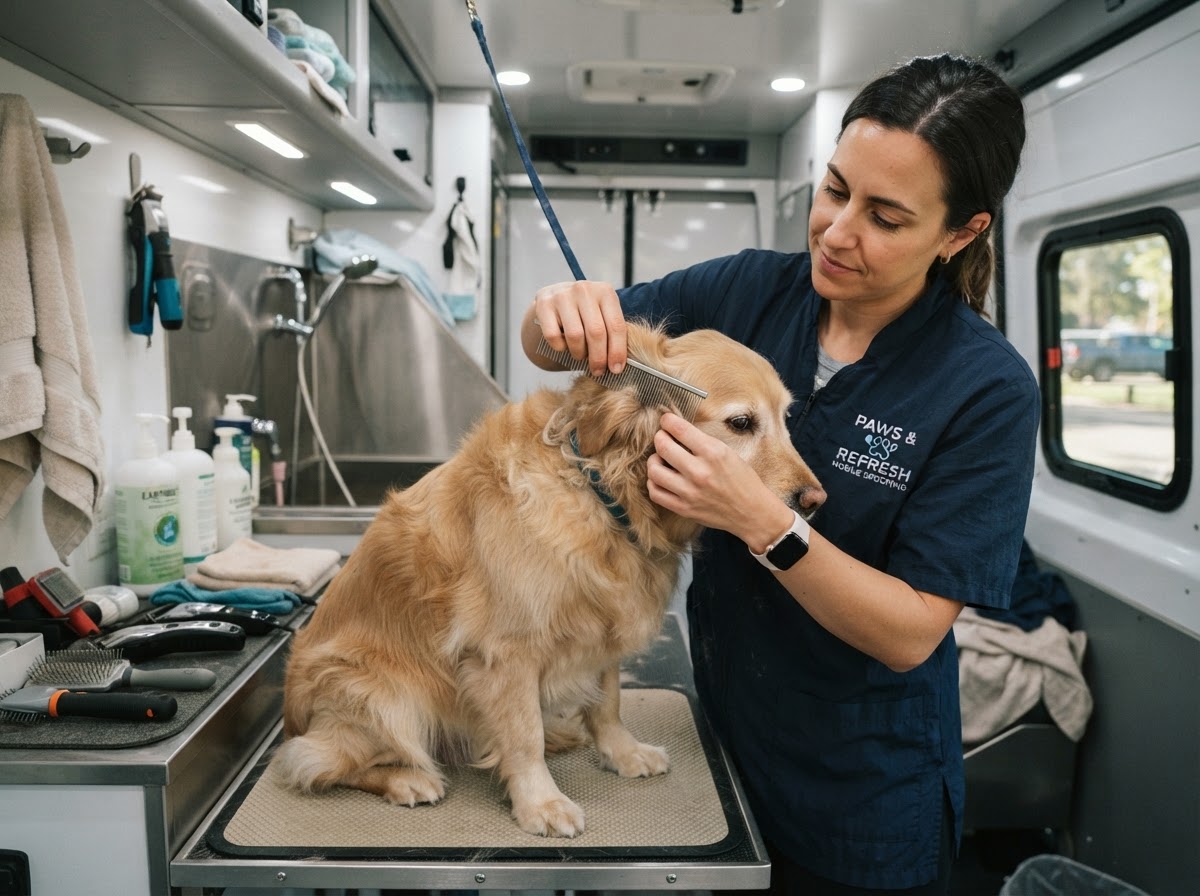
De-matting is the process of addressing mats in the coat. For loose or small mats, the groomer may carefully brush or comb them out, working gently to separate the tangle. For tighter or larger mats, the groomer may carefully split the mat and work it apart gradually. In some cases, the mat may need to be clipped out rather than brushed through.
The approach depends on several factors: the mat's location, how tight it is, how large it is, the overall coat condition, and your pet's comfort. A mat close to the skin that's tightly clumped may be painful to brush out, and the groomer's priority is your pet's comfort. Not every mat can or should be brushed out — sometimes clipping is the kinder choice.
The comfort factor
Your pet's comfort is the most important factor. Tight mats pull on the skin, and brushing them out can be uncomfortable or painful, especially when the mat is close to the skin. The groomer works at your pet's pace and prioritizes their comfort. If a mat is too tight or too painful to brush out, clipping may be the kinder option.
Share how your pet responds to being brushed and handled. If your pet is sensitive about having certain areas touched — behind the ears, under the legs — mention it so the team can plan a gentle, patient approach. For nervous or senior pets, the team takes extra care to keep the experience calm and comfortable.
Why not every mat can be brushed out
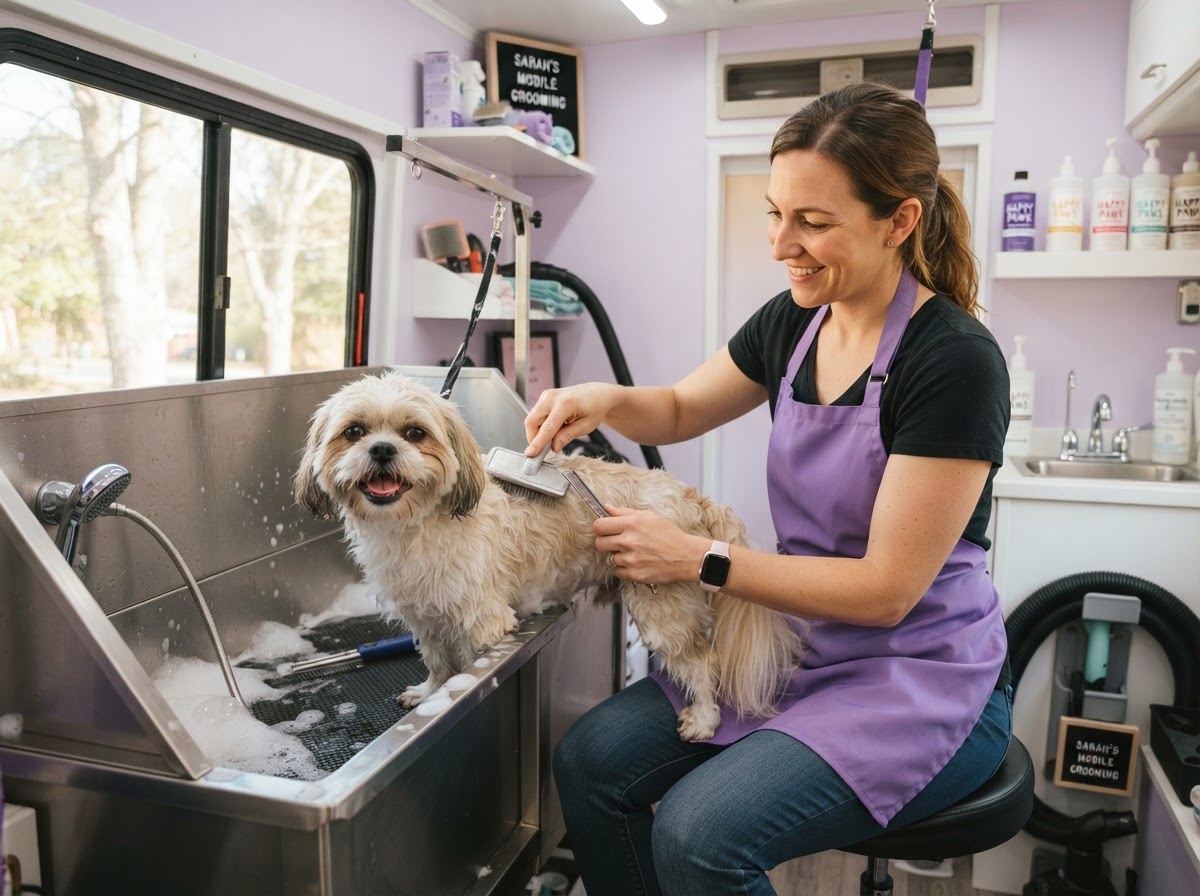
There's a limit to what de-matting can achieve humanely. A tight mat that's close to the skin may be too painful to brush out, and forcing it can cause discomfort, skin irritation, or even injury. In these cases, clipping the mat out — which may mean a shorter cut in that area or over the whole coat — is the kinder choice. The groomer prioritizes your pet's comfort over preserving coat length.
Severe matting over a large area may require clipping the whole coat short to start fresh. This isn't a failure — it's sometimes the kindest option for a severely matted pet. Once the coat is clipped and the mats are gone, you can maintain the new length going forward with regular brushing to prevent matting from recurring.
The coat condition assessment
The team assesses the coat condition to plan the right approach. How extensive is the matting? Is it in specific areas or all over? How tight are the mats? Is there any skin irritation beneath the mats? The assessment helps the team determine whether de-matting is feasible or whether clipping is the better option for your pet's comfort.
If the team finds skin irritation or other concerns beneath the mats, they'll let you know and may recommend a veterinary check. Mats can trap moisture and debris against the skin, which can cause irritation or skin issues. Grooming addresses the mats; veterinary care addresses any skin conditions beneath them.
Prevention is better than de-matting
The best approach to mats is preventing them. Regular brushing — especially in friction-prone areas — keeps the coat tangle-free. For curly and long coats that mat easily, daily or every-other-day brushing may be needed. The team can recommend the right brush and routine for your pet's coat type.
If your pet's coat mats easily despite regular brushing, discuss it with the team. They can advise on brushing technique, tools, and whether a shorter, more manageable haircut might reduce the matting. A shorter coat is easier to brush and less prone to matting — a practical choice for coats that mat quickly.
What to share before the appointment
- Where you've noticed mats or tangles
- How long since the last grooming or thorough brushing
- How your pet responds to being brushed — any sensitive areas
- Whether your pet has had de-matting before and how it went
- Any skin sensitivities or conditions you're aware of
- Your pet's temperament — calm, nervous, sensitive to handling
The more the team knows, the better they can plan a comfortable, effective approach to your pet's mats. Honest information about the matting and your pet's comfort helps the team deliver the right care.
Questions to ask about de-matting
- Can the mats be brushed out, or will they need to be clipped?
- Is my pet's coat condition suitable for de-matting, or should we start fresh?
- How can I prevent mats from forming between visits?
- What brush should I use, and how often should I brush?
- Is a shorter haircut a better choice for my pet's coat to reduce matting?
De-matting addresses a common coat problem, but the approach always prioritizes your pet's comfort. Not every mat can be brushed out, and sometimes a shorter cut is the kindest choice. Discuss the matting with the team to plan the right approach.
Quick questions
Ready to groom your pet?
Book an appointment or request a personalized quote with Fluffy Crew.