Short-Haired and Long-Haired Cats: How Grooming Needs Can Differ
A cat's coat type shapes their grooming needs. Short-haired and long-haired cats face different challenges — from matting and shedding to bathing tolerance. Understanding these differences helps you discuss the right care with your groomer and keep your cat comfortable between visits.
Cats come in a wide range of coat types, and those differences affect what grooming they need. A short-haired tabby and a long-haired Persian have very different coat-care requirements. This guide compares short-haired and long-haired cat grooming needs so you can have an informed conversation with the Fluffy Crew team about what's right for your cat.
Short-haired cats: lower maintenance, not no maintenance
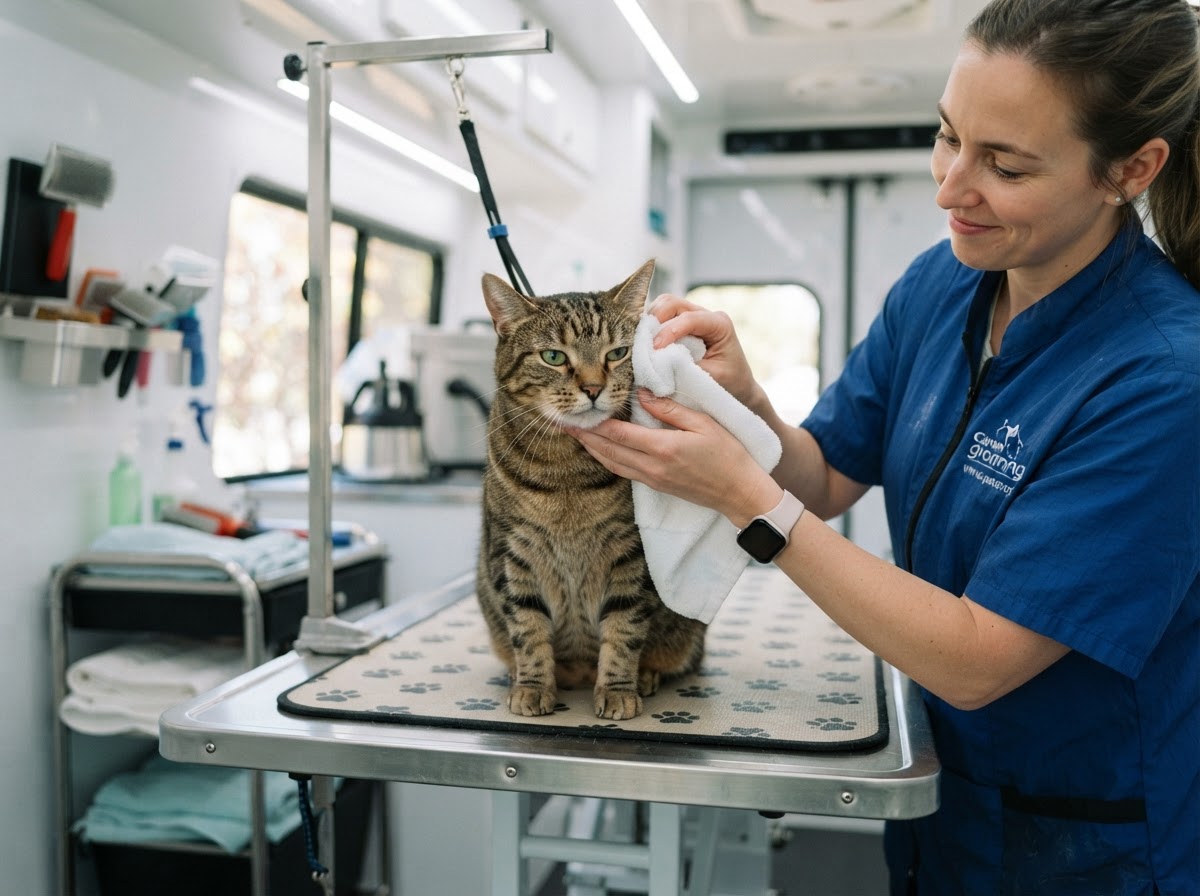
Short-haired cats generally need less intensive coat care than long-haired cats. Their coats are less prone to matting, and they often manage a significant amount of their own grooming through self-grooming. But that doesn't mean they need no grooming support.
Short-haired cats still shed, and regular brushing helps remove loose hair and reduce hairballs. Nail trims, ear cleaning, and general hygiene checks are relevant for short-haired cats just as they are for long-haired cats. The difference is in the frequency and intensity of coat work, not whether grooming is useful.
Long-haired cats: matting is the main concern
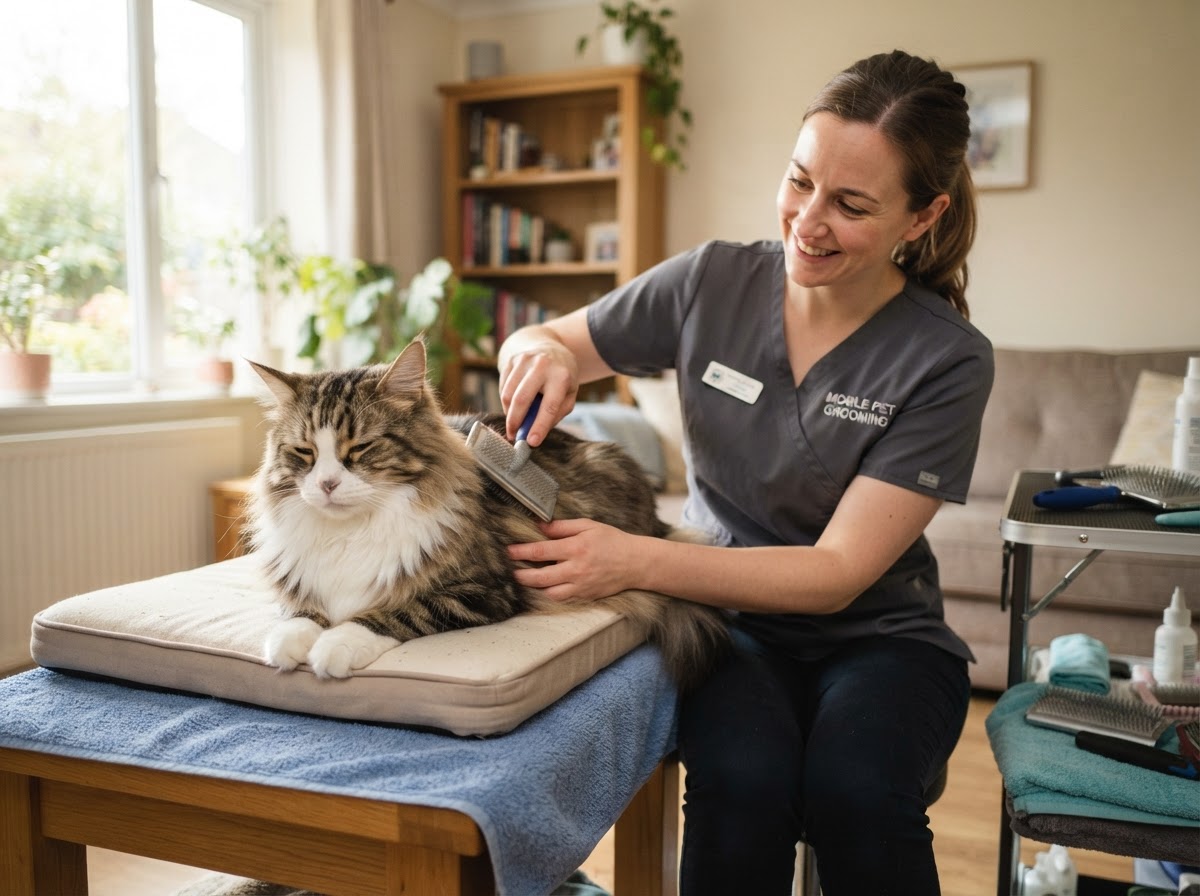
Long-haired cats are more prone to matting, especially in areas where friction occurs — behind the ears, under the legs, along the belly, and around the hindquarters. Mats form when loose hair tangles and tightens, and they can pull on the skin and cause discomfort.
For long-haired cats, regular brushing is more important to prevent mats from forming. Once a mat tightens close to the skin, brushing it out may be uncomfortable or impossible without clipping. The team assesses your cat's coat and recommends the kindest approach — which may include clipping for severe matting.
Shedding and hairballs
Both short-haired and long-haired cats shed, but long-haired cats typically shed more visibly and produce more loose hair. Regular brushing helps manage shedding and can reduce hairballs, which form when cats ingest loose hair during self-grooming.
Current veterinary guidance suggests that while grooming helps manage loose hair, it doesn't eliminate shedding or hairballs entirely. If your cat is experiencing frequent hairballs, excessive shedding, or coat changes, discuss these with your veterinarian — they can indicate underlying health issues that grooming alone doesn't address.
Bathing: not every cat needs it
Cats are fastidious self-groomers, and many cats never need a bath. However, there are situations where a bath may be appropriate — if your cat has gotten into something they can't clean off, if there's a specific grooming reason, or if your veterinarian recommends it for a skin condition.
Bathing tolerance varies enormously among cats. Some cats tolerate water; many do not. Don't assume your cat needs or will accept a bath — discuss it with the team. If a bath is appropriate, the team confirms product suitability for cats, since some dog products are not safe for feline use.
Haircuts: not universal for cats
Unlike dogs, not every cat needs or benefits from a haircut. Some long-haired cats receive a trim to reduce matting in problem areas — sometimes called a sanitary trim or a lion cut — but these are specific decisions based on the individual cat's coat and comfort, not a standard part of cat grooming.
Don't assume a haircut is appropriate for your cat. If you're considering one, discuss it with the team. They confirm whether a trim is suitable for your cat's coat type and whether your cat will tolerate the process. A photo communicates a desired look, but it doesn't guarantee the same result on a different cat.
Nail trims and ear care for both coat types
Regardless of coat length, nail trims and ear care are relevant for most cats. Cats' nails grow continuously, and regular trims help prevent them from becoming overgrown, snagging, or causing scratches. Ear cleaning as part of grooming helps maintain ear hygiene — but it's grooming care, not diagnosis or treatment of ear conditions.
If you notice ear discharge, odor, redness, or your cat scratching at their ears, consult your veterinarian. These can indicate an ear issue that grooming doesn't treat. Share any ear history with the team before the appointment.
Frequency: an individual discussion
There's no single grooming schedule that fits every cat. A long-haired cat prone to matting may need more frequent grooming than a short-haired cat with a healthy coat. Your cat's age, health, activity level, and coat condition all factor in.
Discuss frequency with the team based on your cat's specific needs. They can suggest a schedule that keeps your cat comfortable without over-grooming. For senior cats or cats with health conditions, the approach may be adapted to their comfort and mobility.
Talking to the team about your cat's coat
When you request a quote, describe your cat's coat type, length, and current condition. Mention any mats, shedding concerns, or sensitivities. The team confirms which services are appropriate for your cat and whether they can accommodate your cat's temperament. Cat-specific inclusions are confirmed before booking — don't assume the dog package applies.
For any medical concerns — skin conditions, excessive shedding, ear issues, or changes in grooming behavior — consult your veterinarian. Grooming supports coat care and hygiene; it doesn't replace veterinary attention for health issues.
Quick questions
Ready to groom your pet?
Book an appointment or request a personalized quote with Fluffy Crew.