Grooming and Your Senior Pet's Health: Working With Your Veterinarian
Senior pets often have health conditions that affect how grooming should be done. Sharing health information, following your veterinarian's guidance, and coordinating grooming and veterinary care helps your senior pet stay comfortable and well-cared-for. This guide covers how to work with both your vet and the grooming team.
Senior pets often have health conditions that affect how grooming should be done. Arthritis, dental disease, heart or kidney conditions, skin changes, and other age-related issues all influence what grooming is appropriate and comfortable for your senior pet. This guide covers how to share health information with the grooming team, follow your veterinarian's guidance, and coordinate grooming and veterinary care so your senior pet stays comfortable and well-cared-for.
Common senior health considerations
Several health conditions are common in senior pets and affect grooming. Arthritis and joint stiffness affect standing comfort and mobility. Dental disease is common and can affect the mouth and eating. Heart, kidney, and other organ conditions may affect what your pet can tolerate and what products are suitable. Skin changes — thinner skin, growths, sensitivity — require gentler handling. Vision and hearing changes can affect how your pet experiences the grooming environment.
Each of these affects grooming differently, and the team considers them when planning your senior pet's grooming. But the team isn't providing medical care — they're providing grooming. They adjust the grooming based on the health information you share, but diagnosis, treatment, and medical management come from your veterinarian. The two roles are distinct but complementary.
Sharing health information
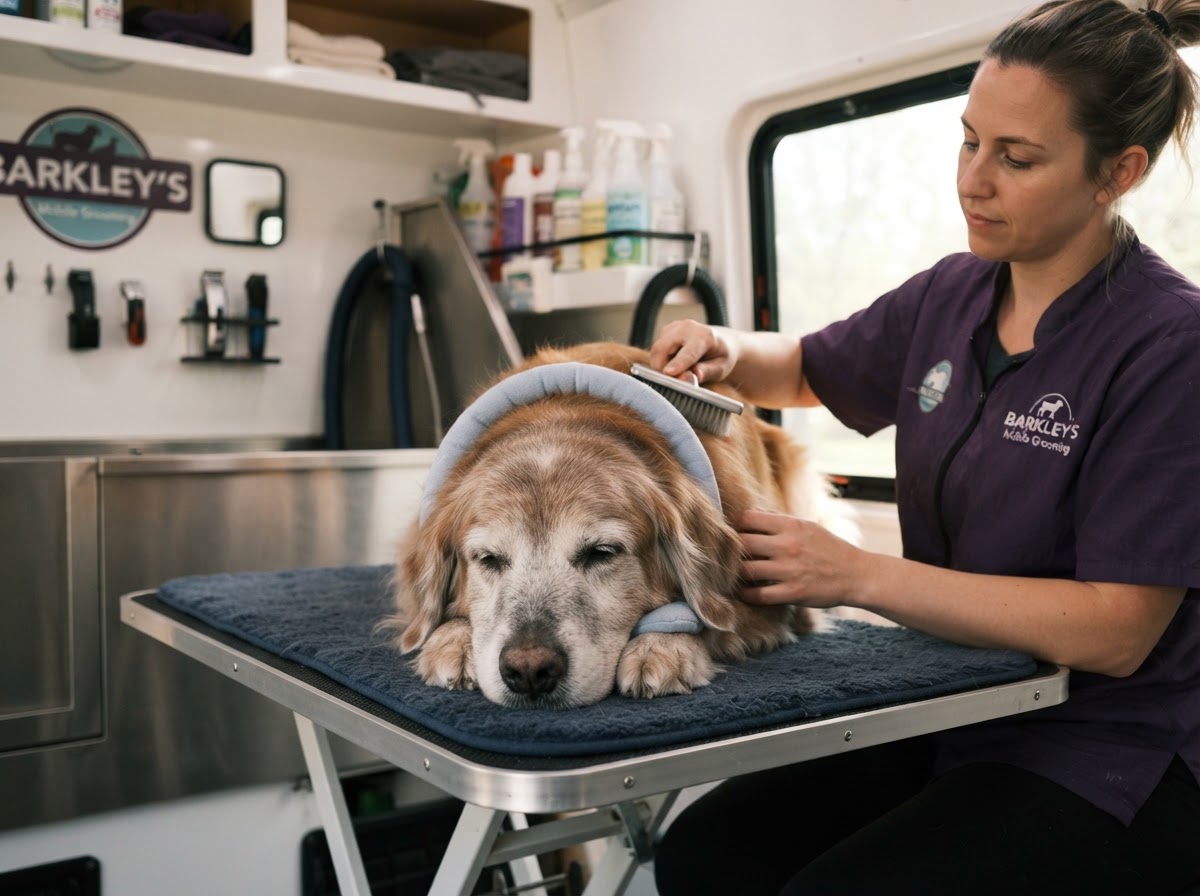
Share your senior pet's health information with the grooming team. What conditions has your veterinarian diagnosed? Is your pet on medication? Are there specific limitations your vet has recommended — what your pet can tolerate, what to avoid, how long the session should be? This information helps the team plan a grooming that's safe and comfortable for your pet.
- Diagnosed health conditions — arthritis, heart, kidney, dental, etc.
- Current medications and what they're for
- Your vet's guidance on grooming — limitations or precautions
- Any recent health changes or concerns
- How your pet's condition affects their comfort or stamina
The more the team knows, the better they can plan. Don't hold back health information — it helps them deliver grooming that respects your senior pet's needs. If you're unsure whether something is relevant, share it — the team would rather have more information than miss something important.
Following your veterinarian's guidance
Your veterinarian is the primary guide for your senior pet's health, and their guidance on grooming matters. If your vet has recommended limitations — keeping sessions short, avoiding certain positions, using specific products, or delaying grooming until a condition is managed — follow that guidance and share it with the grooming team. The team aligns the grooming with your vet's recommendations.
If your vet has advised against grooming for a period — for example, during recovery from an illness or procedure — follow that guidance. Grooming can resume once your vet confirms it's appropriate. The team can wait until your vet gives the go-ahead. Your pet's health comes first, and grooming can wait if needed.
Coordinating grooming and vet care
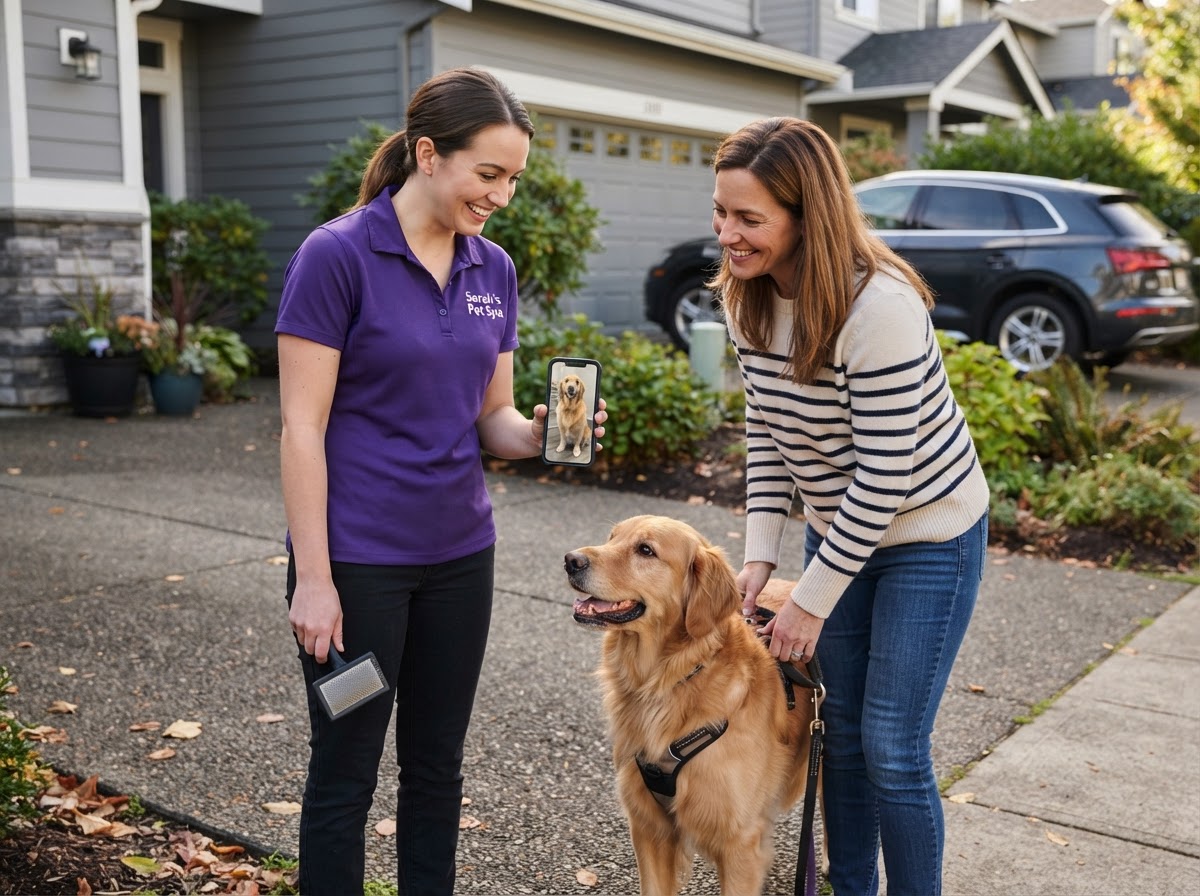
Grooming and veterinary care can work together for your senior pet. Your vet manages medical conditions; the grooming team provides gentle grooming. Share your vet's guidance with the team, and keep your vet informed about grooming — how your pet handled it, what the team observed. This coordination helps both provide the best care.
If the grooming team notices something during the visit — a new lump, skin change, or sign of discomfort — they'll let you know so you can follow up with your vet. They don't diagnose, but their observations can prompt a timely vet visit. This is one way the two roles complement each other for your senior pet's health.
Products and health conditions
Some health conditions affect what grooming products are suitable. If your senior pet has skin sensitivity, allergies, or a condition that affects the skin, the team can choose gentler products. If your vet has recommended specific products or advised against certain ones, share that. Product choice can be tailored to your senior pet's health needs.
Don't introduce new products without considering your pet's health. If your senior pet has sensitivities or is on medication that affects the skin, ask your vet and the team whether a product is suitable. The team can select appropriate products based on your pet's health information. Safety and comfort guide product choice for a senior pet.
When to delay grooming
Sometimes, health means delaying grooming. If your senior pet is recovering from an illness, procedure, or flare-up of a condition, your vet may advise waiting until they're more stable. If your pet is having an off day — seeming uncomfortable, tired, or unwell — it may be better to reschedule. The team would rather groom your pet when they're comfortable than push through an off day.
Don't feel you have to keep a grooming appointment if your senior pet isn't up to it. Reschedule for a better day. The team understands that senior pets have good days and off days, and they'd rather groom your pet when they're comfortable. Your pet's health and comfort come first.
Dental and oral considerations
Dental disease is common in senior pets, and it can affect grooming around the mouth. If your pet has dental disease — sore teeth, gum issues — the team grooms gently around the mouth and face. Cosmetic teeth cleaning may not be appropriate for a pet with dental disease; that's a veterinary concern. Share your pet's dental health so the team can plan accordingly.
If your senior pet has lost teeth or has mouth pain, the team handles the face and mouth area gently. They don't provide dental treatment, but they can groom around the mouth carefully. Your veterinarian manages dental disease; the team grooms gently around it.
Questions to ask
- What health information should I share with the grooming team?
- Has my vet recommended any grooming limitations or precautions?
- Are there products I should avoid given my pet's health?
- Should I delay grooming if my pet is having an off day?
- How can the team and my vet coordinate my pet's care?
Senior pets often have health conditions that affect grooming. Share health information, follow your vet's guidance, and coordinate grooming and veterinary care — the two roles are distinct but complementary. Your vet manages health; the team provides gentle grooming. Together, they keep your senior pet comfortable and well-cared-for.
Quick questions
Ready to groom your pet?
Book an appointment or request a personalized quote with Fluffy Crew.