Senior Pet Grooming: A Gentle Approach for Older Dogs and Cats
Senior pets benefit from a gentler, more patient grooming approach. As pets age, they may have mobility changes, increased sensitivity, and health considerations that affect how grooming should be done. This guide covers how senior grooming differs and what to share so the team can plan a comfortable visit for your older pet.
Senior pets benefit from a gentler, more patient approach to grooming. As pets age, changes in mobility, sensitivity, and health can affect how grooming should be done — what was comfortable at a younger age may need adjustment for a senior pet. This guide covers how senior grooming differs from standard grooming, what the team considers for older pets, and what to share so the team can plan a comfortable, appropriate visit for your senior dog or cat.
Why senior grooming is different
Senior pets have different needs than younger pets. As pets age, they may experience arthritis or joint stiffness that affects their comfort standing for grooming, increased skin sensitivity or thinner skin that requires gentler handling, dental issues, vision or hearing changes, and other health considerations. A grooming approach that works for a young, healthy adult may not be comfortable or appropriate for a senior pet.
Senior grooming considers these age-related changes and adjusts accordingly. The approach is gentler, more patient, and more attentive to your pet's comfort and limitations. The goal is the same — a clean, comfortable, well-cared-for pet — but the way it's achieved respects what your senior pet can comfortably tolerate.
Mobility considerations
Arthritis and joint stiffness are common in senior pets, and they affect grooming comfort. Standing for an extended grooming may be tiring or uncomfortable for a pet with joint issues. The team may adjust the grooming position, provide support, take breaks, or shorten the session to keep your senior pet comfortable. They work around your pet's mobility rather than expecting them to stand rigidly throughout.
If your senior pet has difficulty standing, has arthritis in specific joints, or tires easily, share that information. The team can plan accordingly — taking breaks, supporting your pet's posture, or adjusting the grooming to reduce strain. For a pet with significant mobility issues, a shorter, gentler session may be more appropriate than a full grooming.
Skin and coat changes
Senior pets often have skin and coat changes. The skin may become thinner and more sensitive with age, requiring gentler handling and brushing. The coat may become thinner or change in texture. Some senior pets develop lumps, bumps, or skin growths that need to be groomed around carefully. The team handles senior skin and coats with extra gentleness.
If your senior pet has any skin growths, lumps, or sensitive areas, point them out so the team can groom around them carefully. Don't assume the team will find every growth — sharing what you know helps them avoid causing discomfort. If your pet's skin is particularly sensitive or fragile, mention it so the team can adjust their handling and product use.
Patience and pace
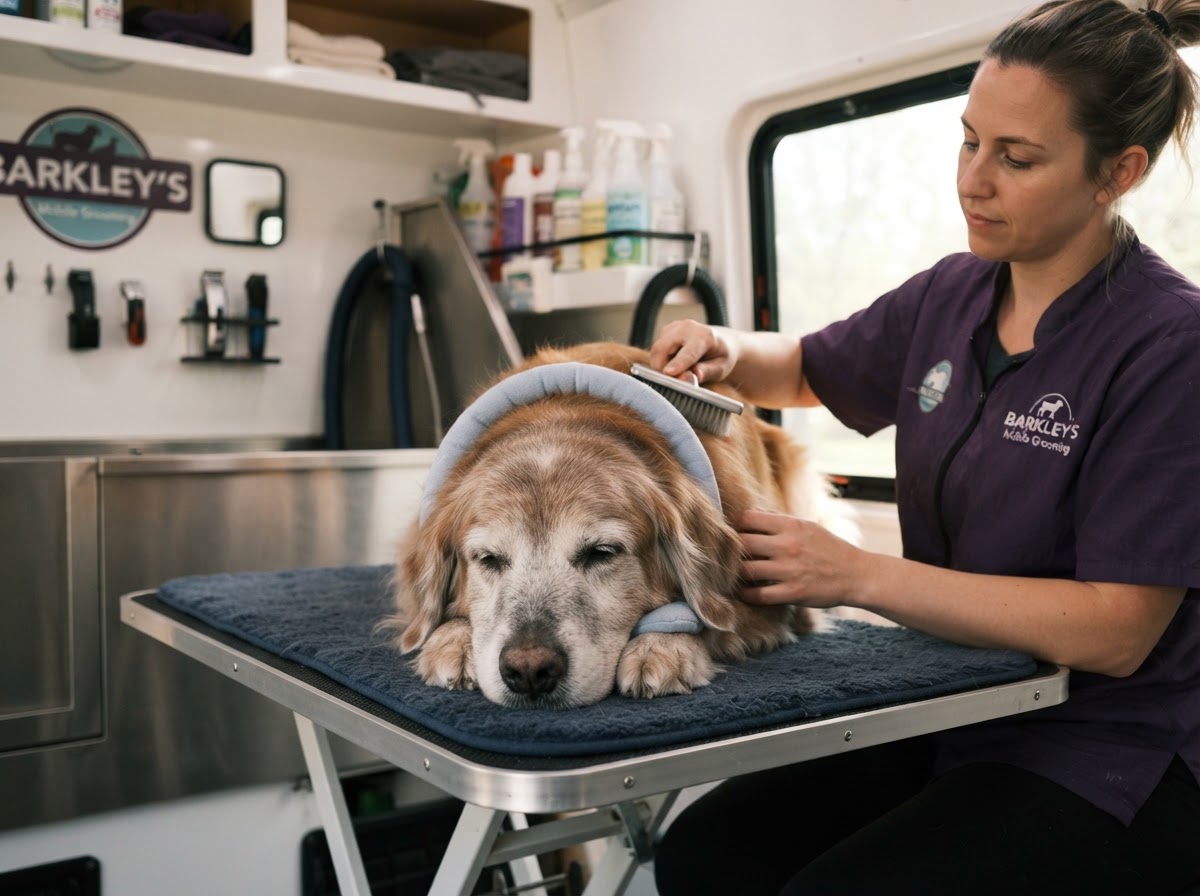
Patience is central to senior grooming. The team works at a pace your senior pet is comfortable with, taking breaks as needed and not rushing. For a senior pet, a calm, unhurried grooming is more comfortable than a quick, efficient one. The team prioritizes your pet's comfort over the speed of the grooming.
If your senior pet needs a slower pace, more breaks, or a shorter session, the team accommodates that. They may recommend splitting the grooming into shorter visits if a full session is too much. The goal is a comfortable experience, not a rushed one. The mobile, one-on-one setting supports this — there's no queue of animals to rush for.
Health considerations
Senior pets may have health conditions that affect grooming. If your pet has a diagnosed condition — arthritis, heart disease, kidney issues, dental disease, or another health concern — share it so the team can plan appropriately. Some conditions affect what your pet can comfortably tolerate, what products are suitable, or how long the session should be. Your veterinarian's guidance on what's appropriate is valuable — share it with the team.
If your senior pet is on medication, share that too. Some medications can affect the skin, coat, or your pet's comfort. The team isn't providing medical care, but knowing about health conditions and medications helps them plan a grooming that's safe and comfortable for your pet. Keep your veterinarian informed about grooming, and follow their guidance on what's appropriate.
What to share about your senior pet
- Your pet's age and any diagnosed health conditions
- Mobility issues — arthritis, joint stiffness, difficulty standing
- Skin changes — sensitivity, thinning skin, lumps, or growths
- Any medications your pet is taking
- Your veterinarian's guidance on grooming appropriateness
- How your pet handles grooming — tiredness, stress, or discomfort
- Any sensitive areas or places to groom carefully
The more the team knows about your senior pet's health, mobility, and comfort, the better they can plan an appropriate, gentle grooming. Don't hold back information — it helps the team deliver care that respects your senior pet's needs and limitations.
The mobile advantage for seniors
The mobile grooming setting is often ideal for senior pets. Your pet stays in their familiar home environment, avoiding the stress and physical demands of transport to a salon — which can be tiring and stressful for an older pet, especially one with mobility or health issues. One-on-one care means the team can focus entirely on your pet and go at their pace.
For a senior pet, avoiding the car ride and the salon environment can make a significant difference in comfort and stress. The familiar, calm home setting and patient, one-on-one care support a gentler grooming experience. If your senior pet finds salon visits stressful or tiring, the mobile setting can be a better option.
Frequency of senior grooming
How often a senior pet should be groomed depends on their coat type, condition, and health. Some senior pets benefit from more frequent, lighter grooming to keep the coat manageable without long, tiring sessions. Others may do well with a standard schedule. The team can advise based on your pet's needs, coat, and what they can comfortably tolerate.
For a senior pet that tires easily, more frequent but shorter grooming visits may be better than occasional long sessions. Discuss a schedule with the team that keeps your pet's coat in good condition without overtaxing them. The right frequency respects your senior pet's energy and comfort.
Questions to ask about senior grooming
- How should grooming be adjusted for my senior pet's mobility?
- What should I share about my pet's health and medications?
- Can the grooming be shorter or split into shorter visits?
- Is the mobile setting good for my senior pet?
- How often should my senior pet be groomed?
Senior pets benefit from a gentler, more patient grooming approach that considers mobility, skin sensitivity, and health. Share your senior pet's needs, and the team can plan a comfortable, appropriate grooming. The mobile, one-on-one setting is often ideal for senior pets.
Quick questions
Ready to groom your pet?
Book an appointment or request a personalized quote with Fluffy Crew.