Keeping Senior Pets Comfortable During Grooming: Patience and Adjustments
For senior pets, comfort is the priority during grooming — more than a perfect result or a complete service. Patience, breaks, supportive positioning, and attention to sensitive areas keep older pets comfortable. This guide covers how the team approaches senior grooming comfort.
For senior pets, comfort is the priority during grooming — more than a perfect result, a complete service, or efficiency. A senior pet's grooming should be a calm, comfortable experience that respects their age, mobility, and health. This guide covers how the team keeps older pets comfortable — through patience, breaks, supportive positioning, and attention to sensitive areas — so your senior pet's grooming is as gentle as it should be.
Comfort as the priority
For a senior pet, the priority is comfort. The goal isn't the most complete or perfect grooming — it's a grooming that your senior pet can comfortably tolerate and that leaves them feeling good. If a full grooming would be too much, a lighter, gentler session is the right choice. The team prioritizes your pet's well-being over completing every step.
This means the team may adjust the grooming — shortening it, taking breaks, skipping steps that are too much for your pet, or focusing on the most important care. A senior pet that has a calm, comfortable, partial grooming is better off than one who's stressed or exhausted by a complete grooming. Comfort guides the approach.
Patience and a slower pace
Patience is central to senior grooming comfort. The team works at a slower pace, giving your senior pet time to settle and feel comfortable. They don't rush through the grooming. For a senior pet, a calm, unhurried approach reduces stress and makes the experience more comfortable. The mobile, one-on-one setting supports this — there's no rush.
A slower pace also means the team can read your pet's comfort throughout. If your senior pet seems tired, stressed, or uncomfortable, the team can adjust — taking a break, going slower, or wrapping up. They're attentive to how your pet is doing, not just to completing the grooming. This attentiveness keeps the experience comfortable.
Breaks and shorter sessions
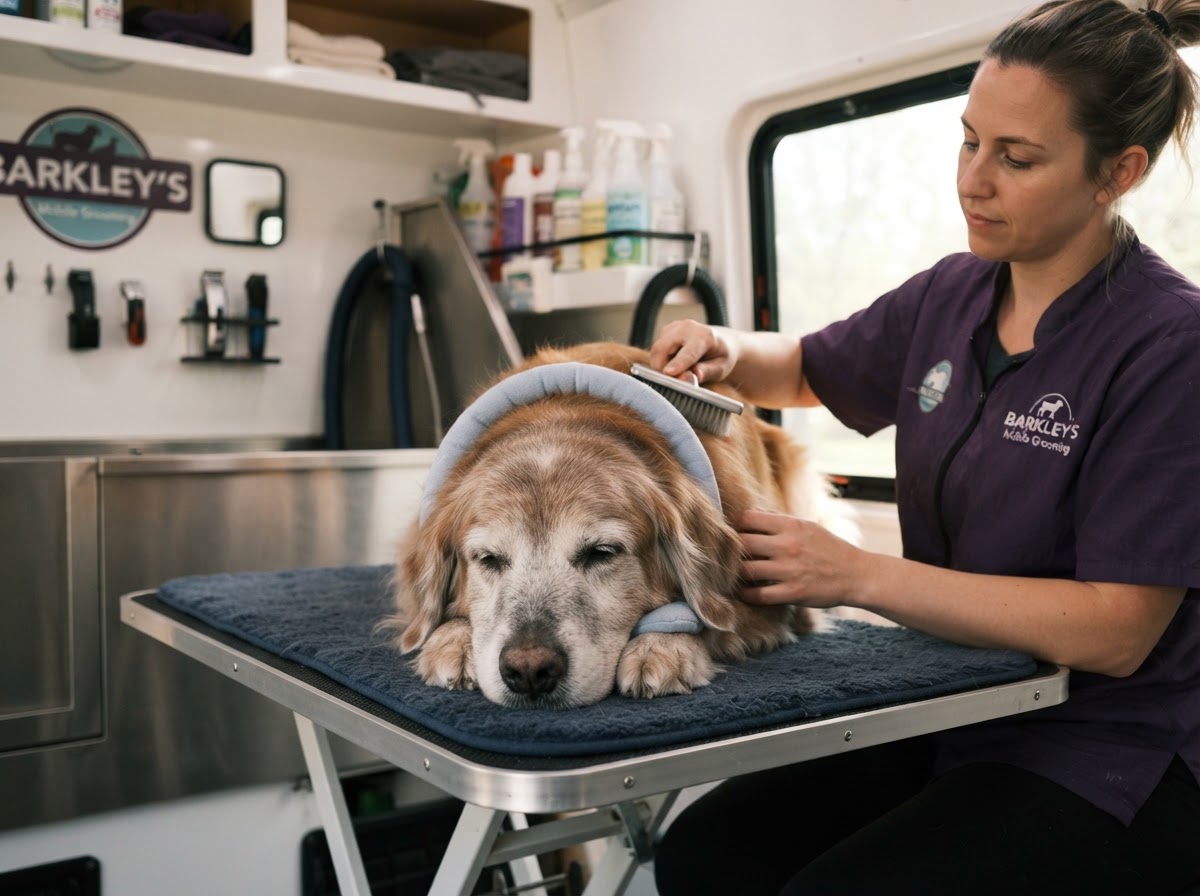
Breaks are part of senior grooming. If your senior pet tires, the team takes breaks to let them rest. For a pet with arthritis or stamina issues, standing for an extended grooming can be tiring, and breaks help. The team may also recommend shorter sessions or splitting the grooming into multiple visits if a full session is too much.
More frequent, lighter grooming can be more comfortable for a senior pet than occasional long sessions. A shorter, gentler grooming every few weeks may keep your pet's coat in good condition without the fatigue of a full grooming. Discuss what schedule works for your senior pet's energy and comfort.
Supportive positioning
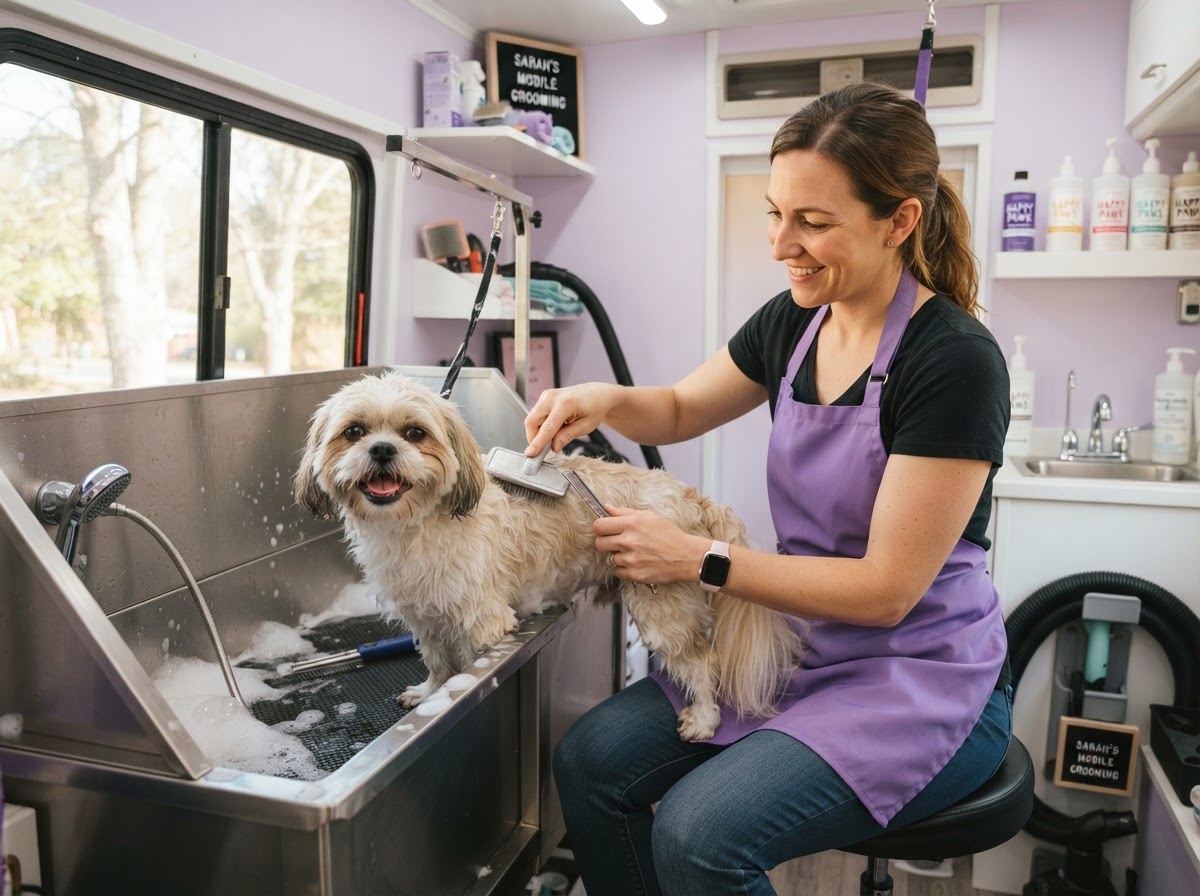
For senior pets with mobility issues, the team may adjust the grooming position to keep your pet comfortable. If standing is tiring or uncomfortable, the team may provide support or adjust how your pet is positioned for different parts of the grooming. The goal is to reduce strain on joints and keep your pet comfortable throughout.
If your senior pet has specific mobility issues — difficulty standing, arthritis in specific joints — share them so the team can plan supportive positioning. They work around your pet's limitations rather than expecting them to conform to a standard grooming posture. Comfort in positioning is part of senior grooming care.
Sensitive areas and gentle handling
Senior pets often have sensitive areas that need gentle handling. Thinner skin, skin growths, sore joints, or areas of discomfort all require extra care. The team handles senior pets gently, brushing and handling with light pressure, and working carefully around any sensitive spots. If your pet has specific sensitive areas, point them out.
If your senior pet has lumps, bumps, or skin growths, the team grooms around them carefully rather than over them. Don't assume the team will notice every growth — sharing what you know helps them avoid causing discomfort. Gentle handling of sensitive areas is a key part of keeping a senior pet comfortable.
Temperature and the environment
The grooming environment affects comfort, especially for senior pets. The team keeps the mobile salon at a comfortable temperature — not too warm or too cool — which matters for older pets who may be more sensitive to temperature. A calm, quiet environment also helps, reducing stress for a senior pet who may be more easily unsettled.
If your senior pet is sensitive to temperature, noise, or specific environmental factors, mention it. The team can adjust where possible — the temperature, the noise level, the pace. A comfortable environment supports a comfortable grooming for a senior pet.
Reading your pet's comfort
The team reads your senior pet's comfort throughout the grooming. Signs of tiredness, stress, or discomfort prompt adjustments — a break, a slower pace, or wrapping up the session. The team is attentive to how your pet is doing and prioritizes their well-being. This attentiveness is part of keeping a senior pet comfortable.
You know your senior pet best. Share what you know about their comfort — do they tire after a certain time? Do they get stressed by specific parts of grooming? Do they have good days and off days? This information helps the team read your pet's comfort and adjust accordingly.
When comfort means a lighter grooming
Sometimes, keeping a senior pet comfortable means a lighter grooming. If a full grooming would be too much — too long, too tiring, too stressful — a lighter version that focuses on the essentials is the right choice. A clean, comfortable, partial grooming is better for a senior pet than an exhausting complete one. The team can advise on what's appropriate.
Don't feel that a lighter grooming is a lesser service. For a senior pet, it may be the most appropriate, most comfortable choice. The goal is your pet's well-being, and a gentle, comfortable grooming — even a partial one — serves that goal. Discuss what's right for your senior pet with the team.
Questions to ask about senior grooming comfort
- How will the team keep my senior pet comfortable during grooming?
- Can the grooming be shorter or split into shorter visits?
- How should positioning be adjusted for my pet's mobility?
- What sensitive areas should the team groom around carefully?
- How will the team read my pet's comfort during the visit?
For senior pets, comfort is the priority. Patience, breaks, supportive positioning, gentle handling of sensitive areas, and a comfortable environment keep older pets comfortable during grooming. Share what you know about your senior pet, and the team will plan a gentle, appropriate grooming.
Quick questions
Ready to groom your pet?
Book an appointment or request a personalized quote with Fluffy Crew.