How to Use Reference Photos When Requesting a Pet Haircut
A reference photo is one of the most useful tools for communicating a desired haircut — but it has limits. A photo shows the look you're aiming for; it doesn't guarantee an identical result on a different dog with a different coat. Here's how to use reference photos effectively.
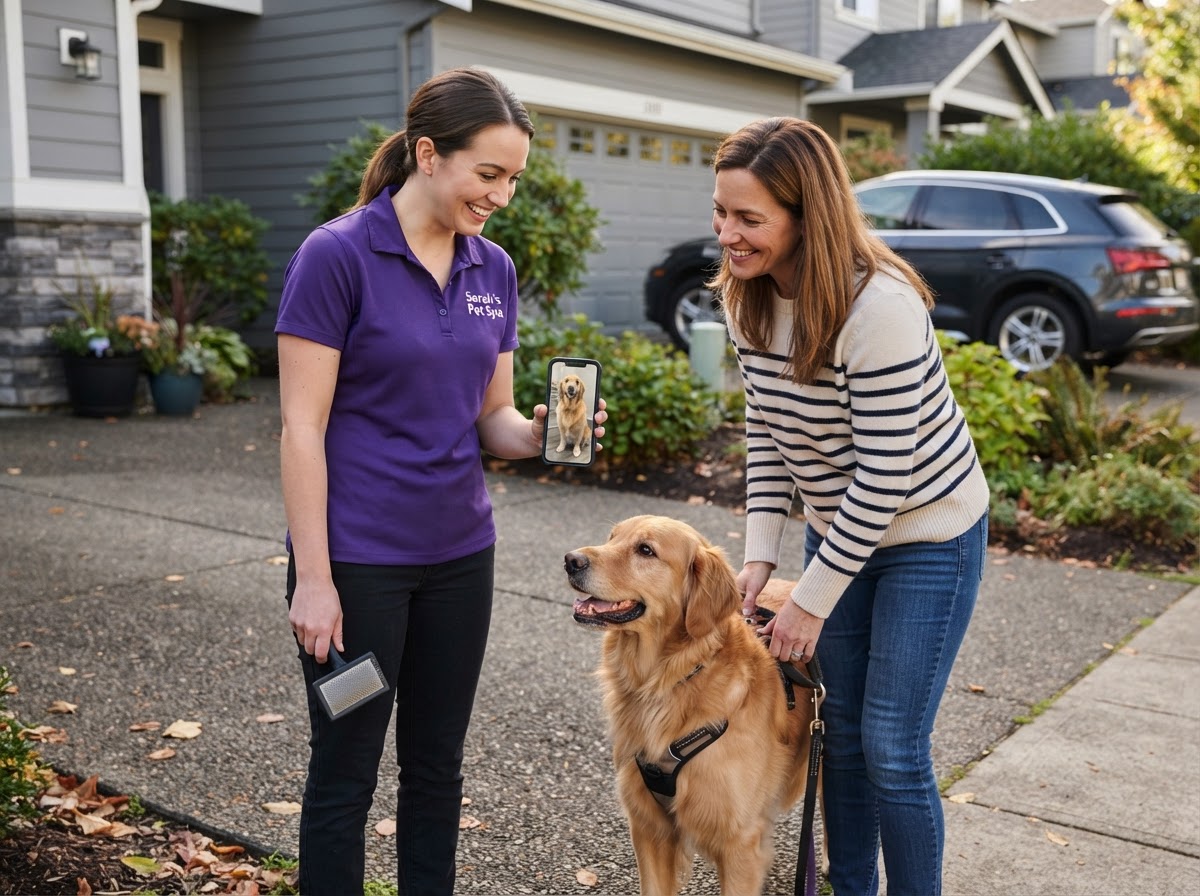
If you've seen a dog haircut you like — on a friend's dog, in a photo, or in a breed guide — bringing that reference photo to your grooming appointment is one of the best ways to communicate what you want. A picture conveys a style far more clearly than words like 'medium length' or 'tidy.' But it's important to understand what a reference photo can and can't do. This guide explains how to use them well.
Why reference photos help
Words are imprecise when it comes to haircuts. 'Short' to one person might be 'very short' to another. 'Tidy' could mean many things. A reference photo removes that ambiguity — it shows the exact look, length, and shape you have in mind. The groomer can see what you're describing rather than interpreting your words.
For the groomer, a reference photo is a starting point for the conversation. It shows the general style, and then the groomer can assess whether your dog's coat type and condition can achieve something similar. The photo communicates your aim; the groomer confirms what's possible.
What a reference photo can't guarantee
Here's the important caveat: a reference photo shows a style on a specific dog with a specific coat. Your dog has a different coat — possibly a different breed, coat texture, coat density, and condition. The same haircut will look different on a different coat. The photo communicates an aim, not a guarantee of an identical result.
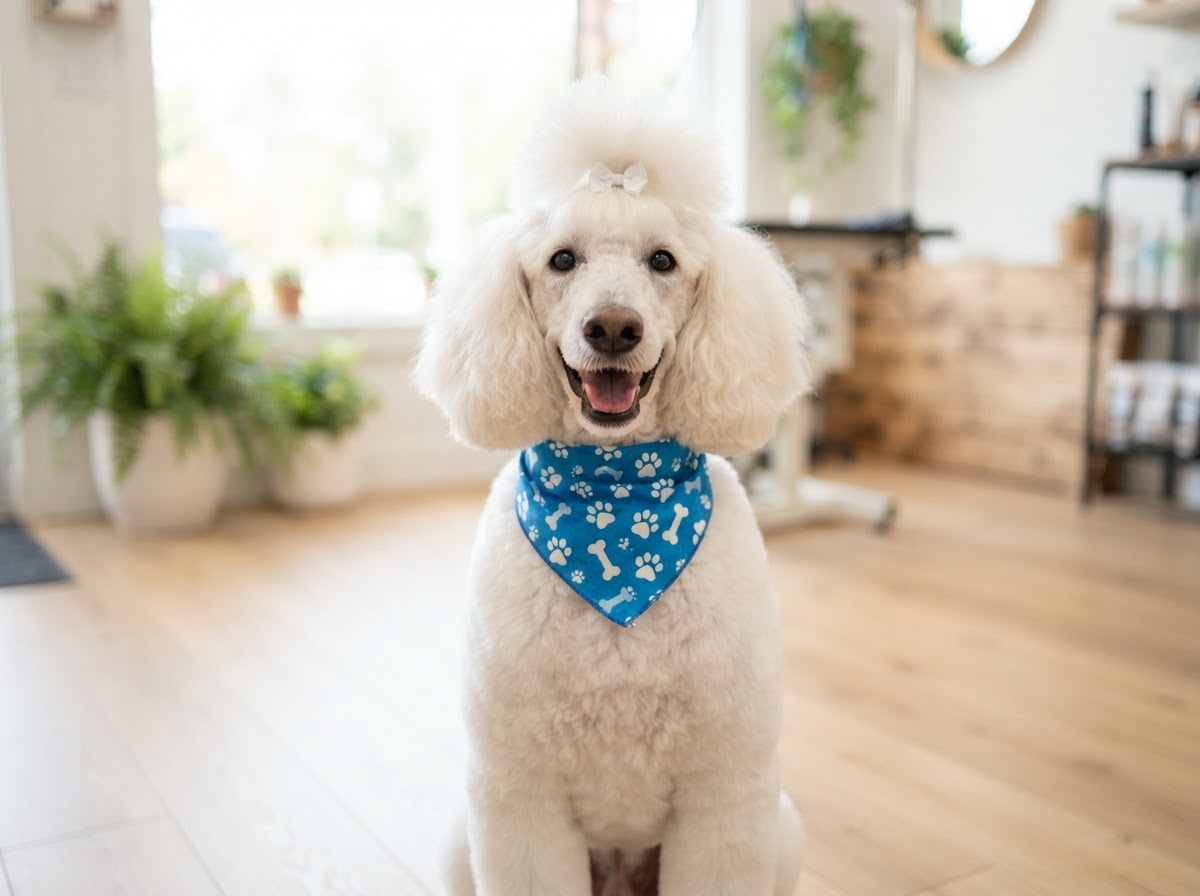
For example, a photo of a poodle with a specific trim won't look the same on a doodle with a different curl pattern and coat density. The groomer can aim for a similar style, but the result depends on your dog's actual coat. Understanding this sets realistic expectations.
Choosing the right reference photo
When choosing a reference photo, look for one with a dog of a similar breed or coat type to yours if possible. A photo of a similar coat gives the groomer a more achievable target. If you can't find a similar breed, any photo that shows the general style and length you want is still helpful.
Look for photos that clearly show the whole dog — face, body, legs, and tail — rather than just a close-up of one area. A full-body photo gives the groomer a complete picture of the style. Multiple angles are even better if you have them.
Communicating face, body, and leg preferences
Break the photo down into areas. The face, body, legs, and tail are often cut differently, and you may want different lengths or styles for each. Point out specific elements: 'I like the face rounded like this,' or 'I want the legs trimmed shorter but the body left longer.'
If you have preferences for specific areas — leave the ears long, trim the paws tight, round the face, keep the tail full — mention them alongside the photo. The photo gives the overall style; your specifics tailor it to your dog.
Discussing desired length
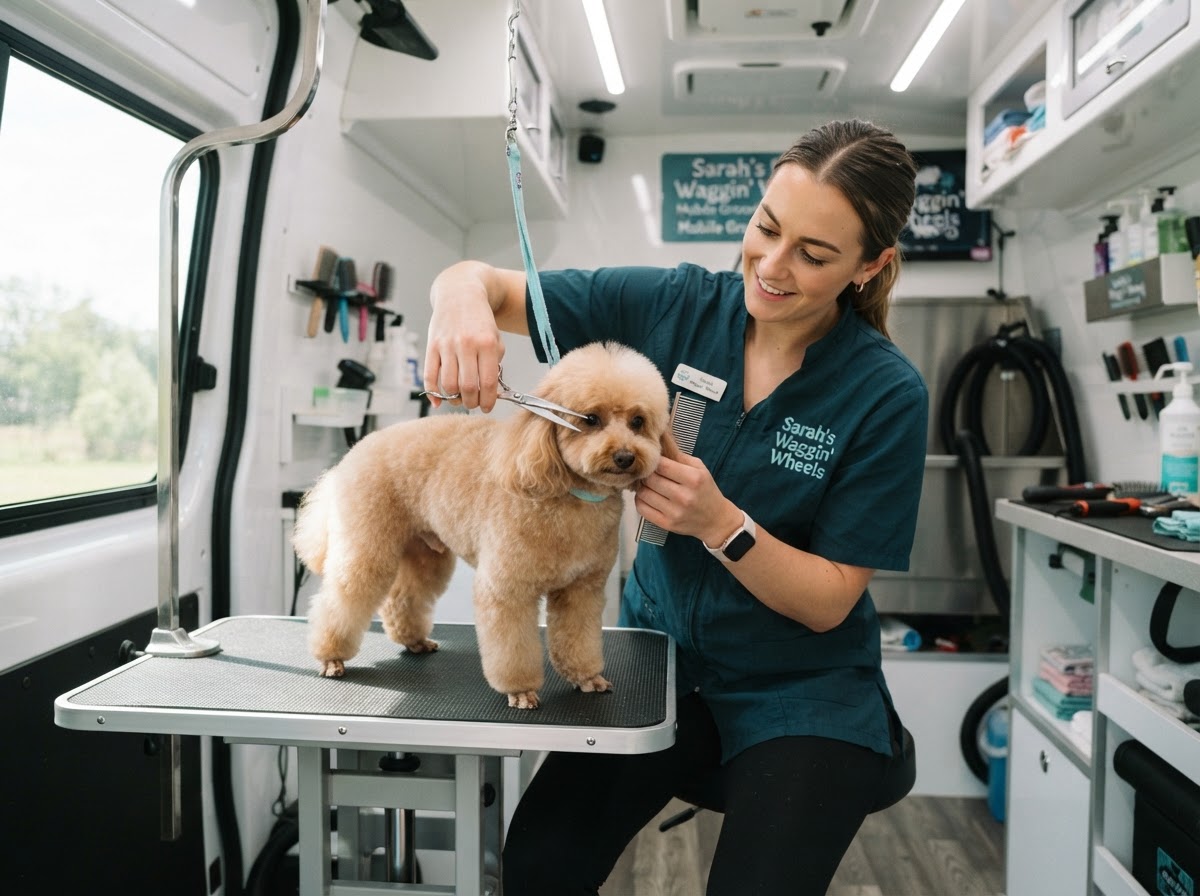
Even with a photo, discuss the desired length explicitly. A photo may not show the exact length clearly — is that coat one inch or two inches long? Discuss the length in concrete terms: 'I'd like the body about an inch and a half long' or 'I want it short enough to be easy to brush but not shaved.'
The groomer can also show you guide lengths — combs or guards that demonstrate how much coat will remain. This gives you a concrete sense of the result before the cut begins. Don't be afraid to ask to see the length before the groomer starts.
Previous results as references
If your dog has been groomed before and you liked the result, a photo of your own dog after a previous grooming is an excellent reference. It shows a style that worked on your dog's actual coat. If you have photos of previous cuts you liked — or didn't like — bring them. They help the groomer understand your preferences on your specific dog.
If there's a previous cut you didn't like, a photo of that is just as useful. 'I didn't like this — it was too short on the face' tells the groomer what to avoid. Both positive and negative references help.
What to share alongside the photo
A reference photo works best when paired with details about your dog. Share your dog's breed, coat type, and current condition. Mention any matting or tangles. If your dog has sensitive areas — doesn't like their face touched, is sensitive about their paws — mention it so the groomer can plan a comfortable approach.
Also share your maintenance commitment: 'I can brush a few times a week but not daily.' This helps the groomer recommend a length you can actually maintain, since a photo may show a longer style that requires more upkeep than you can provide.
Managing expectations
The key to using reference photos well is managing expectations. The photo shows the direction; the groomer confirms what's achievable on your dog's coat. If your dog's coat is matted, the groomer may need to go shorter than the photo. If your dog's coat type is different from the photo's, the result will look different.
Ask the groomer, 'Can we achieve something like this on my dog?' Their answer — which considers your dog's coat, condition, and your maintenance ability — is more useful than assuming the photo will be reproduced exactly.
Questions to ask with your reference photo
- Can we achieve a style like this on my dog's coat type and condition?
- How will this look different on my dog compared to the photo?
- What length is the coat in the photo, and what length would you recommend for my dog?
- Can we adjust the face, legs, or tail differently from the photo?
- How much maintenance will this style require between visits?
A reference photo, used well, is a powerful tool. Pair it with honest details about your dog and realistic expectations, and you'll get the most from the grooming conversation.
Quick questions
Ready to groom your pet?
Book an appointment or request a personalized quote with Fluffy Crew.