Preparing Your Cat for a Mobile Grooming Visit
Cats often do best in familiar surroundings, which makes mobile grooming a natural fit. But preparation matters. This guide covers what to communicate, how to arrange the handoff, and what to share about your cat's handling preferences and prior reactions so the visit goes smoothly.
Preparing your cat for a mobile grooming visit is about setting up the conditions for a calm, successful experience. Cats are sensitive to change, unfamiliar people, and being handled in ways they're not used to. The more the team knows in advance, the better they can plan a gentle approach. This guide walks through communication, handoff, handling preferences, and what to share before the visit.
Start with honest communication
The foundation of a good cat grooming visit is honest communication. Tell the team about your cat's temperament — are they calm, shy, nervous, or reactive? Have they been professionally groomed before, and how did they respond? If your cat has a history of scratching, biting, or panicking when handled, share it upfront.
Disclosing behavior isn't a judgment, and it doesn't mean your cat can't be groomed. It helps the team confirm whether they can safely accommodate your cat and plan the right approach. A team that knows what to expect can work at your cat's pace and avoid surprises.
Discuss the handoff arrangement
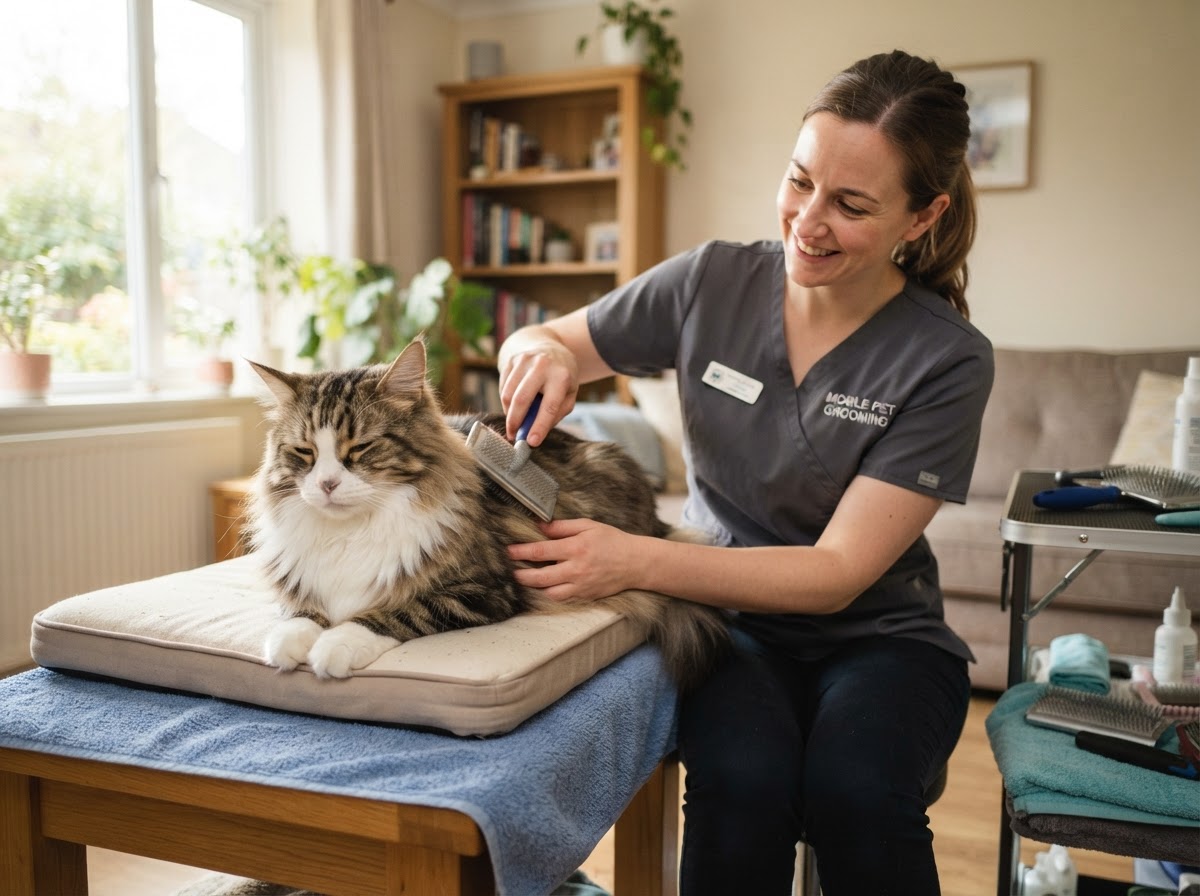
How will the groomer receive your cat? If your cat is comfortable being picked up, discuss how that will happen. If your cat is more comfortable in a carrier, have it ready and confirm with the team how the handoff will work. Some cats do better when they can approach the groomer on their own terms; others need a more structured handoff.
Confirm carrier and access arrangements before the visit. If your cat needs to be in a carrier for any part of the process, make sure it's clean, accessible, and familiar. A carrier your cat already associates with positive experiences is less stressful than one that only appears for vet trips.
Share handling preferences
Cats have preferences about how and where they're touched. Share what you know about your cat's comfort with handling:
- Does your cat tolerate having their paws touched and held?
- Are they comfortable with their ears being examined?
- How do they respond to having their face and head handled?
- Are they startled by sounds like dryers or clippers?
- Are there specific areas they're protective of or sensitive about?
- What techniques have worked (or not worked) when you've handled them at home?
This information helps the groomer adjust their approach. If your cat is sensitive about their paws, the team can plan a patient approach to nail trims. If they're startled by loud sounds, the team can discuss whether certain tools are appropriate or whether a quieter approach is better.
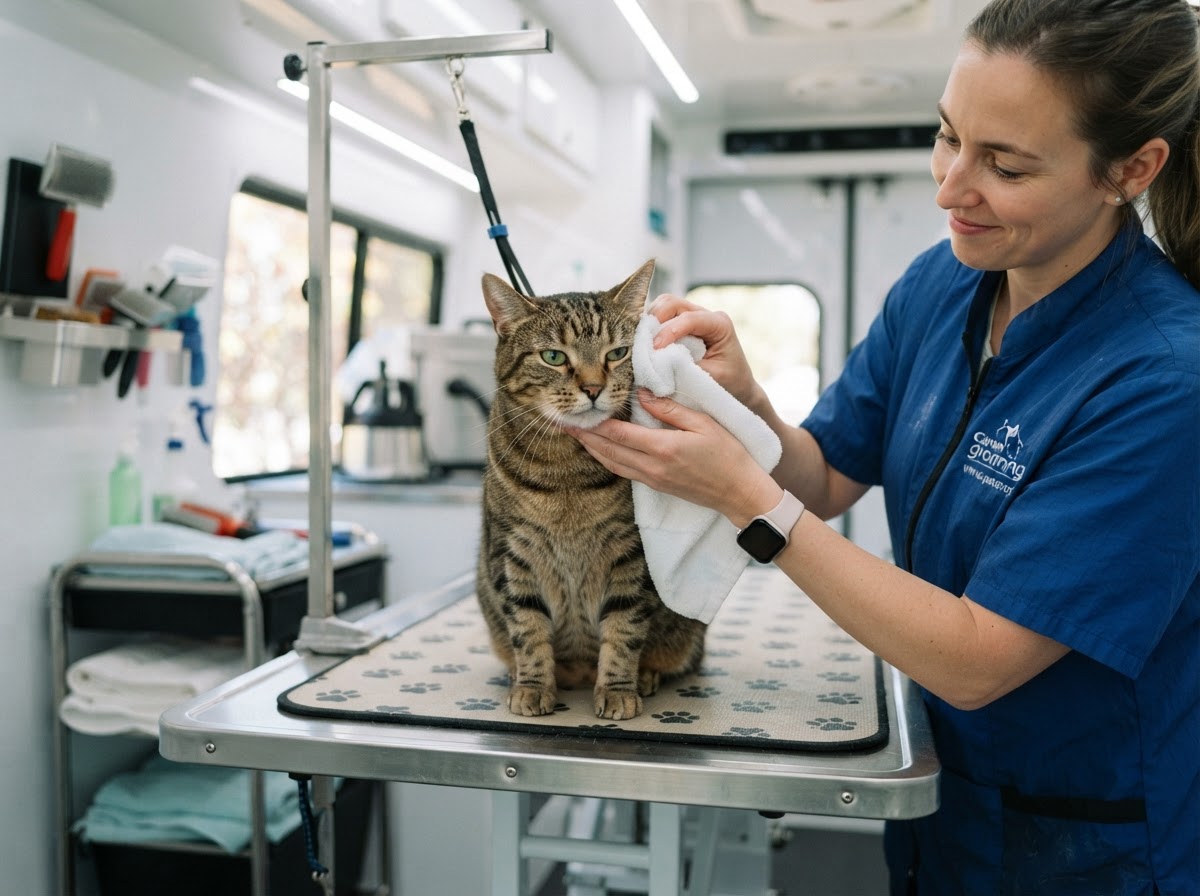
Prior reactions and history
Share your cat's prior grooming and handling history. If your cat has been groomed before, describe how it went — were they calm, nervous, or reactive? If they've had a negative experience, whether at a groomer or a vet, mention it so the team can take a different approach.
If your cat is on any veterinary treatment plan — medicated shampoo, parasite prevention, ear medication — bring that information. The team confirms whether they can accommodate veterinary instructions. Don't stop prescribed care before the appointment; discuss it with the team and your vet.
Creating a calm environment
On the day of the visit, set up a calm environment. A quiet space away from other pets, loud noises, and distractions helps your cat feel secure. If you have dogs or other cats, keep them separate so your cat being groomed isn't stressed by their presence.
If your cat has a favorite blanket, bed, or space where they feel safe, have it accessible. Familiar scents and surroundings can help reduce anxiety. The mobile salon arrives at your location, so your cat stays in a known environment throughout the visit.
What not to do
Don't prescribe calming medication, fasting, or sedation for your cat before a grooming visit. Any medication decisions belong with your veterinarian, not the groomer. If you're concerned about your cat's anxiety, discuss it with your vet and the team together.
Don't force your cat into a carrier or restrain them aggressively before the visit — this can create a negative association that makes grooming harder. If your cat is difficult to handle, discuss it with the team in advance so they can plan a safe, patient approach.
Confirming cat-specific inclusions
Before the visit, confirm with the team which services are appropriate for your cat. Cat-specific inclusions aren't the same as the dog package — don't assume every item applies. Discuss whether your cat needs a bath, whether a haircut is suitable, and which products are safe for cats.
If you'd like to watch the session, Live PETCAM is included at no extra cost with your grooming session.
After the visit
After the grooming is complete, your cat is returned to you. Give them space to settle — some cats are energetic after grooming, others want to hide and rest. Both reactions are normal. Observe how your cat responds and share feedback with the team for future visits.
For any medical concerns — skin irritation, ear discomfort, changes in behavior, or signs of stress that persist — consult your veterinarian. Grooming is not medical care, and the team focuses on gentle, comfortable grooming rather than diagnosing or treating conditions.
Quick questions
Ready to groom your pet?
Book an appointment or request a personalized quote with Fluffy Crew.