How Paw Trimming Improves Traction and Daily Comfort
Excess hair between the paw pads might seem minor, but it affects your pet's daily comfort. Long paw hair reduces traction, collects debris, and can mat. This guide explains how paw trimming improves grip and comfort — especially for senior pets that need stability and active pets that walk on varied surfaces.
Excess hair between the paw pads might seem like a minor detail, but it has a real effect on your pet's daily comfort and mobility. Long paw hair reduces traction on smooth surfaces, collects debris that becomes uncomfortable, and can mat in damp conditions. This guide explains how paw trimming improves traction and comfort — and why it's especially beneficial for senior pets that need stability and active pets that walk on varied surfaces.
How excess paw hair affects traction
When the hair between the paw pads grows long, it can cover the paw pads themselves, reducing the contact between the pads and the surface. The paw pads provide traction — they're the grippy, textured surface that helps your pet grip the floor. Long hair over the pads reduces this grip, making smooth surfaces — tile, hardwood, laminate — more slippery.
Reduced traction can cause slipping, which is uncomfortable and can affect your pet's confidence on their feet. For senior pets or those with mobility issues, slipping can be more concerning — it can cause anxiety about walking on smooth floors and increase the risk of strain. Trimming the paw hair restores the paw pads' contact with the floor, improving traction and stability.
Debris and discomfort
Long hair between the paw pads collects debris — dirt, small stones, burrs, plant material — that gets trapped against the sensitive skin between the toes. This debris can be uncomfortable and, if not removed, can cause irritation. For pets that walk outdoors or in varied environments, the debris accumulation is a real source of discomfort.
Trimming the paw hair reduces the debris that gets trapped. Short hair between the toes doesn't collect and hold debris the way long hair does. After walks, check your pet's paws for any debris and gently remove it. Paw trimming makes this easier and reduces the debris that accumulates in the first place.
Matting in the paws
Long hair between the paw pads can mat, especially in damp conditions — after walking through wet grass, after bathing, or in humid weather like South Florida's. A mat between the toes pulls on the sensitive skin there, which is uncomfortable. Paw mats can also hide debris or cause skin irritation if left.
Trimming the paw hair prevents matting in this area. Short hair doesn't mat the way long hair does. If you notice a mat between your pet's toes between visits, don't try to cut it out at home — the skin between the toes is thin and easily nicked. Gently brush if you can, or mention it at the grooming visit so the team can address it safely.
Why senior pets benefit especially
Senior pets benefit especially from paw trimming. As pets age, they may lose some muscle strength and stability, making good traction even more important. Slipping on smooth floors can cause anxiety and increase the risk of strain. Tidy paws with good traction help senior pets feel more confident and stable on their feet.
Senior pets may also have difficulty with self-grooming, so the paw hair may grow longer without their ability to manage it. Regular paw trimming as part of senior grooming care keeps the paws comfortable and supports their mobility. If you have a senior pet, mention it so the team can plan a gentle, thorough approach.
Why active pets benefit
Active pets that walk on varied surfaces — trails, parks, beaches — collect more debris in their paw hair. Trimming the paws reduces the debris and makes after-walk checks easier. For pets that walk on different surfaces, tidy paws with good traction support their activity comfortably.
In South Florida, where pets may walk on sandy beaches, grassy parks, and varied terrain, paw trimming helps manage the debris these environments introduce. Short paw hair is easier to keep clean and doesn't hold sand and debris the way long hair does.
How paw trimming is done
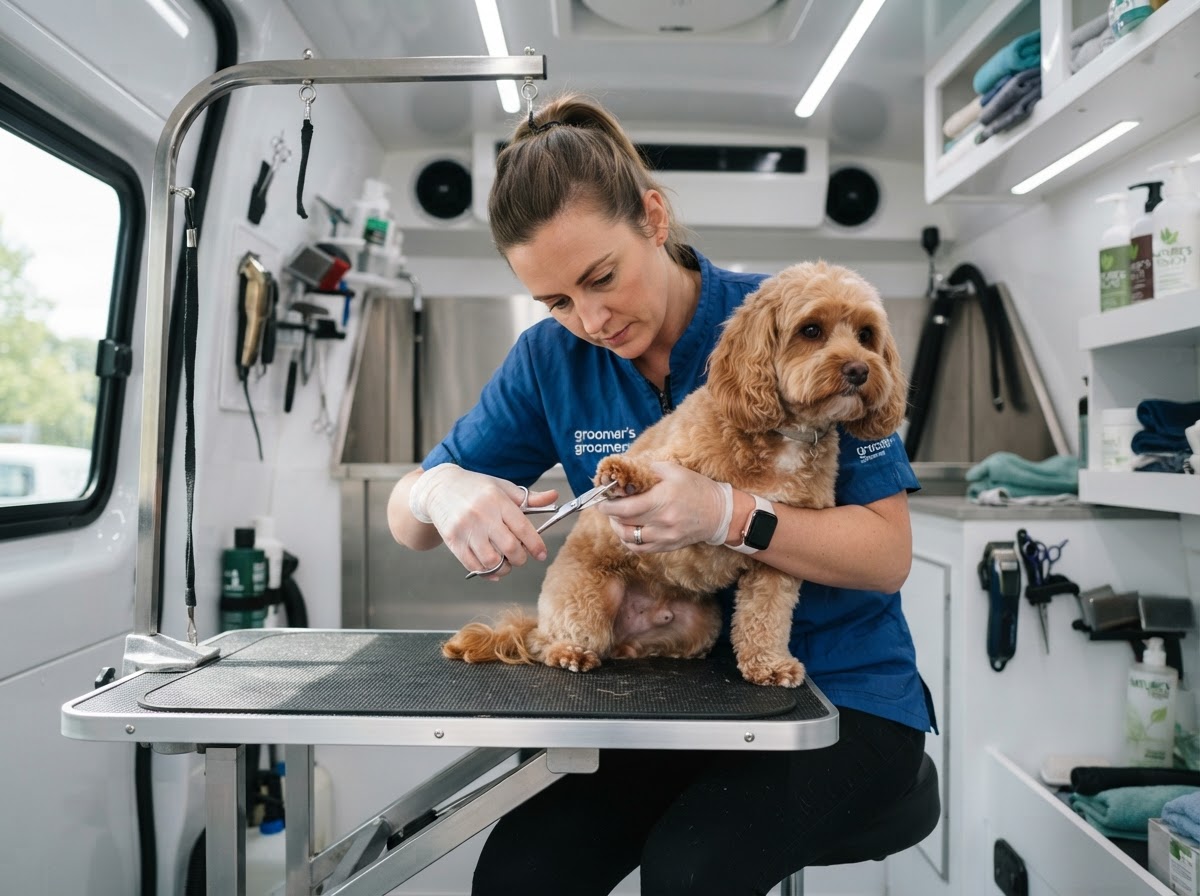
The team carefully trims the hair around and between the paw pads. It's delicate work — the paw pads and the skin between the toes are sensitive, and the trimming is done gently and carefully with appropriate tools. The result is tidy paws with the pads exposed for good traction and short hair that doesn't collect debris or mat.
The process is part of the grooming visit. In Full Grooming, paw trimming is included. The team works gently, especially for pets that are sensitive about paw handling. If your pet is nervous about paw handling, mention it so the team can plan a calm approach.
Between-visit paw care
Between visits, check your pet's paws regularly, especially after outdoor walks. Remove any debris gently. If you notice matting between the toes, don't cut it at home — the skin is sensitive. Gently brush if you can, or wait for the grooming visit. If the paw hair grows quickly, consider more frequent grooming for this area.
For senior pets, checking the paws regularly is especially valuable — it helps you catch debris or discomfort early. Keeping the paws tidy between visits, combined with regular grooming, supports your senior pet's comfort and mobility.
Questions to ask about paw trimming
- Does my pet benefit from paw trimming for traction?
- How often should my pet's paws be trimmed?
- Is paw trimming included in Full Grooming?
- How can I care for my pet's paws between visits?
- What should I do if I notice matting between my pet's toes?
Paw trimming improves traction, reduces debris, and prevents matting — details that affect your pet's daily comfort. It's especially valuable for senior pets that need stability and active pets that walk on varied surfaces. Regular paw trimming as part of grooming keeps your pet comfortable and confident on their feet.
Quick questions
Ready to groom your pet?
Book an appointment or request a personalized quote with Fluffy Crew.