Grooming a Nervous Pet in the Mobile Setting: Calm, Patient, One-on-One
Nervous pets — anxious or fearful during grooming, but not aggressive — often do well in the mobile, one-on-one setting. The familiar home environment, patient pace, and calm approach can help a nervous pet feel more comfortable. This guide covers how the mobile setting helps nervous pets and what to share.
Nervous pets — those that are anxious or fearful during grooming, but not aggressive — often do well in the mobile, one-on-one setting. The familiar home environment, patient pace, and calm approach can help a nervous pet feel more comfortable than a busy salon would. This guide covers how the mobile setting helps nervous pets, what a calm approach looks like, and what to share so the team can plan a gentle, comfortable grooming for your nervous dog or cat.
What a nervous pet looks like
A nervous pet shows anxiety or fear during grooming, but not aggression. They may tremble, freeze, tuck their tail, pant, yawn, lip-lick, try to escape, or hide. They may be reluctant but not aggressive — they don't bite, growl, or lunge, but they're clearly uncomfortable. A nervous pet is distressed but not dangerous; their behavior says 'I'm scared' rather than 'I'm a threat.' Understanding this distinction helps, because nervous pets can often be helped with patience and a calm approach.
Nervousness during grooming is common. Many pets find some part of grooming stressful — the noise of the dryer, the handling of sensitive areas, being restrained. For some pets, the whole experience is anxiety-inducing. A nervous pet isn't being difficult; they're expressing discomfort. The right approach is patience, calm, and gentleness — helping them feel safe rather than forcing them through a stressful experience.
Why the mobile setting helps nervous pets
The mobile setting can be especially good for nervous pets, for several reasons. First, your pet stays in their familiar home environment — no car ride, no unfamiliar salon, no other animals. The familiar surroundings reduce the overall stress load. A nervous pet isn't also dealing with the stress of transport and a new place on top of the grooming itself.
Second, the one-on-one setting means the team focuses entirely on your pet. There's no queue of other animals, no busy salon environment, no noise from other pets. The calm, quiet, focused environment is less overwhelming for a nervous pet. Third, the team can go at your pet's pace — taking breaks, going slowly, letting your pet settle. The mobile setting supports the patient, gentle approach that nervous pets benefit from.
A calm, patient approach
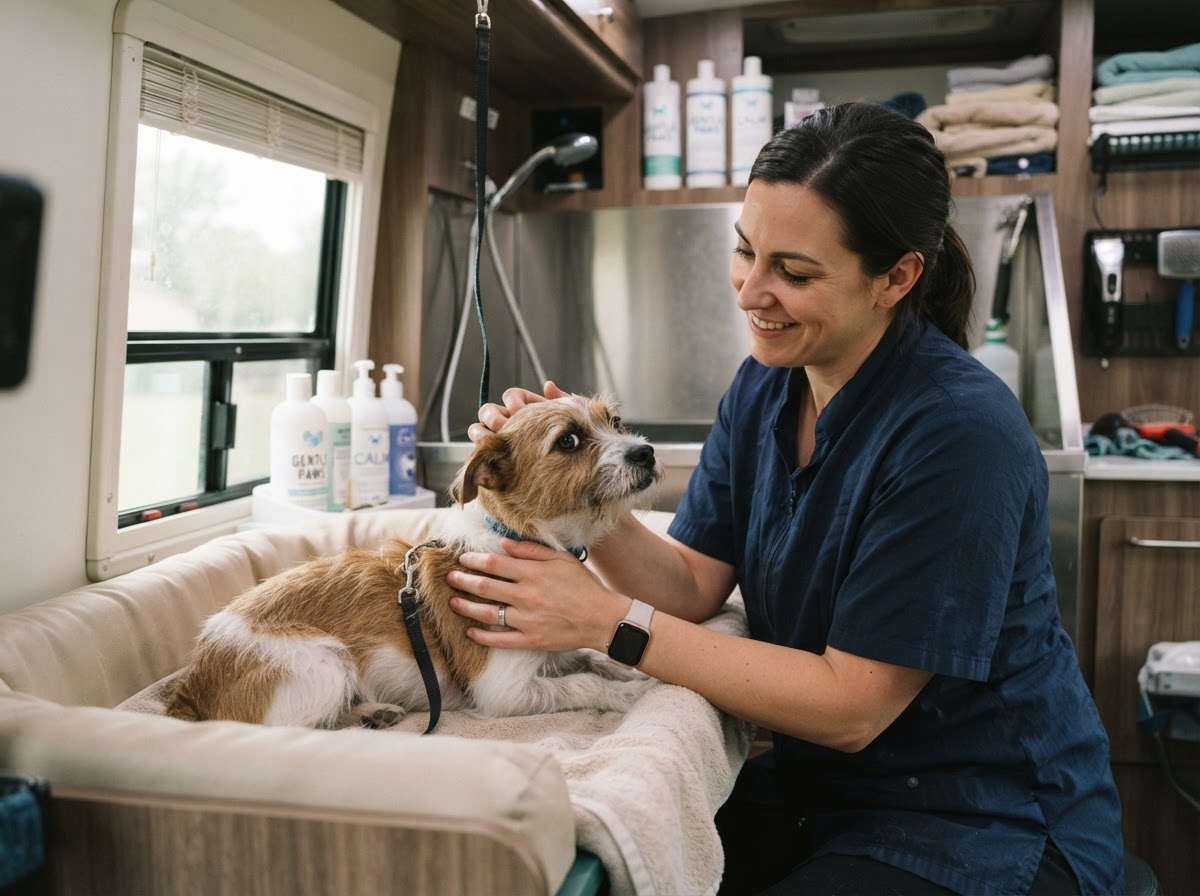
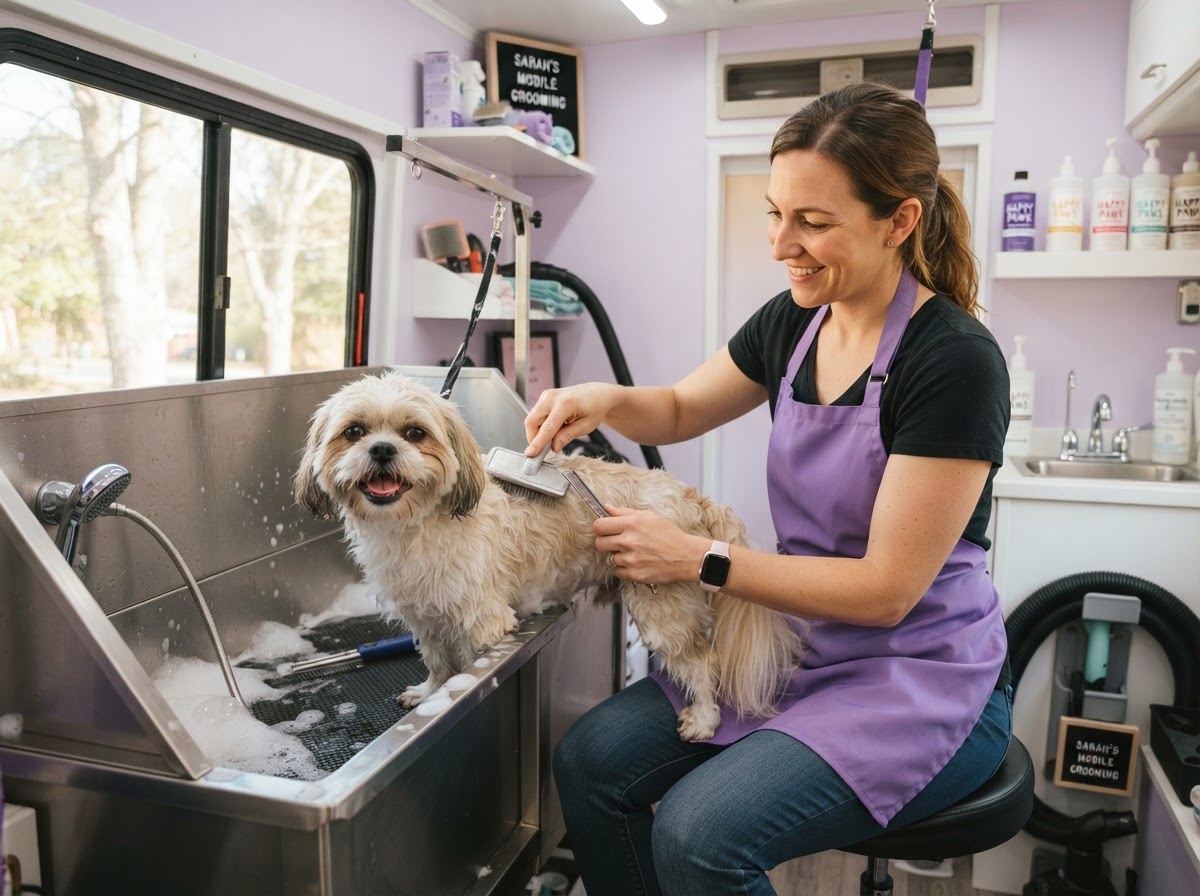
For a nervous pet, the approach is calm and patient. The team lets your pet settle before starting — giving them time to acclimate to the mobile salon and the groomer. They handle your pet gently and work at a pace your pet is comfortable with. They take breaks if your pet seems overwhelmed. They use calm, quiet handling throughout. The goal is for your pet to feel safe, not just to get through the grooming.
The team may not do everything in one visit. For a very nervous pet, a shorter, gentler grooming may be more appropriate than a full session. Building comfort over multiple visits — each one a little easier as your pet learns grooming is safe — may be better than one overwhelming full grooming. The team prioritizes your pet's comfort and a positive experience over completing every step. A calm, partial grooming that builds trust is more valuable than a complete one that traumatizes.
The familiar environment
The familiar home environment is a key advantage for nervous pets. A nervous pet is already dealing with the stress of grooming; adding the stress of a car ride, a new place, and other animals can push them over their threshold. In the mobile setting, your pet is home — their smells, their space, their person nearby. That familiarity lowers the stress baseline, leaving more capacity to handle the grooming itself.
For some nervous pets, having their person nearby — or even being able to see or hear them — provides comfort. In the mobile setting, you're right there at home. While you may not be in the van during the grooming (to allow the team to focus and avoid distractions), being nearby can be reassuring. The familiar environment and your presence nearby help a nervous pet feel safer.
What to share about your nervous pet
Share what you know about your pet's nervousness with the team. What makes them nervous — the dryer, paw handling, being restrained, new environments? How do they show it — trembling, freezing, trying to escape? Have they been groomed before, and how did it go? What helps — a slow approach, breaks, treats, your presence? The more the team knows, the better they can plan a calm, comfortable grooming.
- What specifically makes your pet nervous (dryer, paws, restraint, etc.)
- How they show nervousness (trembling, freezing, escaping)
- How past grooming went, if applicable
- What helps — slow approach, breaks, treats, your presence
- Whether they're nervous generally or about specific things
If your pet's nervousness ever tips into aggression — biting when scared — that's important to share too. A nervous pet that nips when pushed past their threshold needs the special-handling approach, not just the nervous-pet approach. Share the behavior accurately so the team can plan the right approach. Nervous-but-not-aggressive is one thing; nervous-and-will-bite is another.
Building comfort over time
For a nervous pet, building comfort over time can be valuable. A first gentle grooming that's calm and positive — even if abbreviated — helps your pet learn that grooming is safe. Subsequent visits can build on that positive foundation, becoming a little more complete as your pet's comfort grows. Regular, positive grooming helps a nervous pet learn that grooming isn't something to fear. The team can advise on a schedule that builds comfort.
This is especially valuable for puppies — early positive grooming during the socialization period, as our socializing puppy guide explains, builds comfort that lasts. But it's valuable for nervous adult pets too. A nervous rescue pet, a pet that had a bad grooming experience, or a pet that's just anxious can all benefit from patient, positive grooming that builds trust over time. The mobile, one-on-one setting supports this gradual building of comfort.
When nervousness is more than grooming can address
Sometimes, a pet's nervousness is more than grooming can address, and that's worth recognizing. If your pet is so nervous that grooming is genuinely traumatic for them — severe panic, desperate escape attempts, or nervousness that tips into aggression — talk to your veterinarian. Your vet can advise on whether anti-anxiety medication for grooming is appropriate, or whether sedated veterinary grooming is the better option for your pet's welfare.
This isn't a failure — it's recognizing that some pets need more support than grooming alone provides. For a pet whose nervousness makes grooming traumatic, medication or sedation (under your vet's guidance) may be the kindest option. The team can't provide medication or sedation; that's veterinary. Share what you notice, and talk to your vet about options. Your pet's welfare comes first.
Questions to ask about nervous-pet grooming
- Is the mobile setting good for my nervous pet?
- How will the team keep my pet calm during grooming?
- Can the grooming be shorter or gentler for my pet?
- What should I share about my pet's nervousness?
- Should I talk to my vet about anxiety medication for grooming?
Nervous pets — anxious but not aggressive — often do well in the mobile, one-on-one setting. The familiar home environment, patient pace, and calm approach help a nervous pet feel more comfortable. Share what makes your pet nervous and what helps, and the team can plan a gentle, comfortable grooming. For pets whose nervousness makes grooming traumatic, talk to your vet about additional support. Building comfort over time helps your pet learn that grooming is safe.
Quick questions
Ready to groom your pet?
Book an appointment or request a personalized quote with Fluffy Crew.