Nail Trimming for a Pet Who Hates It: A Calmer Approach
Some pets stress about nail trimming — it's one of the most common grooming anxieties. If your pet hates having their paws handled, a calm, patient approach makes a difference. This guide explains how a mobile, one-on-one setting helps and what to share so the team can plan a calm nail trim.
Nail trimming is one of the most common grooming anxieties for pets. Some pets stress about having their paws handled, and nail trimming can be a challenging part of the grooming visit. If your pet hates nail trimming, a calm, patient approach makes a real difference. This guide explains how a mobile, one-on-one setting helps and what to share so the team can plan a calm, comfortable nail trim for a nervous pet.
Why some pets hate nail trimming
There are several reasons pets may dislike nail trimming. Paw handling is sensitive — the paws have many nerve endings, and some pets are naturally protective of them. If a pet has had a painful nail trim in the past — cutting into the quick — they may associate nail trimming with discomfort. Some pets are simply sensitive to being held or restrained in specific ways.
Understanding why your pet dislikes nail trimming helps the team plan the right approach. Share what you know: do they dislike paw handling generally, or specifically nail trimming? Have they had a bad experience before? How do they respond when you touch their paws at home? This information guides a calmer approach.
The mobile, one-on-one advantage
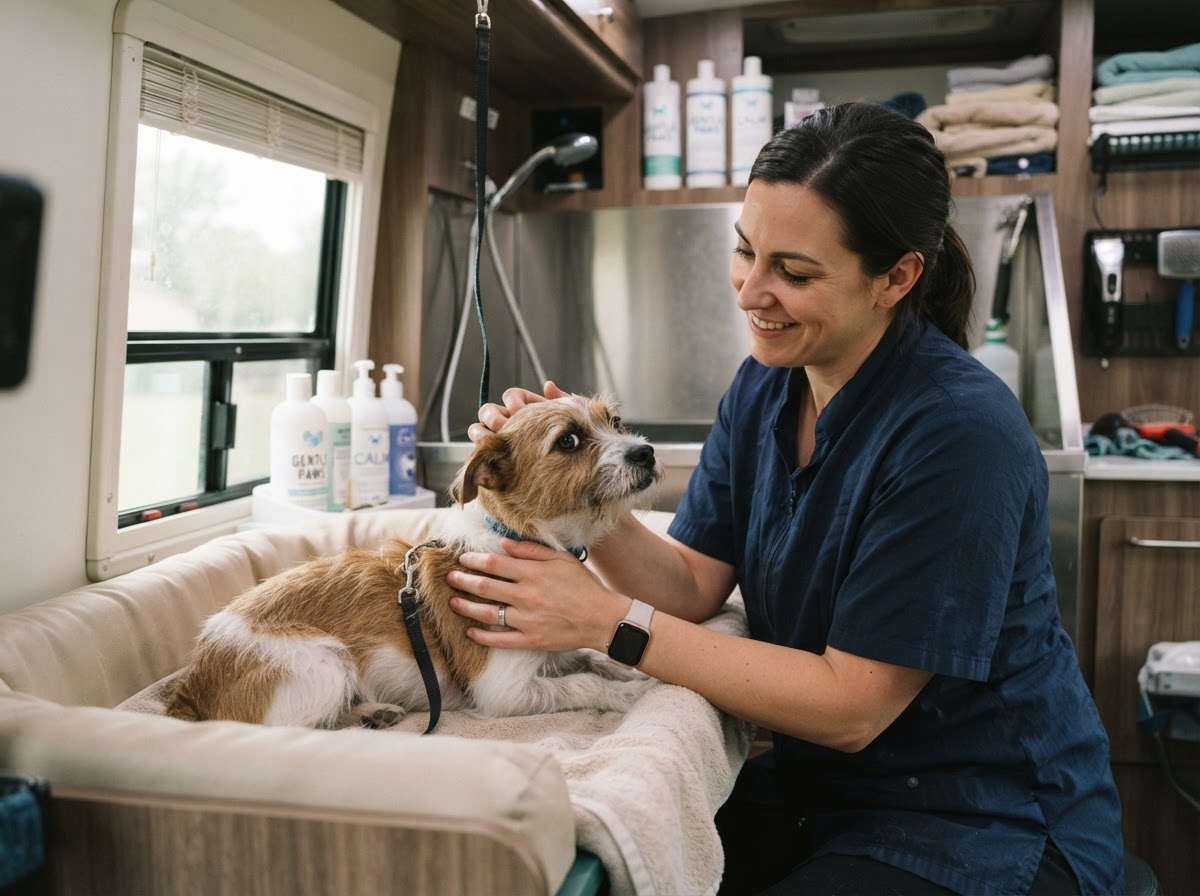
The mobile grooming setting offers advantages for nervous pets. Your pet stays in a familiar environment — at home — rather than being transported to a salon with other animals, noise, and unfamiliar smells. One-on-one care means the team works at your pet's pace without a queue of animals waiting. There's no rush, and the focus is entirely on your pet.
For a pet that's nervous about nail trimming, the calm of a one-on-one setting can make the experience less stressful. The team can take breaks, go slowly, and use a patient approach. There's no pressure to rush through the trim. If your pet needs a gentler, slower session, the mobile setting supports it.
Patience matters
For a nervous pet, patience is the most important tool. The team works at your pet's pace, taking the time needed for a calm trim. They may trim a few nails, take a break, and continue. They may use gentle handling and positive, calm energy throughout. The goal is a comfortable trim, not a forced, stressful one.
If your pet is particularly stressed, the team may recommend trimming fewer nails at a time or planning a shorter, focused session. Sometimes a calm trim of a few nails is better than a stressful trim of all of them. The team prioritizes your pet's comfort over completing every nail in one go.
What to share before the visit
Share what you know about your pet's nail-trimming anxiety. How do they react when you touch their paws? Have they had a difficult nail trim before? Do they respond better to certain people or approaches? Is there a specific paw they're protective of? The more the team knows, the better they can plan.
- How your pet responds to paw handling at home
- Whether they've had a painful or stressful nail trim before
- Whether they're nervous about specific paws or being held
- Any calming approaches that have worked for your pet
- Whether they respond better to certain handling or voices
This information helps the team plan a calm approach. They can adjust their handling, take breaks, and use the techniques most likely to keep your pet comfortable. Honest information about your pet's anxiety is valuable — it's how the team prepares.
Desensitization at home
Between visits, you can help desensitize your pet to paw handling. Gently handle your pet's paws at home — touching, holding, and massaging them — in a calm, positive way. Pair paw handling with treats and calm praise. Over time, this can help your pet feel more comfortable with paw handling, making nail trimming less stressful.
Don't force it — if your pet pulls away, let them and try again later gently. The goal is positive, gradual desensitization, not forced handling. Ask the team for tips on home paw-handling practice. They can advise on techniques to help your pet feel more comfortable between visits.
When nail trimming may not be possible
For some pets, nail trimming is too stressful to complete safely in one session. If your pet is severely anxious or becomes too stressed, the team prioritizes their well-being. They may trim fewer nails, recommend a shorter session, or suggest a follow-up approach. They won't force a stressful trim.
For pets with severe anxiety, talk to your veterinarian. They can advise on approaches to reduce grooming stress, and in some cases, they may recommend options to help your pet tolerate necessary care. Your vet is a partner in managing grooming anxiety for severely nervous pets.
Questions to ask about nervous nail trimming
- How can the team help my nervous pet with nail trimming?
- What should I share about my pet's paw-handling anxiety?
- Can we plan a shorter, calmer nail-trimming session?
- How can I desensitize my pet to paw handling at home?
- What if my pet is too stressed to complete the trim?
If your pet hates nail trimming, a calm, patient approach in a mobile, one-on-one setting can help. Share what you know about your pet's anxiety, ask the team for a gentle approach, and consider desensitization at home. Your pet's comfort comes first.
Quick questions
Ready to groom your pet?
Book an appointment or request a personalized quote with Fluffy Crew.