Nail Trimming During Grooming: Why It Matters and How It's Done
Nail trimming is one of the grooming hygiene services Fluffy Crew offers, and it's also part of Full Grooming. Overgrown nails affect your pet's comfort and movement. This guide explains why nail trimming matters, how it's done carefully, and why every pet's nails are different because of the quick.
Nail trimming is one of the grooming hygiene services Fluffy Crew offers, and it's also one of the inclusions listed in Full Grooming. It's a routine part of grooming care, but it matters more than many owners realize — overgrown nails affect your pet's comfort, movement, and even posture. This guide explains why nail trimming matters, how the team does it carefully, and why every pet's nails are different because of a structure called the quick.
Why nail trimming matters
Nails that are too long affect your pet's comfort and movement. When nails overgrow, they can press against the ground with each step, which can be uncomfortable. Severely overgrown nails can curl under the paw, grow into the paw pad, or cause the toes to splay. Long nails can also affect your pet's posture and gait, potentially contributing to strain over time.
Regular nail trimming keeps the nails at a comfortable length, allowing your pet to walk and stand naturally. It's a basic but important part of grooming care. For pets that don't wear their nails down naturally — especially indoor pets and those that walk on soft surfaces — regular trimming is essential.
How the quick affects trimming
The quick is the living part of the nail that contains blood vessels and nerves. It runs partway through the nail, and it's what makes nail trimming delicate — cutting into the quick causes bleeding and discomfort. The quick's length varies by pet and by how recently the nails have been trimmed.
On light-colored nails, you can often see the quick as a pink area within the nail. On dark nails, it's not visible, which makes trimming more cautious. The team trims carefully, taking small amounts to avoid the quick. For pets with long quicks — often those whose nails have been left too long — only a shorter trim may be possible in one session.
Here's the good news: with regular trimming, the quick recedes over time. Nails trimmed frequently can be maintained shorter because the quick shrinks back. Nails left too long develop long quicks, which limit how short you can trim in one session. Regular trimming helps the quick recede, allowing shorter, more comfortable nails over time.
How nail trimming is done
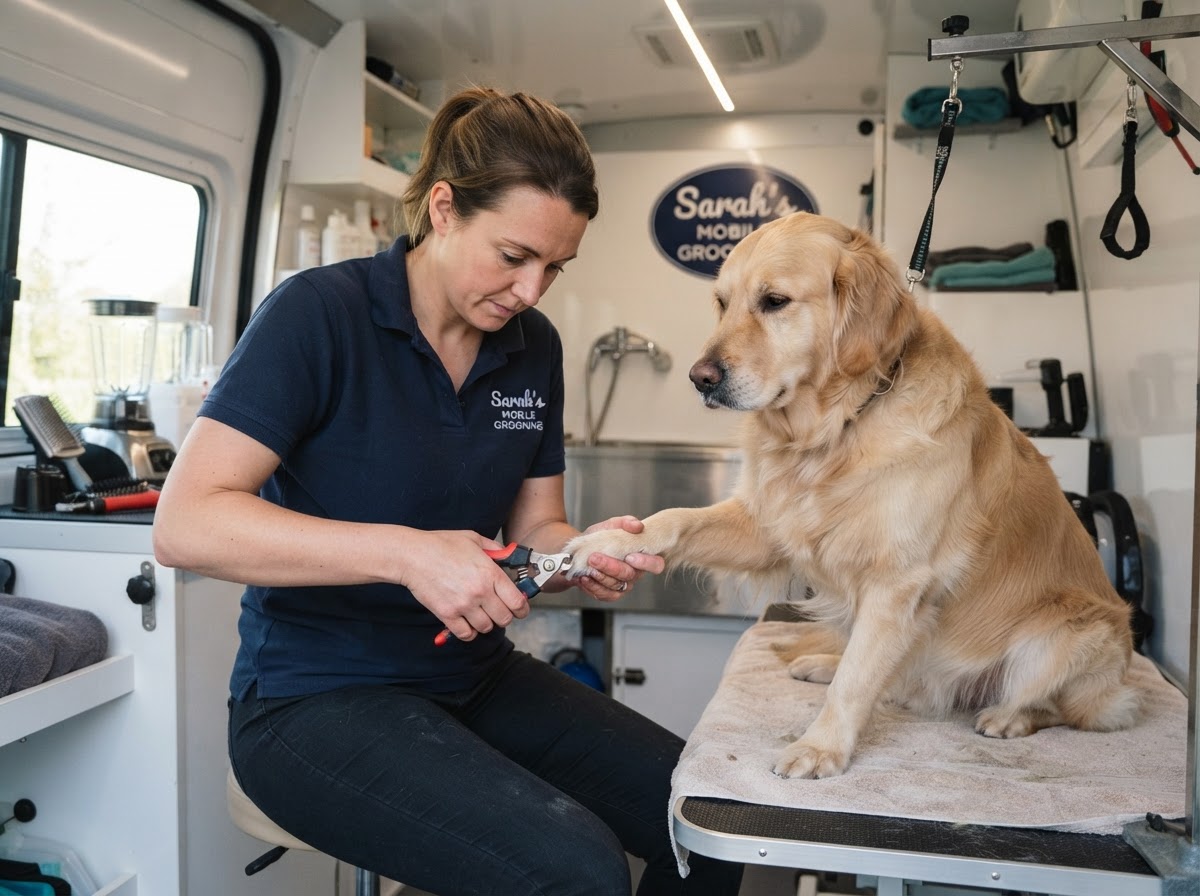
The team trims each nail carefully, taking small amounts to avoid the quick. They use appropriate clippers for your pet's nail size and may use a grinder to smooth sharp edges. The process is done one nail at a time, with care and patience. If a nail bleeds — which can happen even with careful trimming — the team has styptic products to stop the bleeding.
For pets that are nervous about nail trimming, the team works gently and patiently. If your pet is sensitive about having their paws handled, mention it so the team can plan a calm approach. The goal is a comfortable trim, not a stressful experience.
Signs your pet's nails are too long
How do you know if your pet's nails are too long? If you can hear them clicking on hard floors, they're likely too long. If they're curling or curving, they need attention. If your pet's toes seem to splay when standing, the nails may be too long. If nails are pressing into the paw pad, they're seriously overgrown and need prompt attention.
A good rule of thumb: nails should not touch the ground when your pet is standing. If they do, they're too long. When in doubt, ask the team to assess your pet's nails during the grooming visit. They can advise on the right length and a trimming schedule.
How often to trim
How often nails need trimming depends on your pet's activity, the surfaces they walk on, and their nail growth rate. Pets that walk on hard surfaces may wear their nails down naturally and need less frequent trimming. Indoor pets and those that walk on soft surfaces need more frequent trimming. Most pets benefit from trimming every few weeks.
The team can advise on a trimming schedule based on your pet's needs. If your pet's nails grow quickly, more frequent trimming helps the quick recede, allowing shorter, more comfortable nails. Discuss a schedule with the team during the grooming visit.
Dewclaws and special nails
Some pets have dewclaws — a nail higher on the paw that doesn't touch the ground. Because dewclaws don't wear down naturally, they need regular trimming to prevent overgrowth or curling. Some pets also have dewclaws on their front legs only, while others have them on all four. The team checks and trims all nails, including dewclaws.
If your pet has dewclaws, mention it so the team is sure to check them. Dewclaws can curl and grow into the skin if left untrimmed, so they're an important part of nail care. The team includes them in the trimming process.
Nail trimming and Full Grooming
Nail trimming is listed as one of the inclusions in Full Grooming, so it's part of that package. It's also offered as a grooming hygiene service. If you're booking Full Grooming, nail trimming is included. If you want nail trimming without the full package, ask the team whether it's available as a standalone service — its standalone availability is something to confirm.
For cats, nail trimming is also relevant but may involve different considerations. Cat nails are different from dog nails, and cat handling may differ. If you have a cat, discuss cat-specific nail care with the team. Don't assume every dog-package item applies identically to cats.
Questions to ask about nail trimming
- Are my pet's nails too long, and how short can they be trimmed?
- How often should I schedule nail trimming for my pet?
- Can nail trimming be done as a standalone service?
- Does my pet have dewclaws that need attention?
- How can I tell if my pet's nails are too long between visits?
Nail trimming is a basic but important part of grooming care. Overgrown nails affect comfort and movement, and the quick makes every pet's nails different. Regular trimming keeps nails comfortable and helps the quick recede over time.
Quick questions
Ready to groom your pet?
Book an appointment or request a personalized quote with Fluffy Crew.