Can a Tangled Coat Be Brushed Out, or Does the Plan Need to Change?
Finding mats in your dog's coat can be stressful, especially when you're not sure what to do. Can the coat be brushed out, or does the plan need to change? The answer depends on how severe the matting is, where it's located, and your dog's comfort. This guide helps you frame the decision without forcing a painful brush-out.
Finding mats in your dog's coat can feel stressful, especially if you're not sure whether they can be brushed out or if the plan needs to change. The honest answer is that it depends — on the severity of the matting, where the mats are located, the coat's overall condition, and your dog's comfort. This guide helps you frame the decision honestly and understand the options without forcing a painful brush-out or prescribing a specific solution.
Understanding the severity
Mats range from loose tangles that can be gently brushed out to tight, solid clumps that are close to the skin and painful to separate. The severity affects what's possible. A few loose tangles in one area may be easily addressed with gentle brushing. Widespread, tight matting over the body may require a different approach. The team assesses the severity when they see the coat.
Be honest about the matting when you request a quote. Describe what you're seeing: are there a few tangles, or is the coat extensively matted? Are the mats loose or tight? Where are they located? This helps the team plan and set realistic expectations before the appointment.
Location matters
Where the mats are located affects the approach. Mats in friction areas — behind the ears, under the legs, around the collar, on the haunches — are common and may be easier to address if caught early. Mats all over the body, or in areas that are sensitive for your dog, may require a different approach.
Some areas are more sensitive than others. The area behind the ears and under the legs is thin-skinned and more sensitive to brushing. Share which areas your dog is sensitive about so the team can plan a gentle approach or consider clipping those areas for comfort.
Option one: de-matting
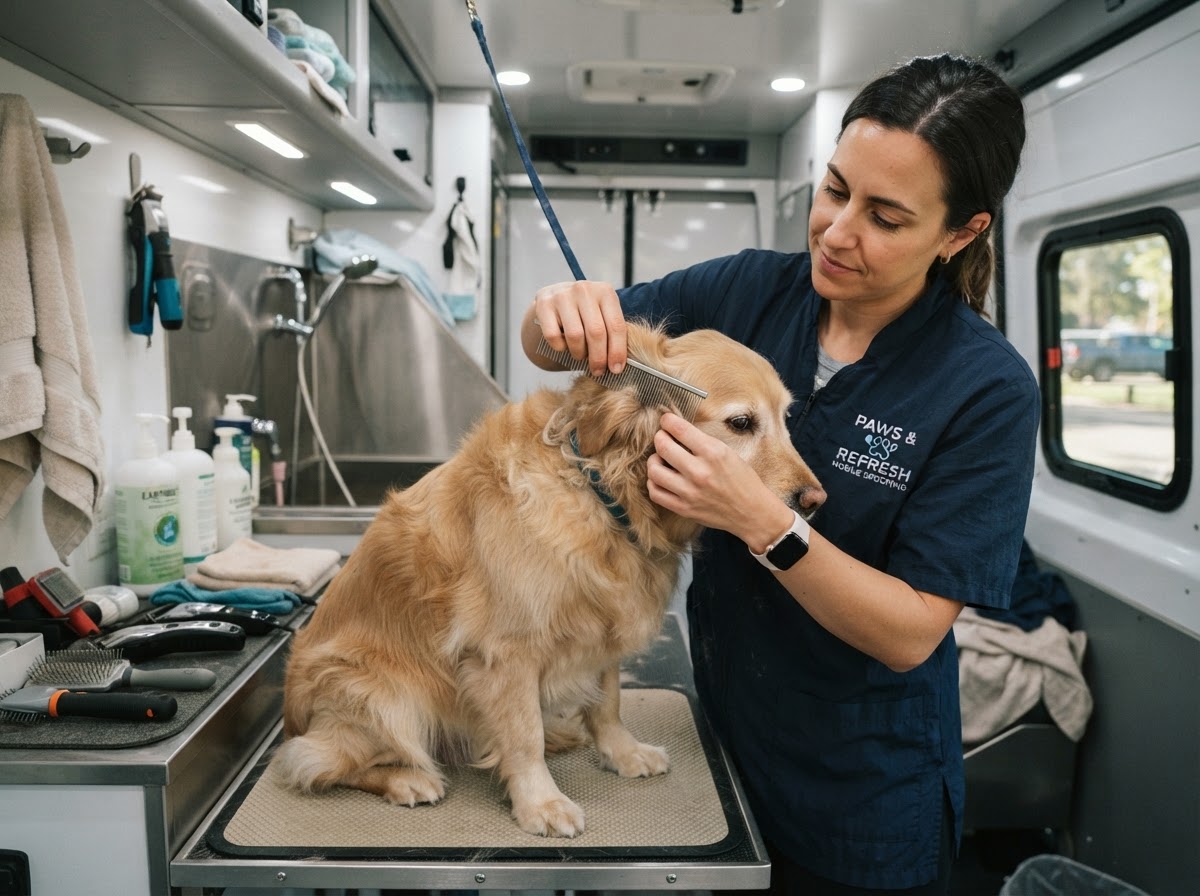
For loose to moderately tight mats, de-matting may be an option. The groomer carefully works through the tangles, using gentle techniques to separate the mat and brush it out. This takes patience and can be time-consuming, and it requires your dog to tolerate the process comfortably. If the mats are too tight or your dog is uncomfortable, de-matting may not be the right choice.
De-matting is most feasible for a few loose mats in a coat that's otherwise in good condition. It preserves the coat length while addressing the tangles. The team can advise whether de-matting is feasible for your dog's specific matting.
Option two: clipping
For tight, extensive, or painful matting, clipping may be the kinder option. Clipping removes the mats without the discomfort of brushing them out. This may mean a shorter cut in the matted areas or, for widespread matting, a shorter cut all over to start fresh. While it may not be the look you'd planned, it's often the most comfortable option for a heavily matted pet.
Clipping is not a failure — it's a practical, kind choice when brushing would be painful or the matting is too severe. Once the coat is clipped and the mats are gone, you can maintain the new length with regular brushing to prevent matting from recurring. The team can advise on the right length going forward.
Your dog's comfort comes first
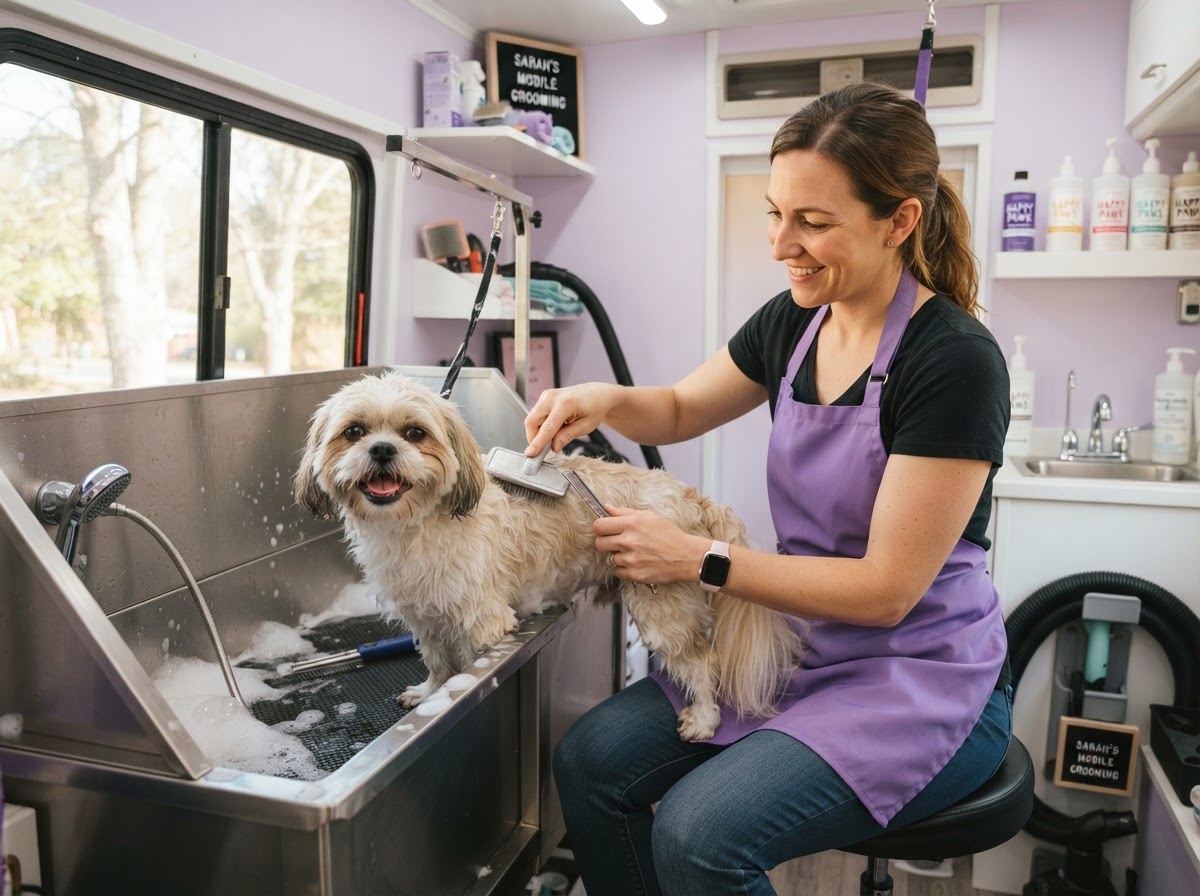
The most important factor is your dog's comfort. Tight mats pull on the skin, and brushing them out can be painful. Forcing a brush-out can cause discomfort, skin irritation, or stress. The team prioritizes your dog's comfort over preserving coat length. If de-matting would be painful, a shorter cut is the kinder choice.
Share how your dog responds to being brushed and handled. If your dog is sensitive, nervous, or has had a difficult grooming experience before, the team plans accordingly. A gentle, patient approach — or a decision to clip for comfort — is always better than forcing through painful mats.
What to expect if the plan changes
If the team determines that clipping is necessary, your dog's coat will be shorter than you may have planned. This is temporary — the coat grows back, and with regular brushing going forward, you can maintain the length and prevent matting from recurring. The team can advise on a brushing routine and a future grooming schedule to keep the coat in good condition.
Don't feel guilty if your dog's coat needs to be clipped. Mats happen, even with attentive owners — some coats mat quickly despite regular brushing. The important thing is addressing the mats for your dog's comfort and then maintaining the coat going forward.
Discussing the options with the team
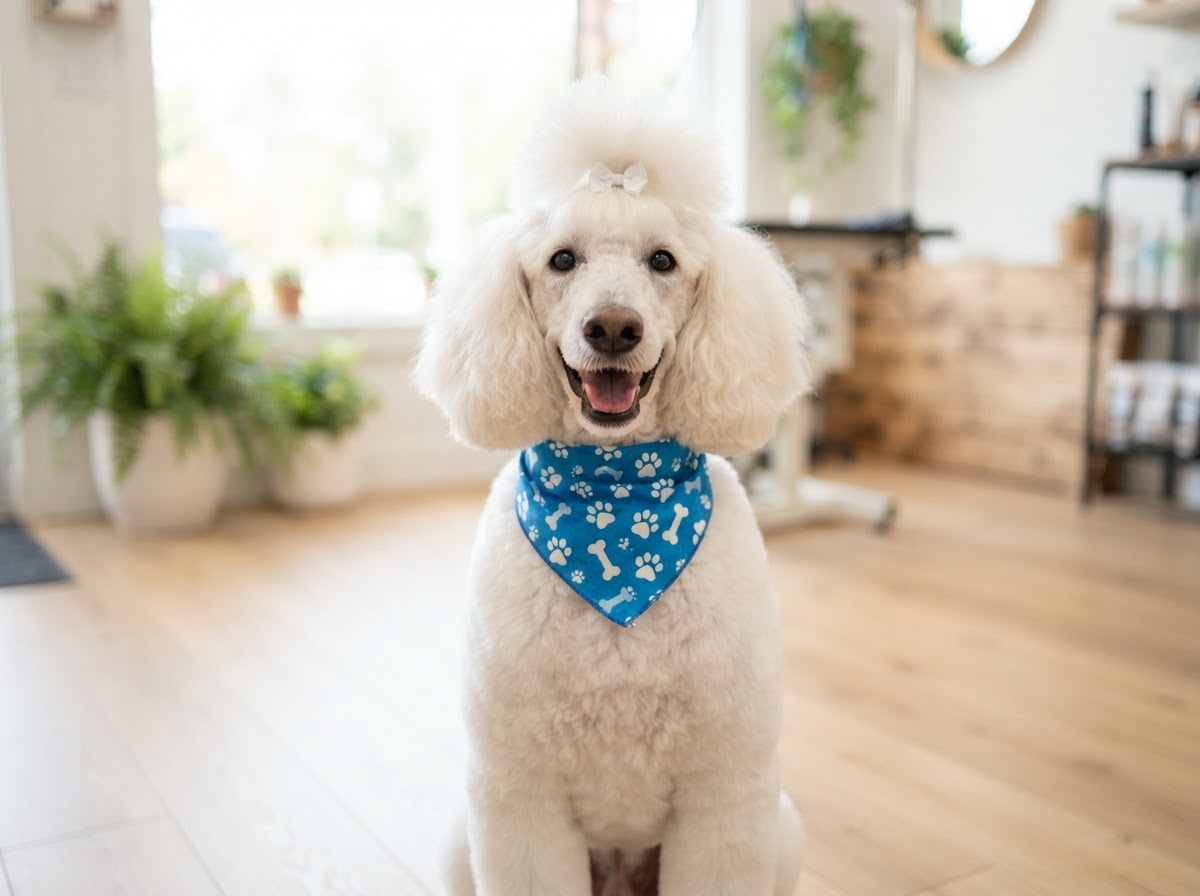
When you request a quote, describe the matting honestly and ask about the options. The team can advise whether de-matting is feasible or whether a shorter cut is the better choice for your dog's comfort. They assess the coat when they see it and plan the kindest approach.
Don't try to brush out tight mats at home before the appointment — it can be painful and may make the matting worse. Let the team assess the coat and plan the right approach. If you're concerned about the matting, mention it when booking so the team is prepared.
Preventing future matting
Once the mats are addressed, prevention is the goal. Regular brushing — especially in friction areas — keeps the coat tangle-free. For coats that mat easily, a shorter, more manageable haircut may reduce the risk. The team can recommend the right brush, routine, and haircut length to prevent matting from recurring.
Discuss a maintenance plan with the team. They can advise on how often to brush, what tools to use, and how often to schedule grooming to keep the coat in good condition. A consistent routine prevents mats from forming and keeps future grooming visits easier.
Questions to ask about a matted coat
- Can the mats be brushed out, or should they be clipped for comfort?
- How short will the coat need to be if we clip?
- How can I prevent mats from forming between visits?
- What brush and routine should I use for my dog's coat type?
- Would a shorter haircut reduce matting going forward?
- How often should I schedule grooming to prevent matting?
A matted coat has options — de-matting for loose tangles, clipping for tight or painful matting. The right choice depends on the severity, location, and your dog's comfort. Discuss the matting with the team to plan the kindest approach.
Quick questions
Ready to groom your pet?
Book an appointment or request a personalized quote with Fluffy Crew.