Grooming Ear Cleaning vs. Veterinary Ear Care: Knowing the Difference
There's an important distinction between ear cleaning during grooming and ear care from your veterinarian. Grooming cleans the outer ear as routine hygiene; veterinary care diagnoses and treats ear conditions. Understanding the difference helps you get the right care for your pet.
There's an important distinction between ear cleaning performed during a grooming visit and ear care provided by your veterinarian. They serve different purposes, and understanding the difference helps you get the right care for your pet at the right time. Grooming cleans the outer ear as routine hygiene; veterinary care diagnoses and treats ear conditions. This guide clarifies the distinction so you know which your pet needs.
What grooming ear cleaning does
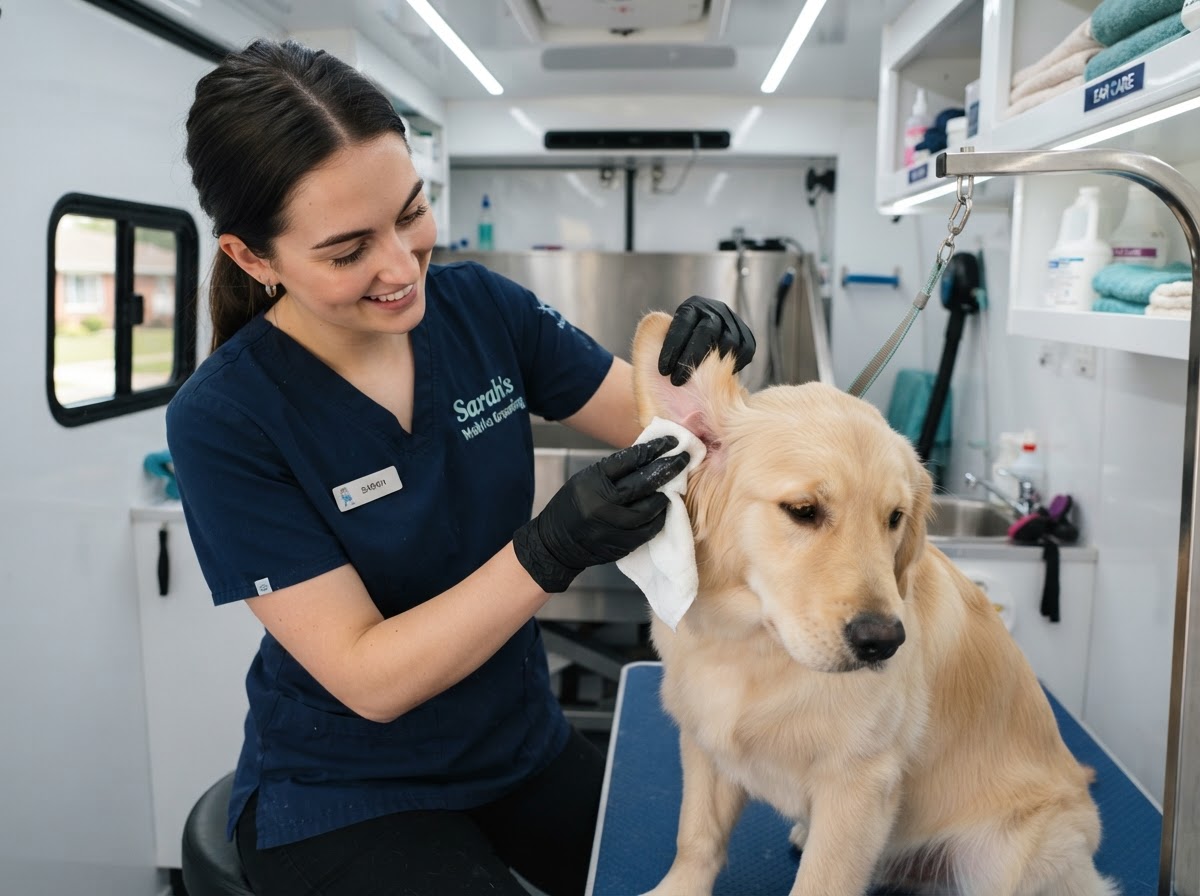
As our guide to ear cleaning explains, grooming ear cleaning is routine hygiene for the outer ear. The team gently cleans the visible part of the ear — the outer ear flap and the opening of the ear canal — removing dirt, wax, and debris. It keeps the ears tidy and comfortable as part of the grooming visit.
The cleaning is gentle and focused on the outer ear. It's hygiene care — keeping the ear clean and comfortable, removing accumulated wax and debris. It's not a deep cleaning, a medical procedure, or a treatment for any condition. The team performs routine cleaning; they don't diagnose or treat ear problems.
What veterinary ear care does
Veterinary ear care diagnoses and treats ear conditions. If your pet has an ear infection, ear mites, allergies affecting the ears, or a chronic ear condition, your veterinarian examines the ear — sometimes with an otoscope to look deep into the canal — diagnoses the issue, and prescribes appropriate treatment, such as ear drops, medication, or a specific cleaning routine.
Veterinary care addresses the medical cause of ear problems, not just the visible symptoms. An ear infection, for example, may need prescription drops to resolve. Ear mites need specific treatment. Allergies affecting the ears need a broader allergy management plan. Your veterinarian provides the diagnosis and treatment; grooming provides routine hygiene.
Why the distinction matters
The distinction matters because the two serve different roles. If your pet has a healthy ear that just needs routine cleaning, grooming is appropriate. If your pet has an ear condition — infection, mites, inflammation, discharge — grooming cleaning alone won't resolve it. The condition needs veterinary diagnosis and treatment. Using grooming cleaning for a medical issue delays proper care.
Conversely, routine ear cleaning doesn't require a vet visit. If your pet's ears are healthy and just need tidying, the grooming visit handles it. You don't need to see your vet for routine ear hygiene. Knowing which your pet needs helps you get the right care efficiently.

Signs that need a veterinarian
Certain signs indicate a veterinary concern rather than routine grooming. If you notice any of these, contact your veterinarian:
- Redness, swelling, or inflammation in the ear
- Discharge, especially with a bad odor
- Persistent head shaking or scratching at the ears
- Pain when the ears are touched
- A tilted head or balance issues
- Dark, coffee-ground-like debris (possible ear mites)
These signs suggest an infection, mites, or another condition that needs veterinary diagnosis and treatment. Don't rely on grooming cleaning to address them. Your veterinarian can examine the ear, identify the cause, and prescribe the right treatment. Routine grooming cleaning can resume once the condition is resolved.
When grooming cleaning is appropriate
Grooming ear cleaning is appropriate for healthy ears that need routine tidying. If your pet's ears are generally healthy but accumulate wax or debris over time — especially floppy-eared breeds — the grooming visit's ear cleaning keeps them comfortable. It's part of routine grooming hygiene, included in Full Grooming.
If your veterinarian has examined your pet's ears and confirmed they're healthy, routine grooming cleaning is fine. If your vet has recommended a specific ear-cleaning routine or product for ongoing maintenance, share that with the grooming team so they can align with the vet's guidance.
Working with both
Grooming and veterinary care can work together for your pet's ear health. If your pet has a chronic ear condition that's being managed by your veterinarian, the grooming team can perform routine outer-ear cleaning between vet visits — but follow your vet's guidance on what's appropriate. Share your vet's recommendations with the team.
If the grooming team notices something concerning during the visit — redness, discharge, odor — they'll let you know so you can follow up with your veterinarian. They don't diagnose, but they can flag what they observe. That observation can prompt a timely vet visit.
Questions to help you decide
- Are my pet's ears healthy, or is there a sign of a problem?
- Is this routine cleaning, or does it need veterinary diagnosis?
- Has my vet recommended a specific ear routine or product?
- What signs should prompt me to call the vet instead of the groomer?
- Can the grooming team clean my pet's ears alongside my vet's plan?
Grooming ear cleaning is routine hygiene for healthy ears; veterinary care diagnoses and treats ear conditions. Knowing the difference helps you get the right care — grooming for routine tidying, your vet for any signs of a problem.
Quick questions
Ready to groom your pet?
Book an appointment or request a personalized quote with Fluffy Crew.