De-Shedding or a Haircut: Which Question Should You Ask First?
De-shedding and a haircut address different problems. One reduces loose hair; the other changes the coat's length and shape. Knowing which your dog needs — or whether both are appropriate — starts with understanding the difference. This guide helps you ask the right question first.
Owners often ask whether their dog needs de-shedding or a haircut, but these treatments address different concerns. De-shedding manages loose, shed-ready hair. A haircut changes the length and shape of the coat. Understanding the difference helps you ask the right question first and get the right treatment for your dog. This guide compares the two so you can discuss your dog's needs clearly.
Two different problems
The first question is: what are you trying to address? If your dog's coat is the length you want but you're overwhelmed by loose hair around the house, de-shedding is the relevant treatment — it removes the shed-ready hair without changing the length. If your dog's coat is too long, unruly, or matted, and you want to change the length or shape, a haircut is the relevant treatment.
Some dogs need both. A heavy shedder with an overgrown coat may benefit from a trim to manage the length and de-shedding to reduce the loose hair. Discuss both concerns with the team so they can plan the right combination of treatments for your dog.
What de-shedding does
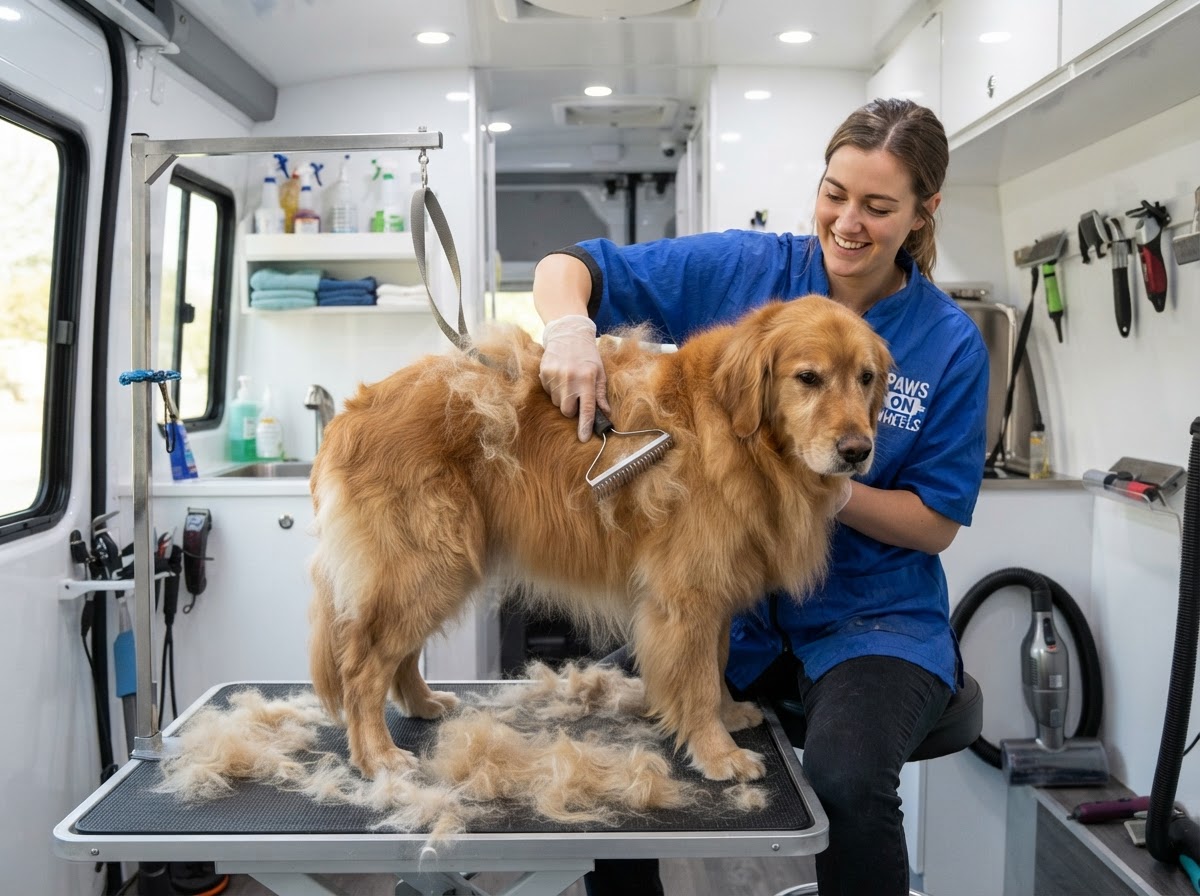
As our guide to de-shedding explains, the treatment removes loose, shed-ready hair from the coat. It involves bathing with products that loosen the shed coat, drying techniques that blow out loose hair, and thorough brushing with tools designed to capture remaining loose undercoat. The coat length isn't significantly changed — the treatment targets what's already loose and ready to shed.
De-shedding is most valuable for heavy shedders, especially double-coated breeds that release large amounts of undercoat. It reduces the amount of hair that sheds around your home for a period after the treatment, though it's temporary — the coat continues its natural shedding cycle.
What a haircut does
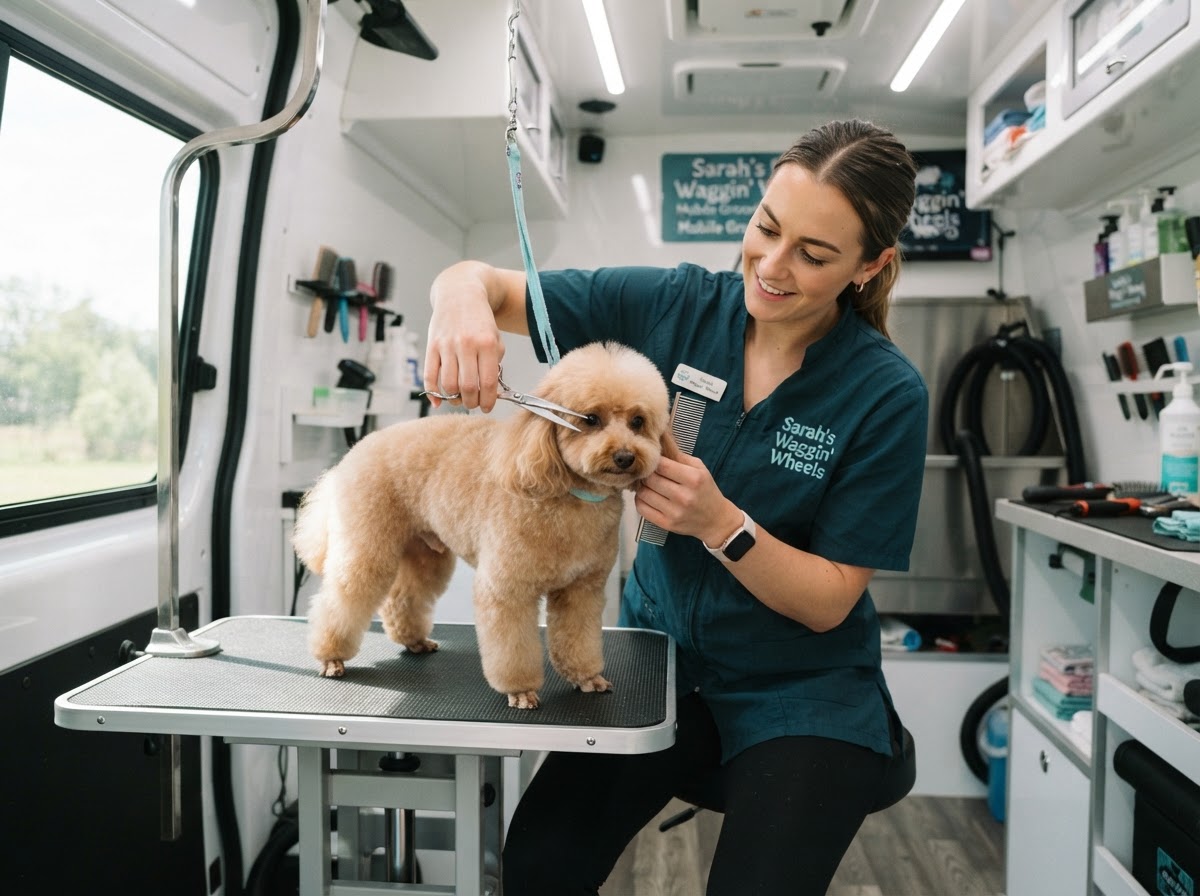
A haircut trims and shapes the coat to a specific length and style. It addresses overgrown, unruly, or matted coats by cutting the hair to a manageable length. A haircut changes the appearance and can make the coat easier to maintain, but it doesn't specifically target loose, shed-ready hair — though the grooming process may remove some loose hair incidentally.
A haircut is the right choice when you want to change the length or style, manage an overgrown coat, or address matting by starting fresh with a shorter cut. It's about the coat's length and shape, not about shedding management specifically.
Coat type and the right approach
Your dog's coat type is central to the decision. For double-coated breeds, de-shedding is often more appropriate than a short haircut. Shaving a double coat very short isn't always advisable — the topcoat protects the skin, regulates temperature, and can be affected by shaving. De-shedding manages the shedding while preserving the protective topcoat.
For single-coated breeds, the choice depends on your goals. If the coat is overgrown, a haircut trims it. If shedding is the concern, de-shedding manages it. For curly coats that mat, a haircut may be needed to address matting, with de-shedding less relevant since curly coats trap shed hair rather than dropping it. Ask the team what's appropriate for your dog's specific coat type.
Can your dog have both?
Yes. A dog can receive both a haircut and de-shedding in the same visit if both are appropriate. For example, a double-coated dog could have a light trim to tidy the coat and de-shedding to manage the loose undercoat. The team can plan the right combination based on your dog's coat type, condition, and your goals.
Discuss both concerns when you request a quote: 'I want the coat shorter, and I'm also dealing with a lot of shedding.' The team can advise on whether both treatments are suitable and plan the visit accordingly.
Medical hair loss is separate
If your dog is losing hair due to a medical condition — patchy hair loss, thinning coat, skin irritation with hair loss — that's a veterinary concern, not a grooming treatment. De-shedding manages normal shedding; it doesn't diagnose or treat medical hair loss. If you're concerned about unusual hair loss, consult your veterinarian.
Don't assume unusual hair loss is normal shedding. If the hair loss is patchy, accompanied by skin changes, or different from your dog's normal shedding pattern, it may indicate a health issue. Grooming can't address medical causes of hair loss — your veterinarian can.
Asking the right question
Start by identifying your goal. Is the coat too long? You need a haircut. Is the coat the right length but shedding heavily? You need de-shedding. Is the coat both overgrown and shedding? You may need both. Is the hair loss unusual or patchy? Consult your veterinarian.
Once you know your goal, discuss it with the team. They can assess your dog's coat type and condition and recommend the right treatment — or combination — for your dog. The right question leads to the right treatment.
Questions to ask about de-shedding vs. a haircut
- Is my dog's coat type better suited to de-shedding, a haircut, or both?
- Should a double coat be shaved, or is de-shedding more appropriate?
- Can both treatments be done in the same visit?
- What's causing my dog's shedding — is it normal or should I consult a vet?
- How often should I schedule de-shedding vs. haircuts for my dog?
Understanding the difference between de-shedding and a haircut helps you ask the right question and get the right treatment. Discuss your dog's needs with the team to plan the best approach.
Quick questions
Ready to groom your pet?
Book an appointment or request a personalized quote with Fluffy Crew.