Preparing for De-Shedding and Discussing Between-Visit Coat Care
A de-shedding appointment goes best when the team knows your dog's coat history, shedding patterns, and any past reactions. This guide covers what to share before the visit and how to discuss between-visit coat care — without numerical promises, guaranteed results, or a fixed return schedule.
Preparing for a de-shedding appointment is about communication. The more the team knows about your dog's coat, shedding patterns, and history, the better they can plan the treatment and advise on between-visit care. This guide covers what to share before the visit and how to discuss ongoing coat care — without making numerical promises about hair reduction, guaranteeing results, or prescribing a fixed return schedule.
Sharing your dog's coat history
Tell the team about your dog's coat. What breed or breed mix is your dog? Is the coat double-coated, single-coated, curly, wavy, or wire? How long is the coat currently? Has it been brushed recently, or is there matting or tangling? The coat history helps the team plan the right de-shedding approach for your dog's specific coat.
If your dog is a mixed breed, describe the coat you see rather than relying on the breed label. A doodle's coat can range from curly to straight, and the actual coat type matters more than the breed mix. Share the coat's current condition honestly — if it's matted, say so, as matting can affect the treatment approach.
Describing observed shedding
Describe the shedding you're seeing. How much loose hair do you find around the house? Is the shedding constant or seasonal? Have you noticed particular times of year when shedding is heavier? In South Florida's climate, some shedding patterns may be year-round rather than strictly seasonal. Your observations help the team understand what you're dealing with.
If you've noticed changes in the shedding — suddenly more than usual, or accompanied by skin changes — mention it. Changes in shedding can sometimes indicate a health issue, and the team can advise whether a veterinary check is appropriate. Normal shedding is one thing; a sudden change is worth discussing.
Past reactions and sensitivities
Share any past reactions to grooming. If your dog has had de-shedding before, how did they handle it? The process involves bathing, drying, and thorough brushing — which can be more intense than a standard groom because of the focus on removing loose coat. If your dog is sensitive to brushing, dryer noise, or prolonged handling, mention it so the team can plan accordingly.
If your dog has skin sensitivities or allergies, share those too. De-shedding involves products and thorough brushing that contact the skin; knowing about sensitivities helps the team choose appropriate products and adjust the approach. For any diagnosed skin conditions, bring veterinary instructions.
What the treatment involves
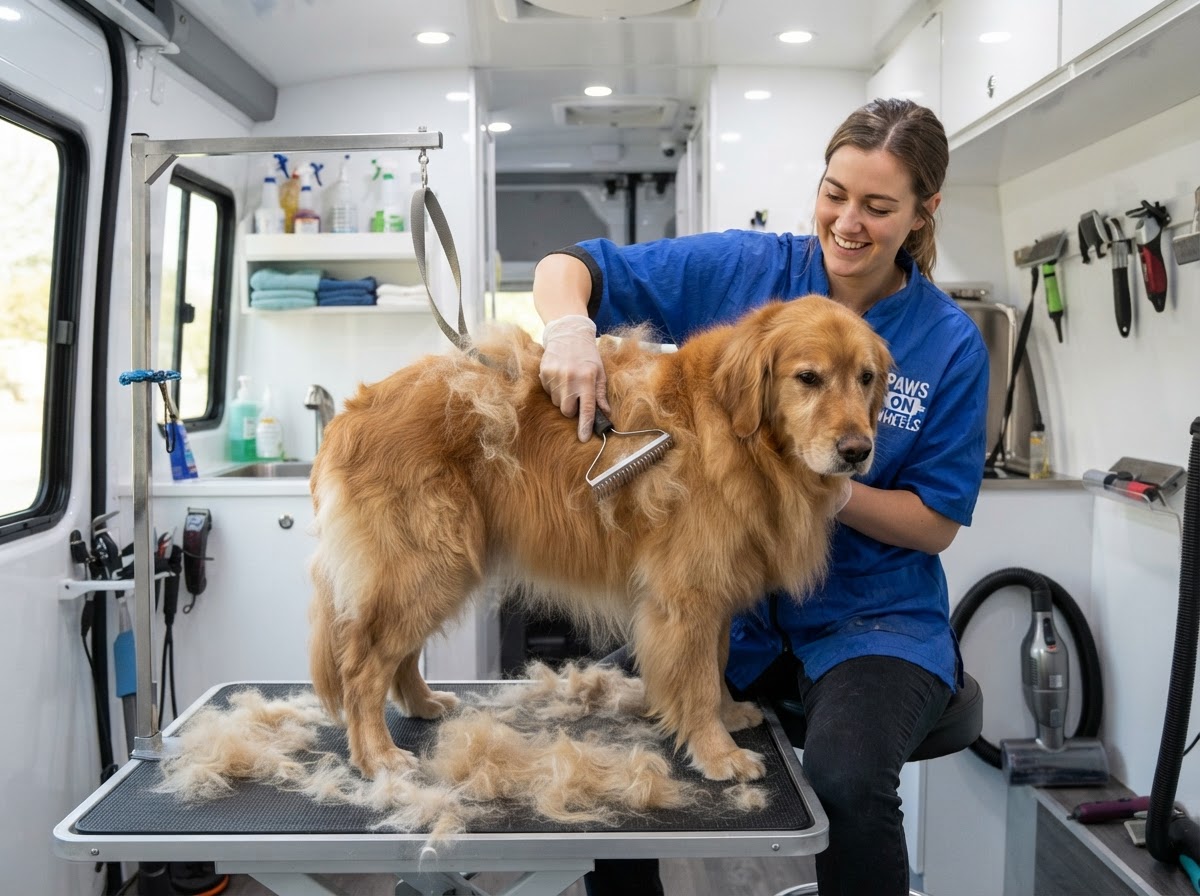
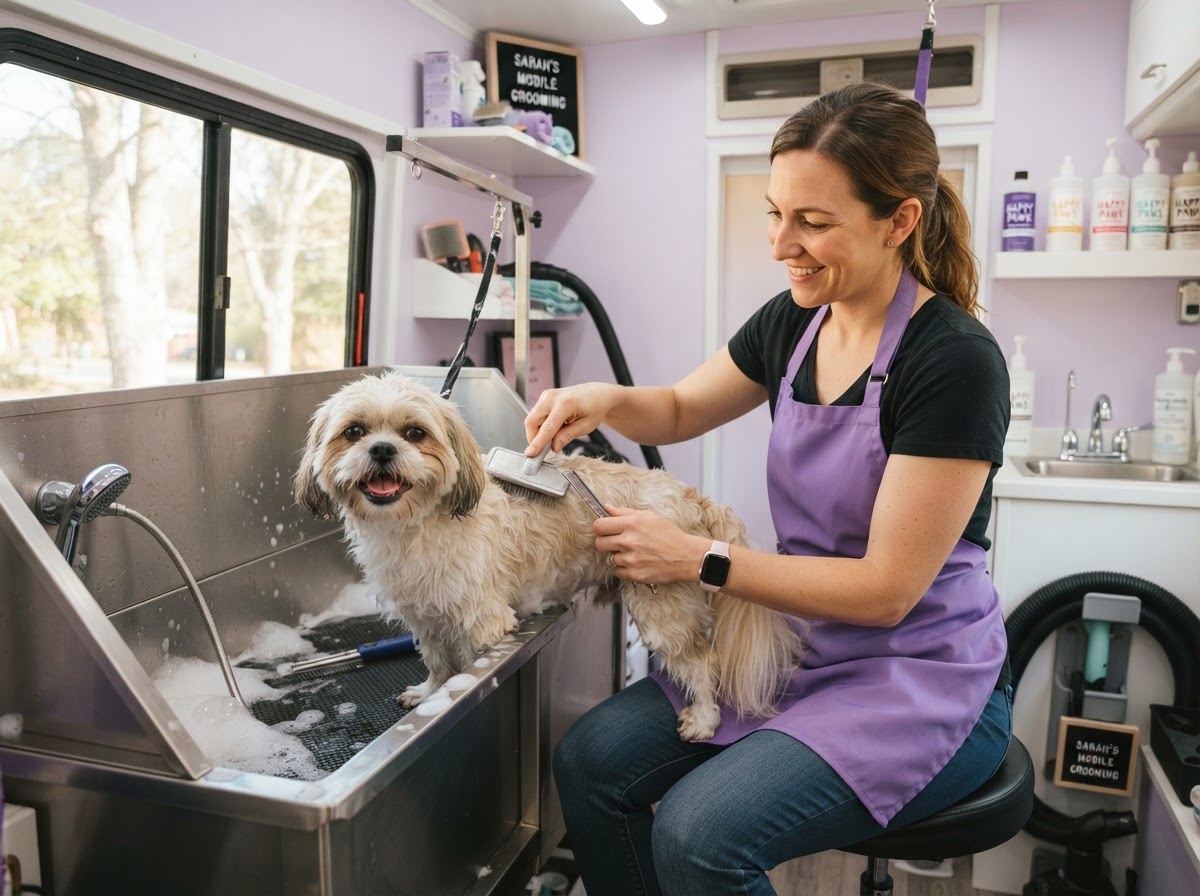
As our de-shedding guide explains, the treatment typically involves a bath with products that help loosen the shed coat, drying techniques that blow out loose hair, and thorough brushing with tools designed to capture remaining loose undercoat. The process is thorough and can take time, especially for dense double coats with significant loose hair.
Your dog receives one-on-one attention throughout the process. The team works at a pace suited to your dog's comfort. If your dog needs breaks or a slower approach, they adjust. Share how your dog typically handles grooming so the team can plan accordingly.
Realistic expectations — no numerical promises
De-shedding removes a significant amount of loose, shed-ready hair, but the exact amount varies based on your dog's coat type, density, shedding cycle, and how much loose hair is present. The team can't promise to remove a specific percentage of hair or guarantee a specific reduction in shedding. What they can do is thoroughly remove the loose coat that's present and ready to shed.
The effect is also temporary. The coat continues its natural shedding cycle, and new hair will become loose and shed in the following weeks. De-shedding reduces the shedding for a period; it doesn't stop it. Discuss realistic expectations with the team based on your dog's specific coat and shedding pattern.
Between-visit coat care
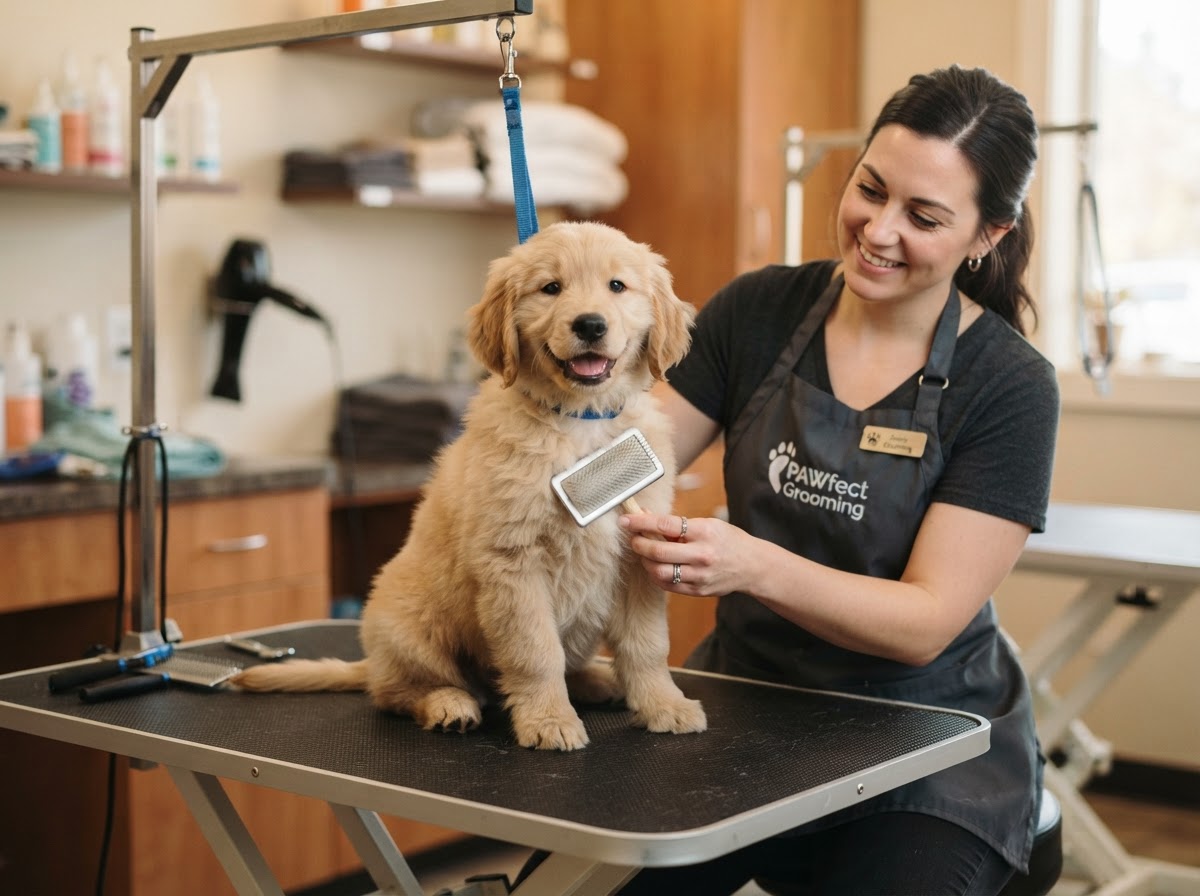
Ask the team for between-visit coat care guidance. Regular brushing at home helps manage loose hair between de-shedding treatments. The team can recommend appropriate brushes and tools for your dog's coat type and suggest a brushing routine. For double-coated breeds, a specific type of brush may be more effective for capturing loose undercoat.
Don't assume one tool works for every coat. Different coats need different brushes — a slicker brush for curly coats, an undercoat rake for double coats, a rubber curry for shorter coats. Ask the team what's appropriate for your dog and how often to brush between visits.
Scheduling — no fixed return interval
How often to schedule de-shedding depends on your dog's breed, coat type, shedding level, and the natural shedding cycle. There's no fixed interval that applies to every dog. For heavy seasonal shedders, de-shedding during peak shedding periods may be most useful. For year-round shedders, regular treatments can help manage ongoing shedding.
Discuss a schedule with the team based on your dog's specific needs. They can recommend how often to schedule de-shedding based on your observations and the coat type — but it's a recommendation tailored to your dog, not a universal rule. Adjust the schedule based on how the coat responds over time.
Questions to ask
- What de-shedding approach is right for my dog's coat type?
- What brushes or tools should I use at home between visits?
- How often should I brush my dog between de-shedding treatments?
- How often should I schedule de-shedding for my dog?
- Are there any coat care products that help manage shedding between visits?
- What should I do if I notice changes in my dog's shedding pattern?
A well-prepared de-shedding appointment, combined with appropriate between-visit care, helps manage your dog's shedding effectively. Share your dog's details, ask for home-care guidance, and plan a schedule based on your dog's individual needs.
Quick questions
Ready to groom your pet?
Book an appointment or request a personalized quote with Fluffy Crew.