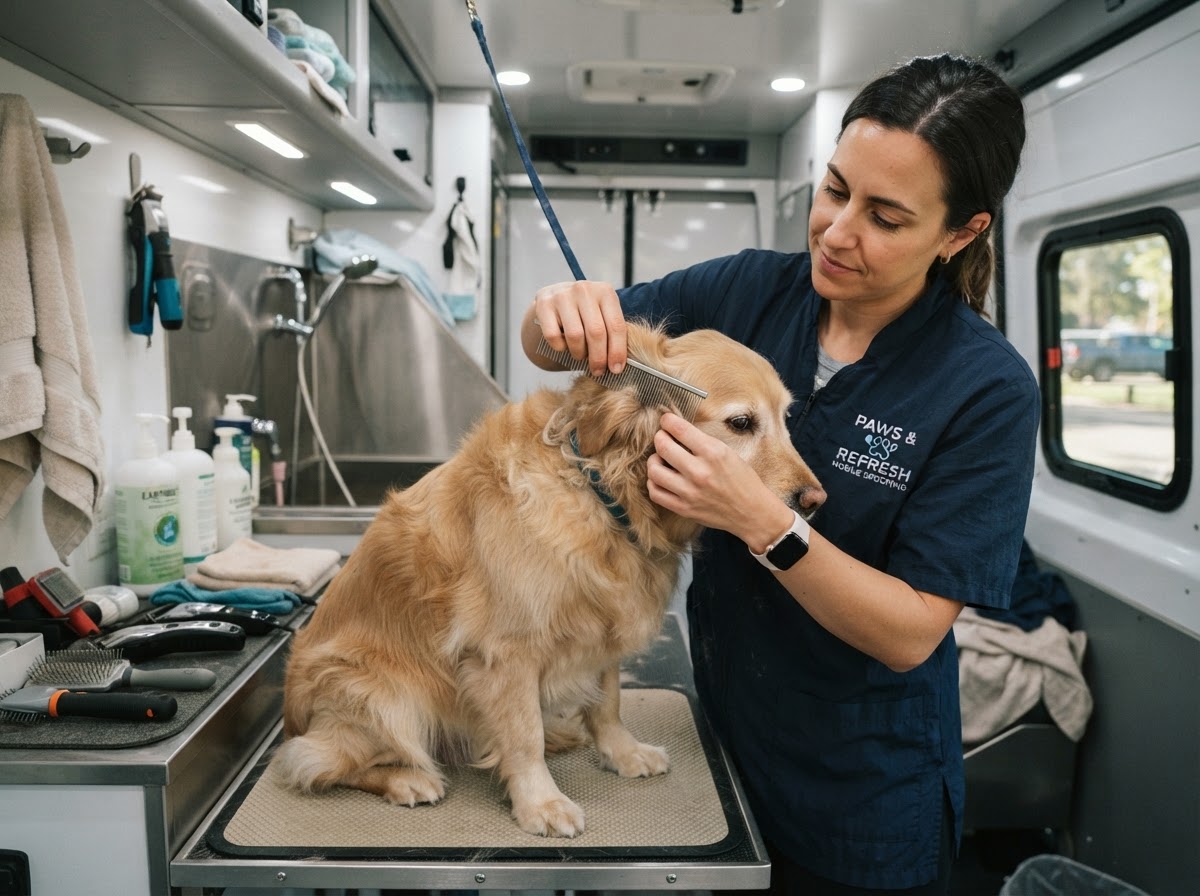
What to Tell Your Groomer About Tangles Before the Visit
Sharing your pet's tangle history before the appointment helps the team plan the right approach for their comfort. This guide covers what to share — observed areas, time since the last grooming, any discomfort, and prior attempts to address mats — without blaming the owner.
If you've noticed tangles or mats in your pet's coat, sharing that information before the grooming appointment helps the team plan the right approach. This guide covers what to tell the team — the observed areas, how long it's been since the last grooming, any discomfort you've noticed, and prior attempts to address the mats — so the team can deliver the kindest, most effective care. There's no blame in sharing this information; it's how the team prepares.
Observed areas
Tell the team where you've noticed tangles or mats. Common areas include behind the ears, under the legs, around the collar, on the haunches, and anywhere friction causes hair to tangle. Identifying the specific areas helps the team know where to look and assess the matting quickly.
If you've noticed mats all over the body rather than in specific areas, mention that too. Widespread matting may require a different approach than mats in a few friction spots. Describe what you're seeing as accurately as you can — it helps the team plan.
Time since the last grooming
Share how long it's been since the last grooming or thorough brushing. If it's been a few weeks, some tangles may be expected. If it's been months, the matting may be more extensive. The time since the last grooming helps the team understand how the matting developed and what to expect.
There's no judgment in sharing this. Life happens, schedules get busy, and coats mat despite best intentions. The information helps the team plan — it doesn't reflect on your care. Be honest about the timeline so the team can set realistic expectations and plan the right approach.
Discomfort you've noticed
Have you noticed any signs of discomfort related to the mats? Does your pet flinch when you touch certain areas? Do they try to move away when you brush near the mats? Have you noticed any skin irritation, redness, or odor? These signs help the team understand whether the mats are causing discomfort and whether a gentle or clipping approach is needed.
If the mats seem to be causing discomfort, mention it when booking. The team may recommend a shorter, more comfortable approach rather than attempting to brush through painful mats. Your observations about your pet's comfort are valuable — you know your pet best.
Prior attempts to address mats
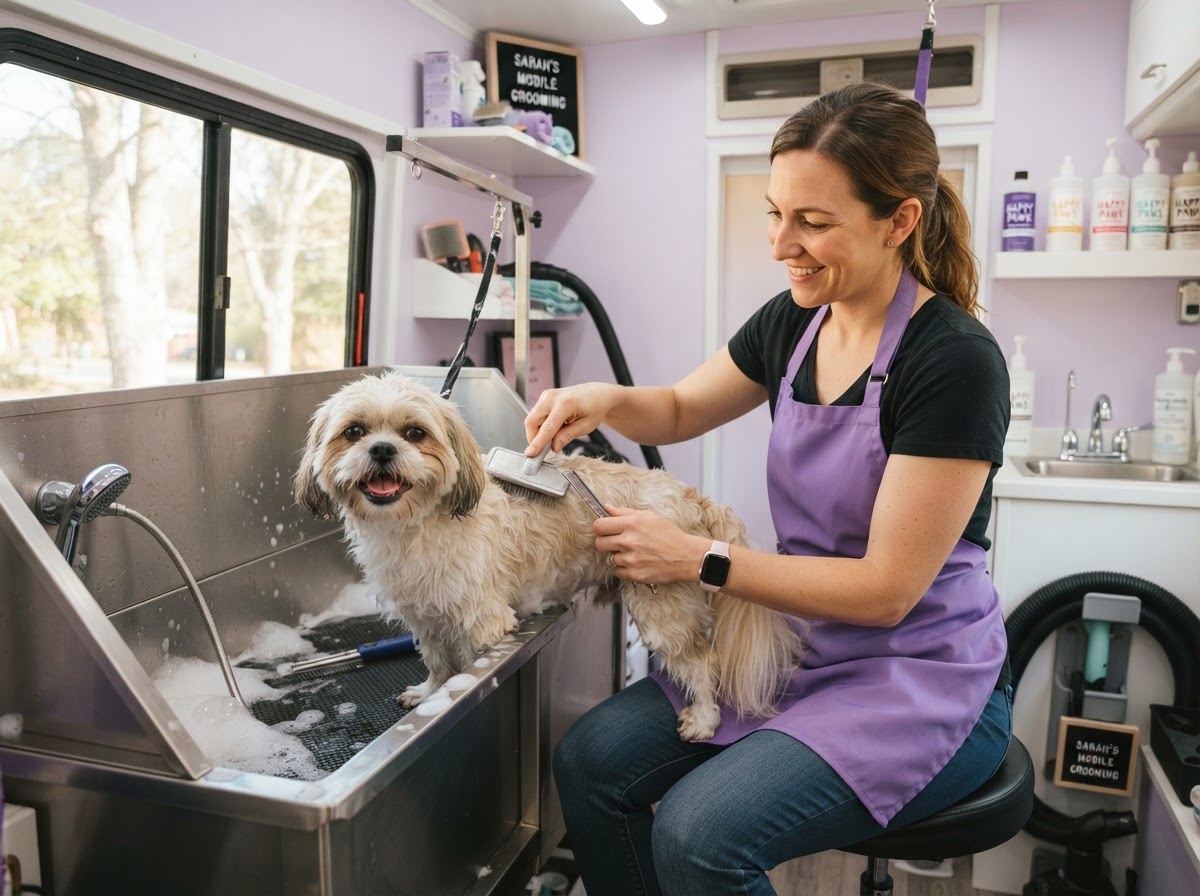
Have you tried to brush the mats out at home? How did it go? If your pet tolerated the brushing, that's useful information. If they were uncomfortable or stressed, the team may plan a different approach. If you weren't able to make progress — which is common with tight mats — that's also helpful to share.
If you've used any detangling products or sprays at home, mention them. If your pet has had de-matting during a previous grooming visit, share how that went. All of this helps the team understand your pet's history with matting and their tolerance for the process.
Your pet's temperament
Share your pet's temperament, especially as it relates to brushing and handling. Is your pet calm and patient, or nervous and sensitive? Do they have specific areas they don't like touched? Are they a senior with mobility considerations? The team plans a gentle, patient approach based on your pet's temperament.
For nervous or senior pets, the team takes extra care to keep the experience calm and comfortable. If your pet has had a difficult grooming experience before — at a salon or elsewhere — share it so the team can plan a different approach. The mobile setting offers one-on-one care in a familiar environment, which can help.
Coat type and grooming history
Share your pet's coat type and grooming history. What breed or breed mix is your pet? Is the coat curly, long, double-coated? Curly and long coats are most prone to matting. Has your pet's coat matted before, or is this the first time? A history of matting may suggest a need for a shorter, more manageable haircut going forward.
If your pet has a specific haircut you usually get, mention it. The team can advise whether that style is practical given the matting, or whether a shorter cut would be more manageable. If you're open to a shorter cut to reduce future matting, say so — it gives the team options to work with.

No blame, just information
Sharing this information isn't about assigning blame. Mats happen to attentive owners — some coats mat quickly despite regular brushing, and life can interfere with grooming schedules. The information helps the team plan the kindest approach for your pet's comfort, not judge your care.
The team's goal is to address the matting comfortably and help you maintain the coat going forward. Honest information about the matting, the timeline, and your pet's comfort helps them deliver the best care and advise on preventing future mats.
Questions to ask about tangles
- Can the mats in these areas be brushed out, or should they be clipped?
- What's the most comfortable approach for my pet given their temperament?
- How can I prevent mats from forming between visits?
- What brush and routine would you recommend for my pet's coat?
- Would a shorter haircut reduce matting going forward?
- How often should I schedule grooming to prevent matting?
Sharing your pet's tangle history — where the mats are, how long since the last grooming, any discomfort, and prior attempts — helps the team plan the right approach. There's no blame in sharing; it's how the team prepares to care for your pet comfortably and effectively.
Quick questions
Ready to groom your pet?
Book an appointment or request a personalized quote with Fluffy Crew.