What Brushing Contributes to a Professional Grooming Visit
Brushing is one of the most fundamental parts of grooming, but it does more than just tidy the coat. This guide explains what brushing contributes to a professional grooming visit — coat observation, loose hair removal, comfort — and why brush selection and handling should be matched to the individual coat.
Brushing is one of the most important steps in a grooming visit, and it does more than many owners realize. Beyond making the coat look tidy, brushing removes loose hair, distributes natural oils, helps prevent mats and tangles, and lets the groomer observe the coat and skin for any concerns. This guide explains what professional brushing contributes — and why the right brush, matched to your pet's individual coat, matters.
Coat observation
One of the first things a groomer does during brushing is observe the coat. As they work through the fur, they can assess its condition — is it clean, matted, thinning, or in good shape? Are there any lumps, bumps, skin issues, or areas of sensitivity? This observation helps the groomer understand what the coat needs and flag anything that may need attention.
If the groomer notices anything concerning — a skin issue, a lump, or an area of hair loss — they may mention it to you. However, groomers don't diagnose conditions; for any concerns, they recommend consulting your veterinarian. The observation is useful information, not a medical assessment.
Loose hair removal
Brushing removes loose hair from the coat — hair that's already shed but still tangled in the fur. This is different from de-shedding, which is a more intensive process focused on removing loose undercoat. Regular brushing helps manage loose hair between more intensive de-shedding sessions.
Removing loose hair through brushing helps reduce the amount of fur your pet sheds around the home and can help reduce hairballs in cats. It also helps prevent tangles and mats from forming, since loose hair is a primary contributor to matting. For long-haired and curly-coated pets, regular brushing is essential to keeping the coat manageable.
Distributing natural oils
Brushing helps distribute the natural oils produced by your pet's skin across the coat. These oils keep the coat moisturized, healthy, and slightly water-repellent. Regular brushing helps ensure the oils are evenly distributed, which can contribute to a healthier-looking, shinier coat.
This is one reason over-bathing without brushing can lead to a dull coat — bathing can strip the oils, and without brushing to redistribute them, the coat may lose its natural sheen. A combined routine of appropriate bathing and regular brushing helps maintain the coat's natural condition.
Preventing mats and tangles
Mats form when loose hair tangles and tightens, often in areas of friction — behind the ears, under the legs, along the belly, and around the collar area. Regular brushing helps prevent mats by removing the loose hair that contributes to tangling before it has a chance to mat.
Once a mat forms and tightens close to the skin, brushing it out may be uncomfortable or impossible without clipping. This is why regular brushing between grooming visits is so important for long-haired and curly-coated pets — it prevents the mats that require more intensive (and sometimes uncomfortable) removal.
Comfort and bonding
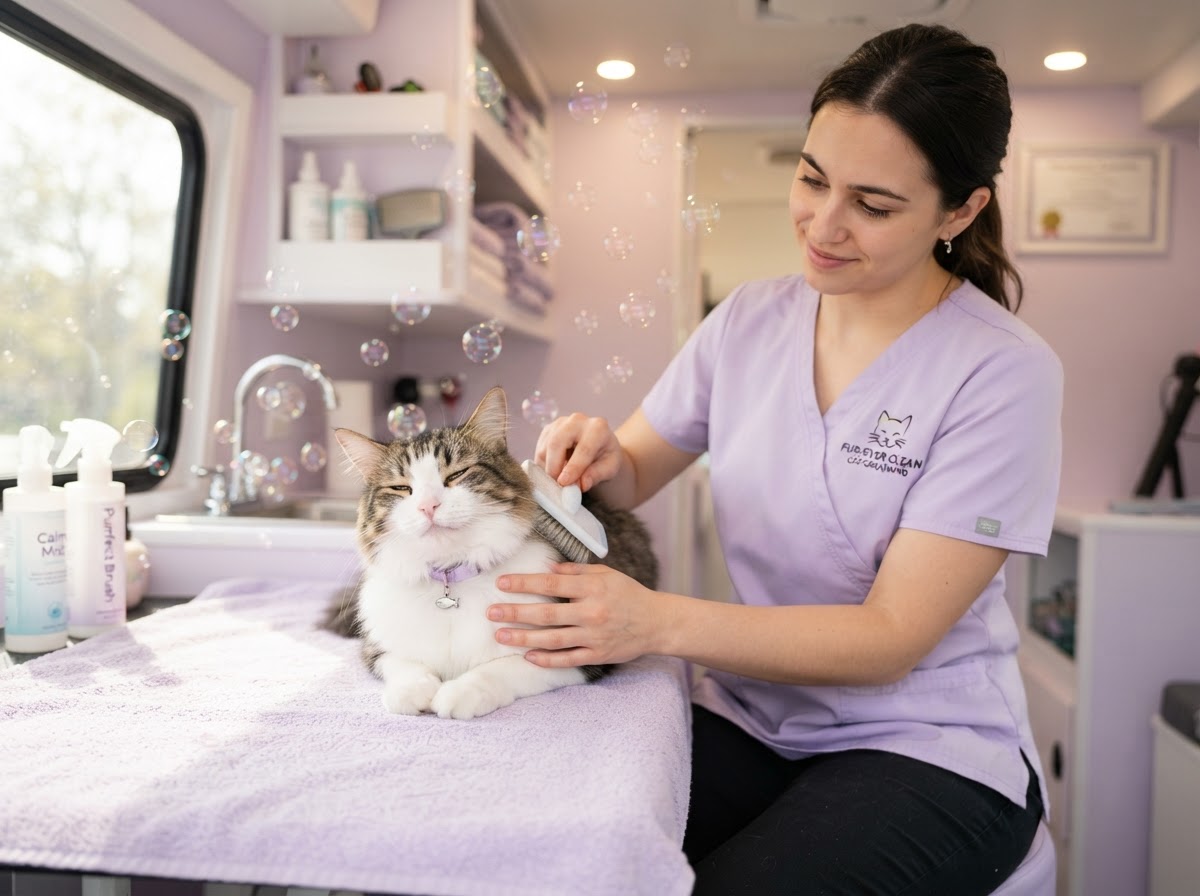
For many pets, brushing is a comfortable, pleasant experience — especially when done gently and at the right pace. It can be a bonding time between pet and groomer (or between pet and owner, when done at home). For nervous pets, gentle brushing can help them relax and build trust with the groomer.
However, not every pet enjoys brushing — some are sensitive about being touched in certain areas, and mats can make brushing uncomfortable. The groomer works at your pet's pace and adjusts the approach based on their comfort. If your pet is sensitive about brushing, mention it so the team can plan a gentle approach.
Why brush selection matters
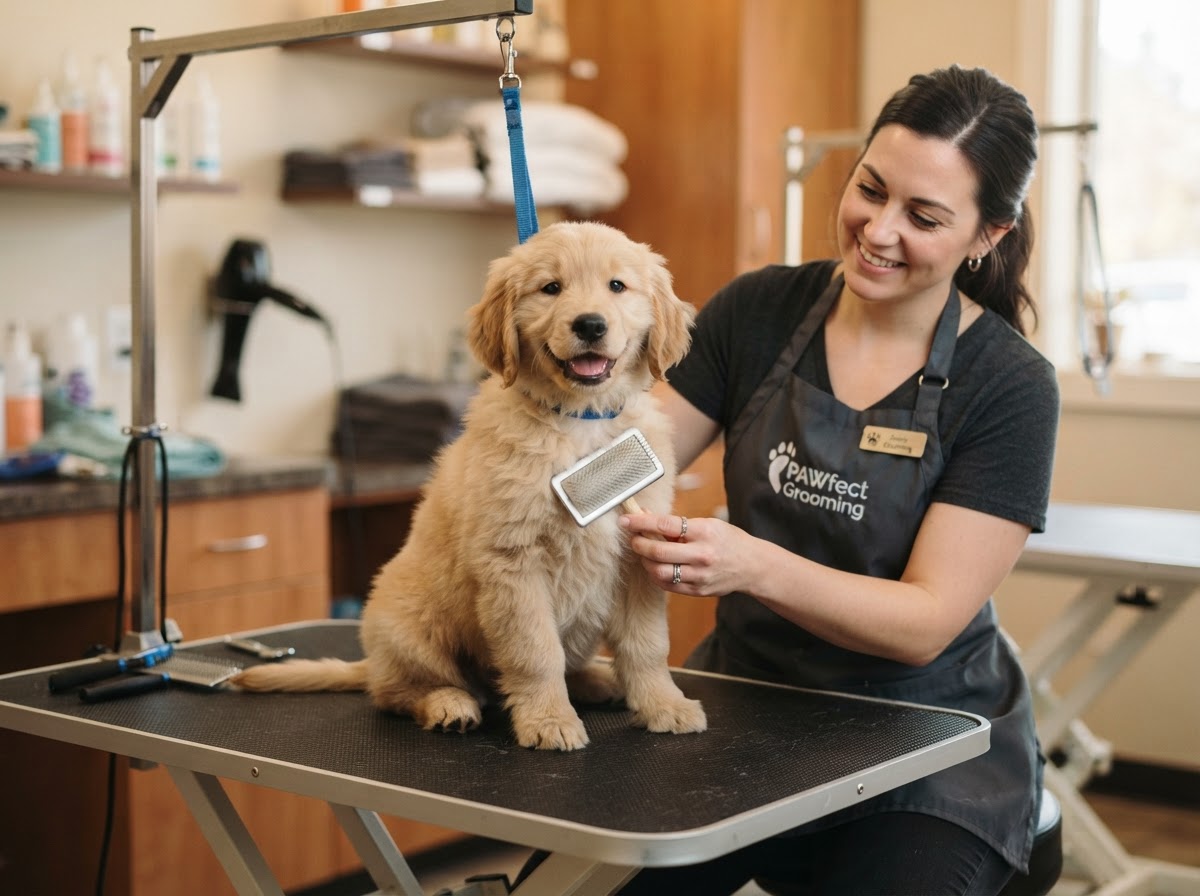
Not all brushes are the same, and using the wrong brush for your pet's coat type can be ineffective or even uncomfortable. Different coats benefit from different tools:
- Slicker brushes work well for removing tangles and loose hair from medium to long coats.
- Bristle brushes are gentler and suit short, smooth coats.
- Pin brushes help with long, flowing coats.
- Curry combs and rubber tools help remove loose hair from short coats and massage the skin.
- Undercoat rakes are designed for double-coated breeds with dense undercoats.
- Deshedding tools are specifically designed for removing loose undercoat.
The groomer selects the right brush for your pet's coat type. If you brush at home between visits, ask the team what tool is appropriate — using the wrong brush can be ineffective or pull on the coat uncomfortably. The right tool makes brushing more effective and more comfortable for your pet.
Matching handling to the coat
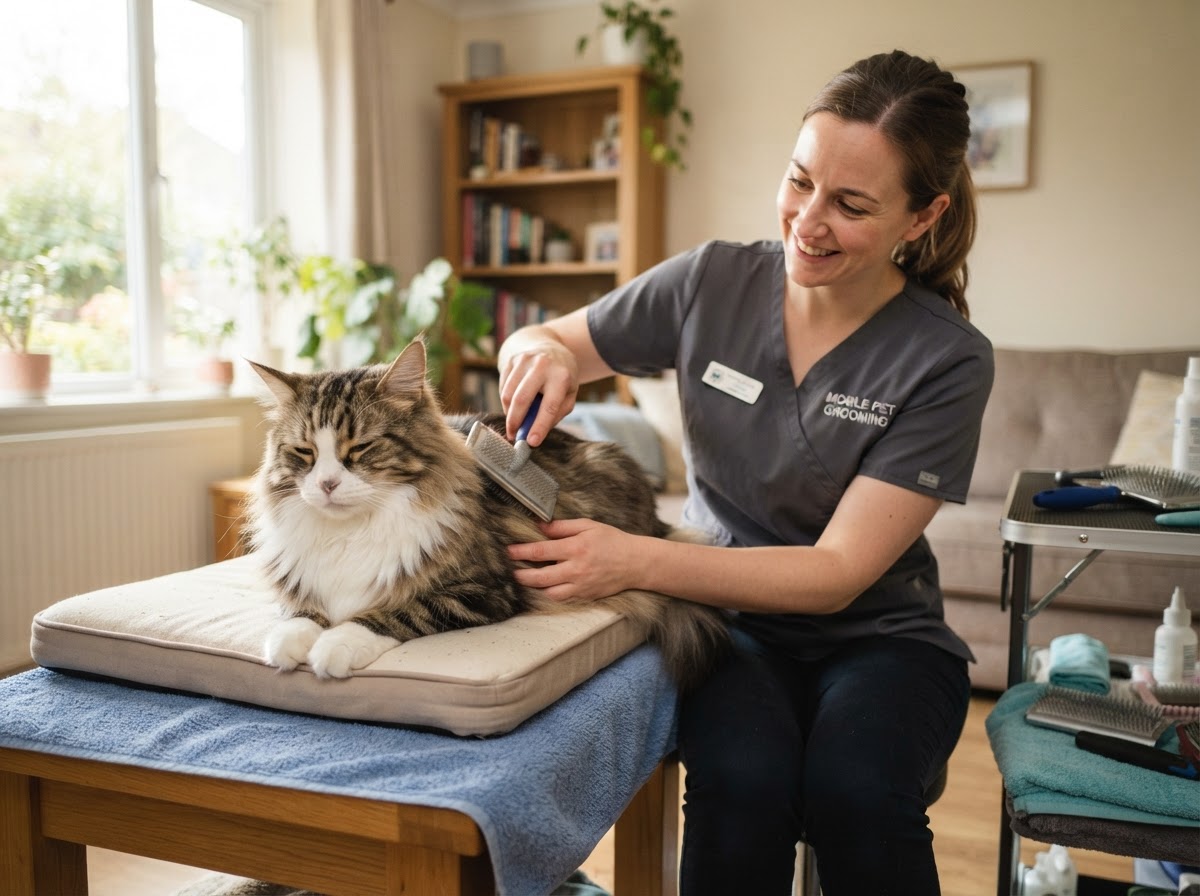
How the brush is used matters as much as which brush is used. A gentle approach that works through the coat section by section is more effective and comfortable than aggressive brushing that pulls on tangles. For pets with sensitive areas, the groomer adjusts their pressure and technique.
If your pet's coat has mats, the groomer assesses whether they can be gently brushed out or whether they need more intensive de-matting or clipping. Forceful brushing through mats is uncomfortable and can damage the coat — the groomer recommends the kindest approach rather than pulling through tangles.
Brushing as part of the grooming visit
Within Fluffy Crew's service structure, brushing is a confirmed component of Full Grooming. It happens during the visit as part of the coat care process, often after the bath and before or alongside the haircut. The groomer brushes thoroughly to remove loose hair, prevent tangles, and prepare the coat for the next steps.
Whether brushing is available as a standalone service — a brush-only appointment — is something to confirm with the team. For most pets, brushing is part of a broader grooming visit rather than a separate appointment.
Between-visit brushing
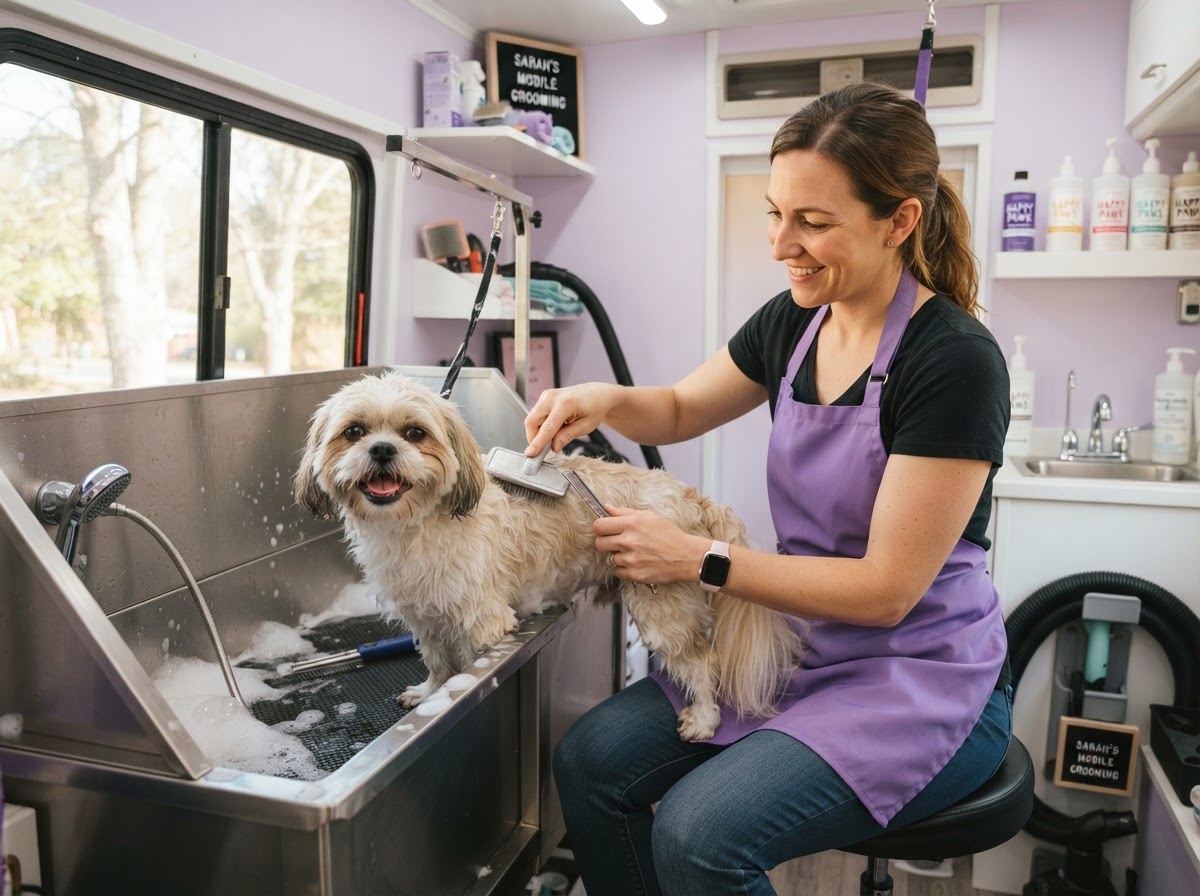
The team can recommend a between-visit brushing routine for your pet's coat type. Regular brushing at home helps maintain the coat between professional grooms, prevents matting, and extends the benefits of each grooming visit. Ask what tool to use and how often to brush when you book.
For long-haired and curly-coated pets, daily or every-other-day brushing may be appropriate. For short-haired pets, less frequent brushing is usually sufficient. The team can tailor a routine to your pet's specific coat type and your lifestyle.
Quick questions
Ready to groom your pet?
Book an appointment or request a personalized quote with Fluffy Crew.