Brushing, De-Shedding, and De-Matting: What Is the Difference?
Brushing, de-shedding, and de-matting are all coat care terms, but they describe different problems and processes. This guide explains the difference so you can understand what each one does, recognize their limits, and report what you're seeing accurately to the grooming team.
Brushing, de-shedding, and de-matting are often mentioned together, but they describe different coat care processes that address different problems. Understanding the difference helps you know what your pet's coat needs, what to ask for, and what to report to the grooming team. This guide explains each process clearly and keeps the distinction separate from the dedicated de-shedding and de-matting decision guides.
Brushing: routine coat maintenance
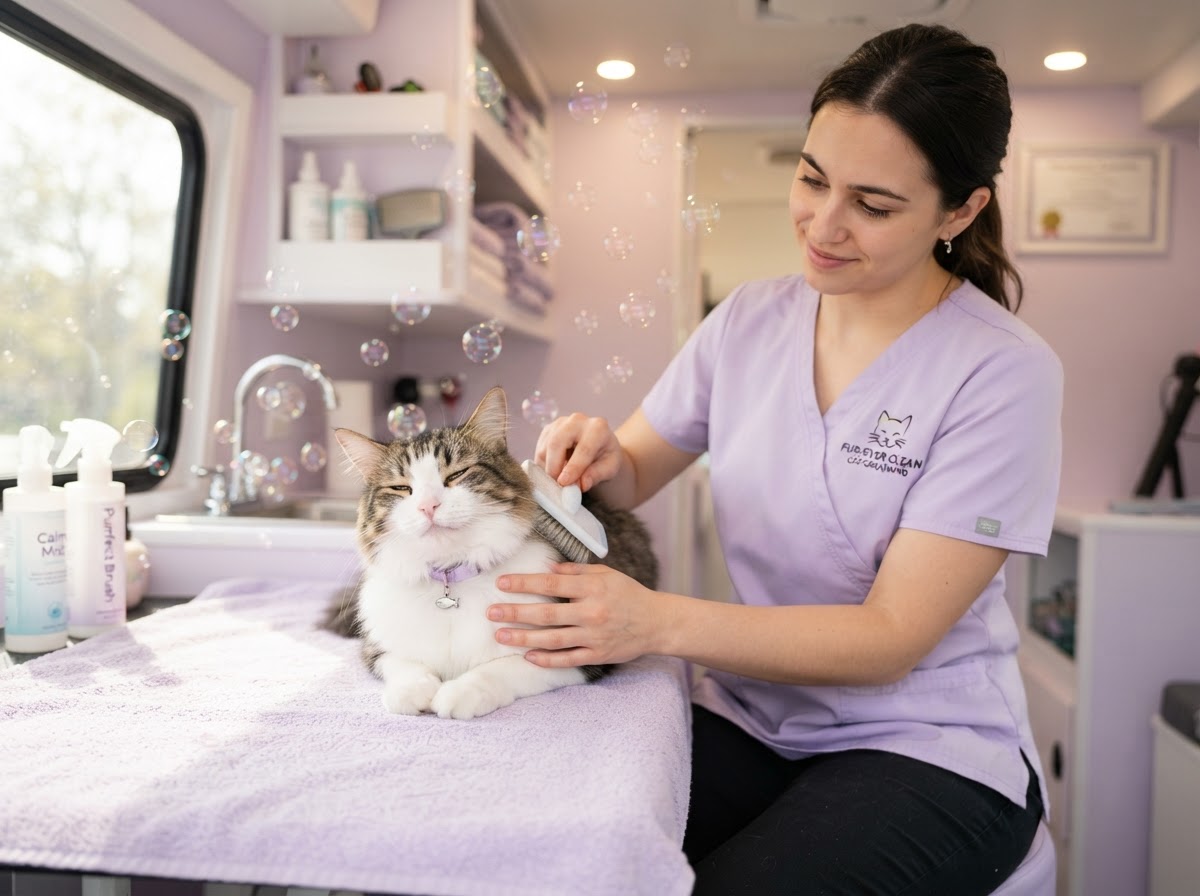
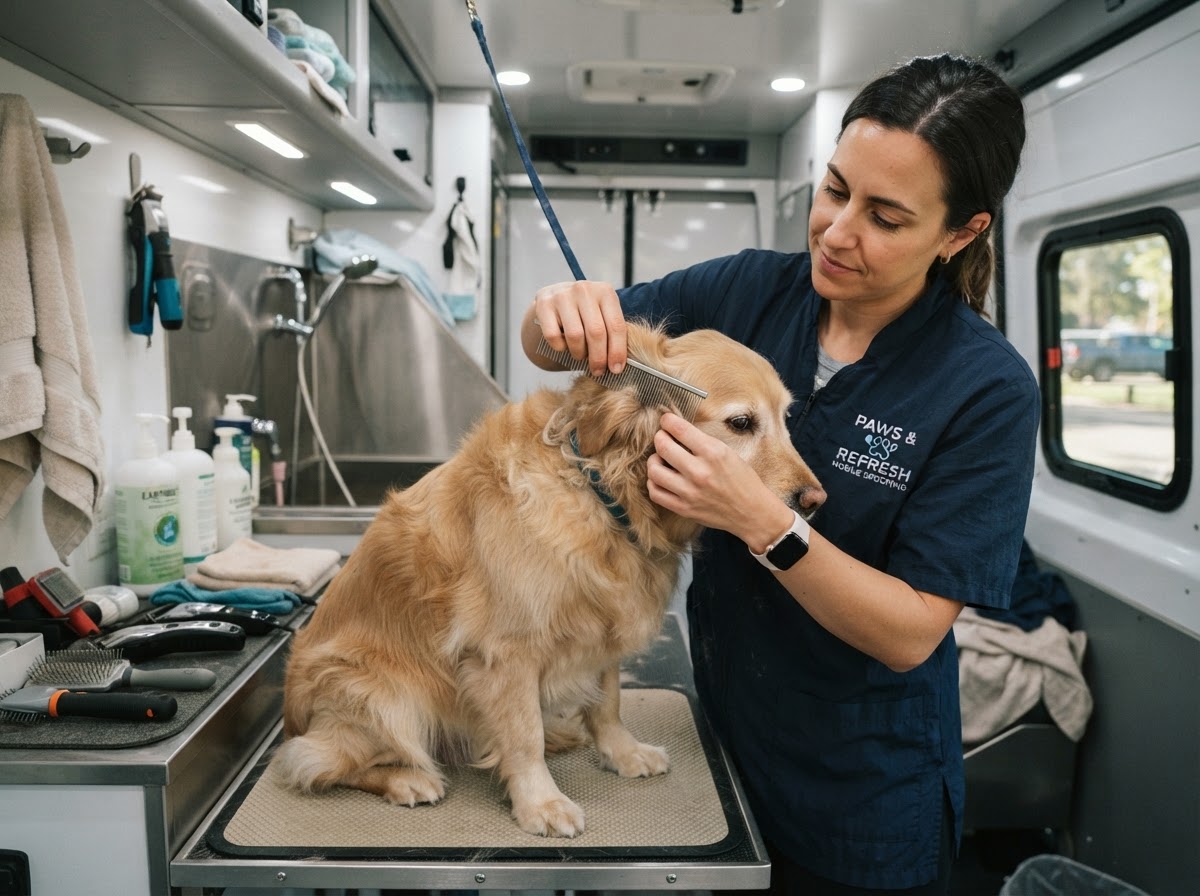
Brushing is routine coat maintenance. It removes loose hair from the top coat, distributes natural oils, helps prevent tangles, and lets the groomer observe the coat and skin. Brushing is what most pets need regularly — it keeps the coat manageable between more intensive grooming steps.
Think of brushing as upkeep. It's done at a comfortable pace, with a brush matched to your pet's coat type. Brushing doesn't specifically target loose undercoat (that's de-shedding) or existing tangles and mats (that's de-matting) — it's general coat care that helps prevent both from becoming problems.
De-shedding: managing loose undercoat
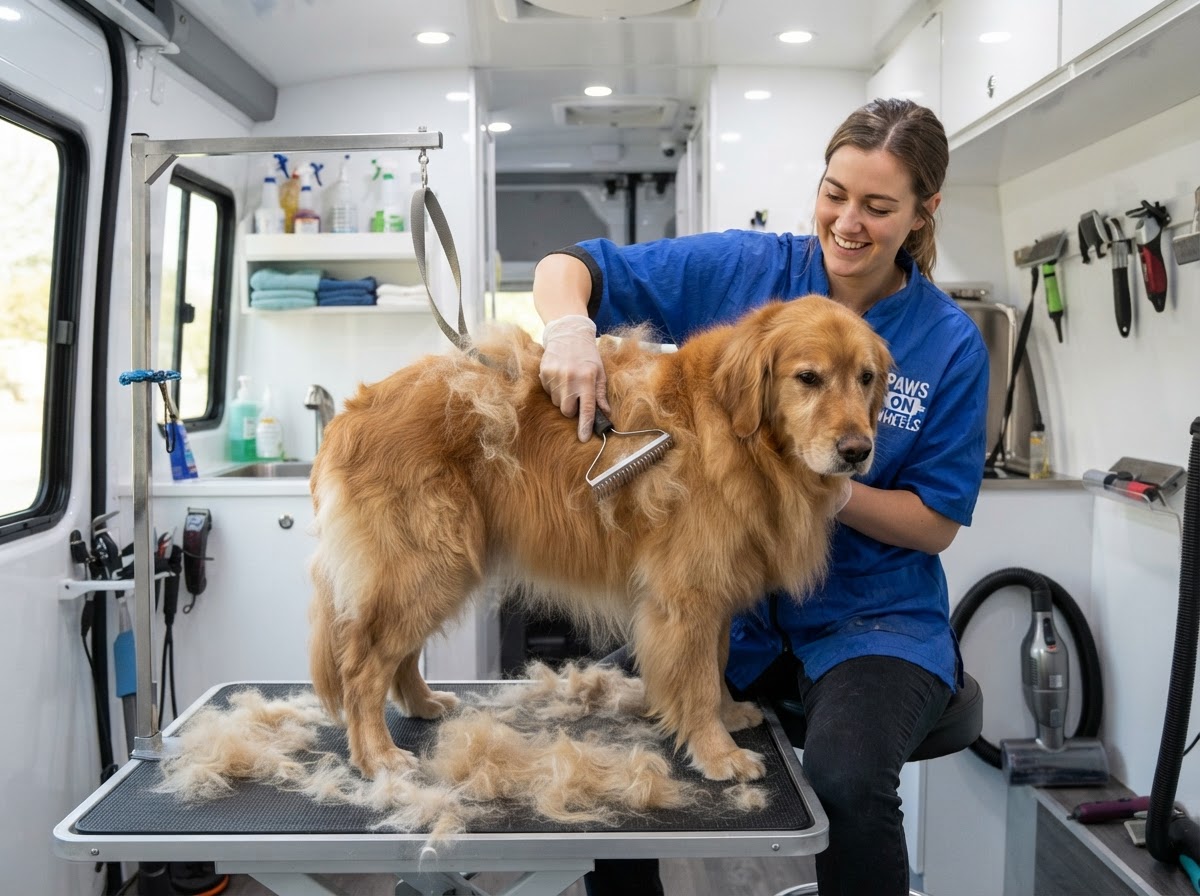
De-shedding is a more intensive process focused on removing loose undercoat — the dense, soft fur beneath the top coat that's the primary source of shedding. Double-coated breeds like retrievers, shepherds, and huskies have significant undercoats that shed seasonally and continuously.
De-shedding uses specific tools and techniques to reach the undercoat and remove loose hair before it sheds around your home. It's different from brushing in its focus (undercoat specifically) and its intensity (more thorough removal of loose coat). De-shedding doesn't stop shedding — it manages it by removing loose coat that would otherwise end up on your furniture.
De-shedding is most beneficial for double-coated and heavy-shedding breeds. For single-coated breeds or pets without significant undercoat, de-shedding isn't as relevant. Share your pet's coat type so the team can confirm whether de-shedding is appropriate.
De-matting: addressing tangles and mats
De-matting addresses tangles and mats that have already formed. A tangle is a loose knot; a mat is a tighter, denser knot that's pulled close to the skin. Mats can be uncomfortable and, if left, can pull on the skin and cause irritation.
De-matting involves working through tangles and mats — sometimes gently brushing them out, sometimes separating them with specialized tools, and sometimes clipping them out if they're too tight or extensive to brush through safely. The approach depends on the severity of the matting, the location, and your pet's comfort.
Not every mat can be brushed out. Tight mats close to the skin may require clipping for your pet's comfort — forcing a brush through a tight mat is painful and can damage the coat. The team assesses the matting and recommends the kindest approach.
The key differences at a glance
| Process | What it addresses | Focus |
|---|---|---|
| Brushing | General coat maintenance | Top coat, loose hair, tangles prevention |
| De-shedding | Loose undercoat | Undercoat removal to manage shedding |
| De-matting | Existing tangles and mats | Working out or clipping mats |
These processes are related but distinct. Brushing helps prevent the conditions that lead to matting and manages some loose hair. De-shedding is more intensive loose-coat removal. De-matting addresses problems that have already formed. They may all happen in the same grooming visit, but they're different processes with different goals.
What an owner can report
When you share information with the team, describe what you're seeing in terms of these three processes. This helps the team understand what your pet needs:
- "My pet's coat is generally clean but has loose hair everywhere" — suggests de-shedding may help.
- "My pet has tangles behind the ears and under the legs" — suggests de-matting is needed.
- "My pet's coat is in good shape but just needs general upkeep" — suggests brushing is sufficient.
- "My pet has both loose hair and some tangles" — suggests a combination approach.
Share the location and severity of any tangles or mats. Describe your pet's coat type — short, long, curly, double-coated. Mention whether your pet is comfortable with brushing or has sensitive areas. This information helps the team plan the right combination of processes for your pet.
When each process is appropriate
Brushing is appropriate for nearly every pet as routine maintenance. De-shedding is most appropriate for double-coated and heavy-shedding breeds. De-matting is appropriate whenever tangles or mats are present — and the sooner they're addressed, the easier and more comfortable they are to manage.
If you're not sure which your pet needs, describe the coat condition to the team when requesting a quote. They assess the coat and recommend the right combination of processes. Don't assume you need all three — your pet's coat condition determines what's appropriate.
Limits to keep in mind
Each process has limits. Brushing doesn't stop shedding or remove all loose undercoat. De-shedding doesn't stop shedding permanently — it manages it for a period. De-matting can't always remove every mat without clipping — some mats are too tight or extensive to brush out comfortably.
Also, none of these processes is a medical treatment. If your pet's coat is thinning, if there are bald patches, or if the skin is irritated, consult your veterinarian — these can indicate underlying health issues that grooming alone doesn't address. The grooming team focuses on coat care; your veterinarian addresses medical concerns.
Talking to the team
When you request a quote, describe your pet's coat type, current condition, and what you've noticed — loose hair, tangles, mats, or general upkeep needs. The team confirms which processes are appropriate and whether they're available as standalone services or as part of a grooming package. They can also recommend a between-visit routine to keep the coat manageable.
Understanding the difference between brushing, de-shedding, and de-matting helps you describe what your pet needs — and helps the team deliver the right care. For detailed decision guides on de-shedding and de-matting specifically, see the dedicated guides in the blog.
Quick questions
Ready to groom your pet?
Book an appointment or request a personalized quote with Fluffy Crew.