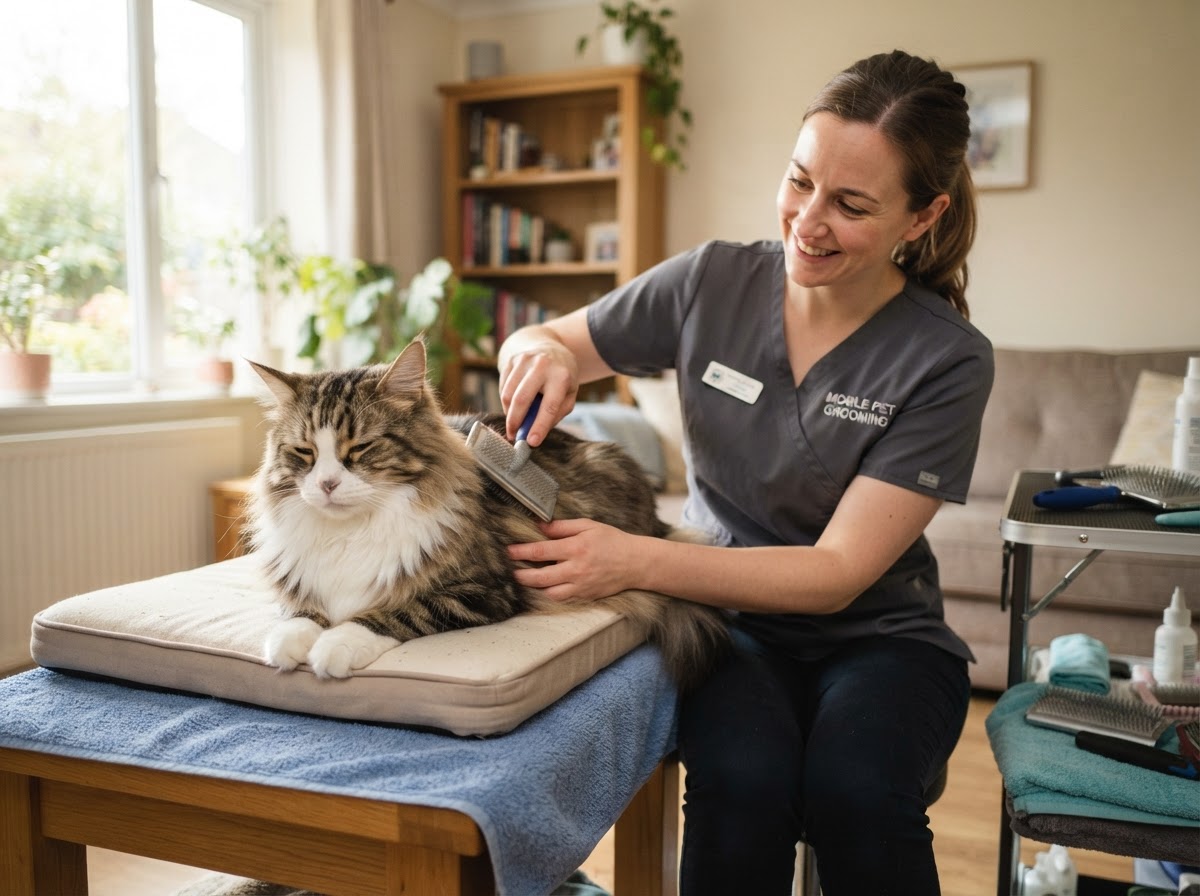
Building a Realistic Between-Visit Brushing Routine
What you do between professional grooms matters as much as the grooms themselves. This guide helps you build a realistic between-visit brushing routine — asking for suitable tools, reading your pet's comfort cues, and keeping it manageable — without forceful brushing or a one-size-fits-all tool recommendation.
A professional grooming visit sets the coat up, but what happens between visits keeps it there. Regular brushing at home helps prevent mats, manages loose hair, and extends the benefits of each grooming visit. But a brushing routine only works if it's realistic — suited to your pet's coat type, comfortable for your pet, and manageable for you. This guide helps you build one that works.
Start with the right tool
The first step is using the right brush for your pet's coat type. Using the wrong tool can be ineffective (it won't reach the right layer of the coat) or uncomfortable (it pulls on the fur or irritates the skin). There's no universal brush that works for every pet — the right tool depends on your pet's coat.
- Short, smooth coats — a bristle brush or rubber curry tool
- Medium to long coats — a slicker brush for tangles and loose hair
- Long, flowing coats — a pin brush for gentle detangling
- Double-coated breeds — an undercoat rake for loose undercoat
- Curly coats — a slicker brush, used gently to avoid pulling
Ask the team what brush is right for your pet when you book a grooming visit. They can recommend a specific tool based on your pet's breed, coat type, and condition. Don't guess — using the wrong brush is one of the most common reasons an at-home brushing routine doesn't work.
Reading your pet's comfort cues
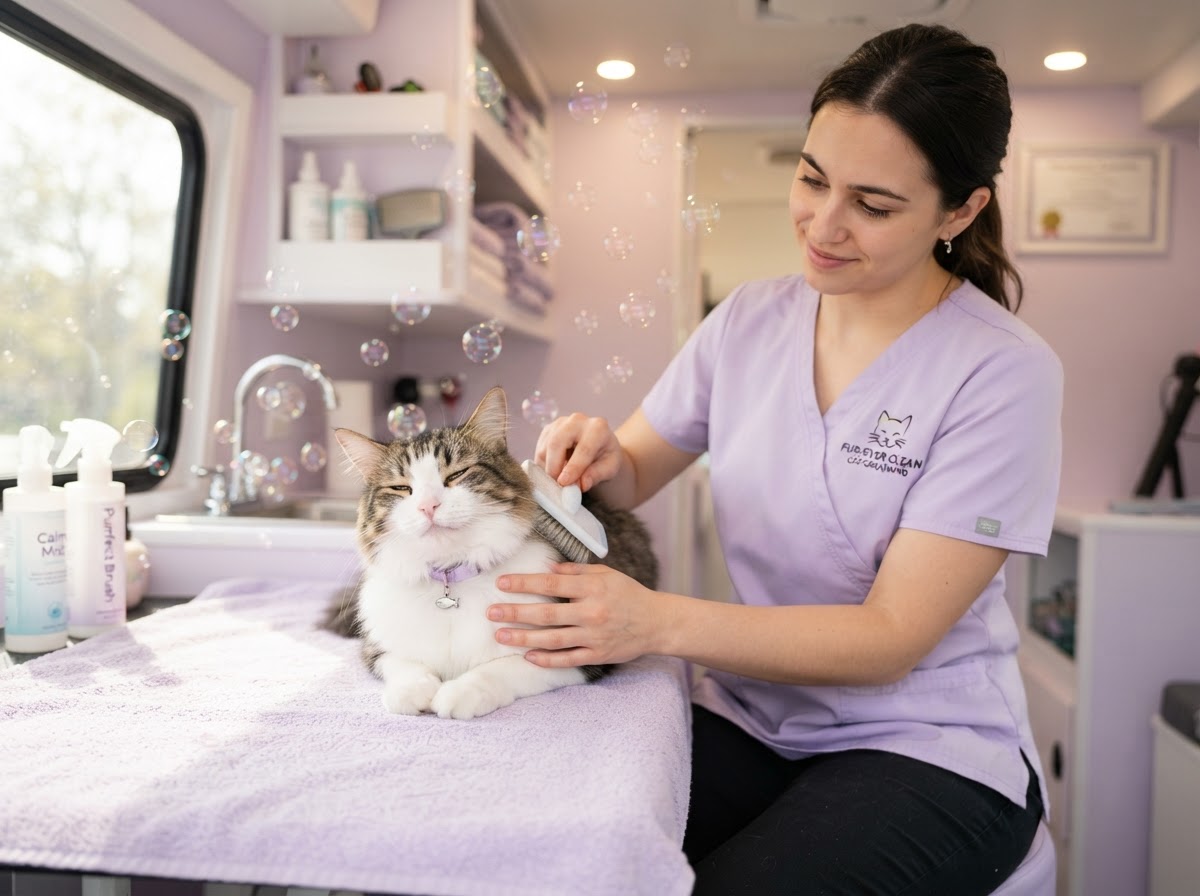
Your pet tells you when they're comfortable and when they're not. Pay attention to their body language during brushing. Comfortable pets relax, lean into the brushing, and may even seem to enjoy it. Uncomfortable pets may tense up, pull away, turn to look at the area being brushed, or become restless.
If your pet shows signs of discomfort — especially in a specific area — stop and assess. There may be a mat or tangle in that spot, or the area may be sensitive. Don't force the brush through a tangle — that's uncomfortable and can damage the coat. If there's a mat, leave it for the groomer to assess during the next visit.
For pets that are new to brushing, start short and gentle. A few minutes at a time, in a comfortable area, with gentle pressure. Over time, your pet can build tolerance and may come to enjoy the routine. If your pet consistently dislikes brushing, mention it to the team — they may recommend a different approach or tool.
How often to brush
Frequency depends on your pet's coat type. There's no single schedule that works for every pet:
- Long-haired and curly-coated pets — daily or every other day to prevent matting.
- Medium-coated pets — several times a week.
- Short-haired pets — once or twice a week is usually sufficient.
- Double-coated breeds — regular brushing, with more frequent sessions during shedding seasons.
Ask the team for a specific recommendation for your pet's coat type. The right frequency keeps the coat manageable without over-brushing, which can irritate the skin for some pets. The team can also suggest whether de-shedding between visits is appropriate for your pet.
Keeping it manageable
A brushing routine only works if it's sustainable. If daily brushing isn't realistic for your schedule, a few times a week is better than nothing. The goal is consistency — regular brushing that keeps the coat from becoming matted or unmanageable between professional grooms.
Set up a comfortable space for brushing — a spot where your pet is relaxed, with good lighting, and where loose hair is easy to clean up. Some owners find it easier to brush right after a walk, when their pet is calm; others prefer a specific time of day. Find what works for you and your pet.
What to do and what not to do
Do brush gently and section by section, working through the coat methodically. Do pay attention to high-matting areas — behind the ears, under the legs, along the belly, and around the collar. Do stop if you encounter a mat or tangle and leave it for the groomer.
Don't force the brush through tangles or mats — that's uncomfortable and can damage the coat. Don't pull on the fur or use excessive pressure. Don't brush areas that are clearly uncomfortable — if your pet reacts, stop and mention it to the team. And don't use a tool that isn't suited to your pet's coat type.
When brushing isn't enough
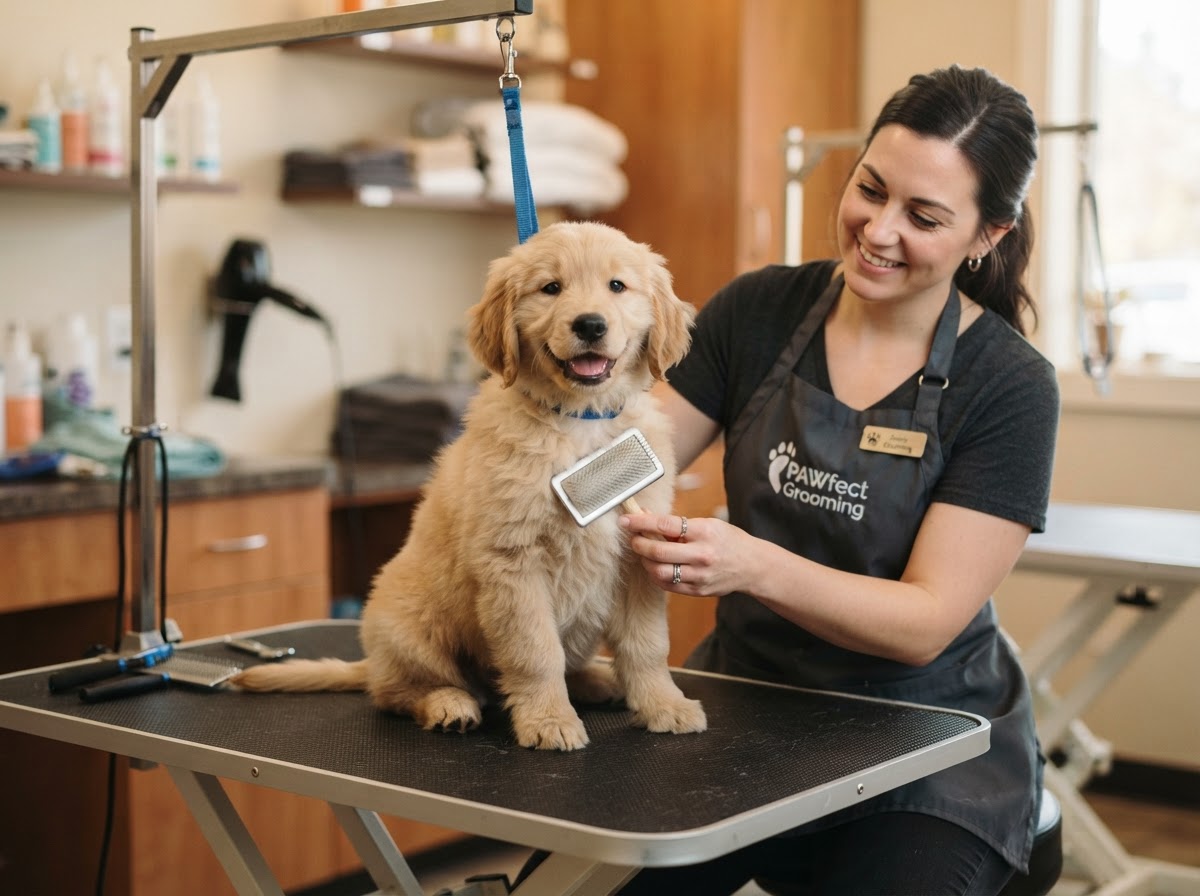
Sometimes brushing at home isn't enough to keep the coat manageable — especially for pets with dense, long, or curly coats that mat easily. If you're brushing regularly and still finding mats, it may be time for a more frequent professional grooming schedule, or a specific coat care approach.
Discuss this with the team. They can assess your pet's coat, recommend how often to schedule professional grooming, and suggest whether de-shedding or de-matting between regular grooms is appropriate. The goal is a combined approach — at-home brushing plus professional grooming — that keeps the coat healthy and comfortable.
Building the routine over time
A brushing routine develops over time. Start with short sessions, build your pet's tolerance, and find a frequency and approach that works for you both. As you and your pet settle into the routine, it becomes easier — and it extends the benefits of each professional grooming visit significantly.
The team can help you build the routine. When you book a grooming visit, ask what tool to use, how often to brush, and whether there are specific areas to focus on for your pet's coat. They can also show you the technique if you're unsure — don't hesitate to ask.
When to schedule the next grooming visit
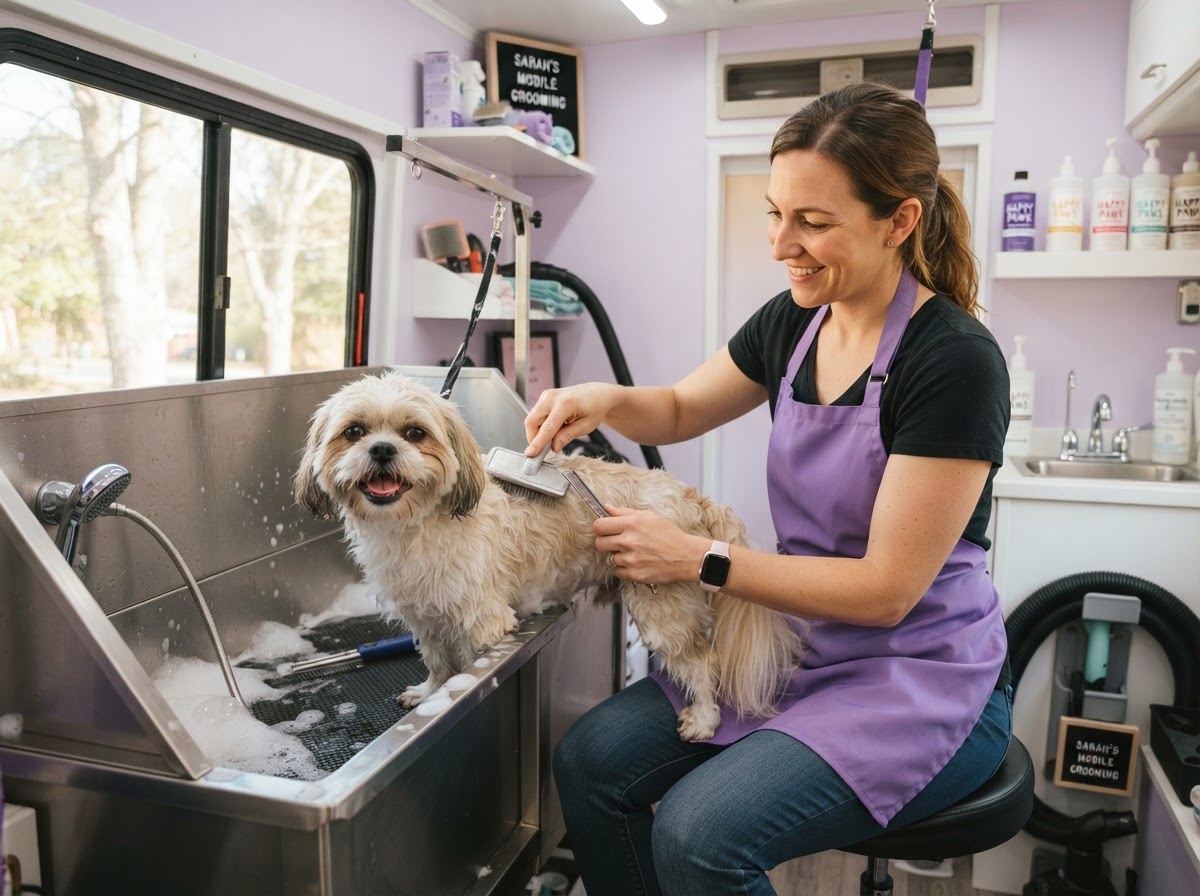
Even with a good at-home routine, regular professional grooming is essential. The team can recommend how often to schedule visits based on your pet's breed, coat type, and lifestyle. For most pets in Broward and South Palm Beach County, grooming every few weeks keeps the coat manageable in the warm, humid climate.
If you notice the coat becoming matted, tangled, or unmanageable despite your at-home routine, schedule a grooming visit sooner rather than waiting — the longer mats sit, the harder and more uncomfortable they are to address. The team can help you find the right balance of at-home care and professional grooming for your pet.
Quick questions
Ready to groom your pet?
Book an appointment or request a personalized quote with Fluffy Crew.