Aggressive Dog Handling During Grooming: Sharing Your Pet's Needs
Some pets need special handling during grooming — and Fluffy Crew lists aggressive dog handling among its services. But it's important to understand how it works: it requires advance notice, honest communication about your pet's behavior, and the team confirming whether they can accommodate your pet. It's not guaranteed. This guide covers how to approach special handling for aggressive or reactive dogs.
Fluffy Crew lists aggressive dog handling among its services, and some pets do need special handling during grooming. But it's important to understand how this works: special handling requires advance notice, honest communication about your pet's behavior, and the team confirming whether they can safely accommodate your pet. It is not guaranteed — not every pet can be accommodated, and the decision depends on your pet's specific behavior, needs, and what the team can safely manage. This guide covers how to approach special handling for aggressive or reactive dogs and what to share before booking.
What special handling means
Special handling refers to grooming pets that need extra care, patience, or safety measures due to their behavior. This can include pets that are reactive — they may nip, bite, growl, or lunge when stressed, handled in sensitive areas, or feeling threatened. It can include pets that are fearful or anxious to the point of reacting defensively. It can include pets with a history of biting or aggression during grooming or handling. These pets need a different approach than a calm, cooperative pet.
Special handling isn't a failure on your pet's part or yours. Some pets are reactive due to past experiences, fear, lack of socialization, pain, or temperament. The goal is to find out whether the team can groom your pet safely and comfortably — and if so, how. The team approaches special handling with patience, safety, and honesty about what they can and can't do.
Why honesty matters
Honesty about your pet's behavior is essential for special handling. If your pet has ever bitten, nipped, or reacted aggressively during grooming or handling, share that upfront. If your pet is reactive in specific situations — having their paws handled, their face touched, being restrained — share that. If your pet has a bite history, even if it was years ago, share it. The team needs to know what they're working with to plan safely.
Withholding information about aggression isn't kind to your pet or the groomer. It puts the groomer at risk and can lead to a stressful, unsafe situation that could have been avoided. If the team knows in advance, they can plan — using safety measures, taking breaks, going slowly, or deciding that your pet's needs are beyond what they can safely handle. Honesty lets the team make an informed decision about whether and how to accommodate your pet.
It's not guaranteed
Special handling is not guaranteed. Not every aggressive or reactive pet can be accommodated — the team may determine that your pet's needs are beyond what they can safely manage, or that grooming would be too stressful for your pet. This is an honest limitation, not a judgment of your pet. Some pets need a setting with veterinary involvement, sedation under veterinary supervision, or a specialized behavior approach that mobile grooming can't provide.
The team makes this decision based on your pet's behavior, their own safety, and your pet's welfare. If they can't accommodate your pet, they'll tell you honestly rather than putting anyone at risk. It's better to know in advance than to have a stressful, unsafe grooming attempt. Ask the team whether your pet can be accommodated before assuming special handling is available for your pet.
What to share before booking
- Any bite history — when, what triggered it, how severe
- Specific triggers — handling paws, face, ears, restraint, etc.
- Signs your pet shows when stressed — growling, lip licking, snapping, freezing
- Whether your pet has been groomed before and how it went
- Any management techniques that help your pet — muzzling, breaks, specific handling
- Whether your vet or a behaviorist is involved in managing your pet's behavior
- Whether your pet is on medication for anxiety or reactivity
The more the team knows, the better they can assess whether they can safely accommodate your pet. Don't minimize your pet's behavior — a 'he's just a little nippy' can mean something very different to a groomer than it does to you. Describe the behavior accurately so the team can make an informed decision.
The mobile setting and special handling
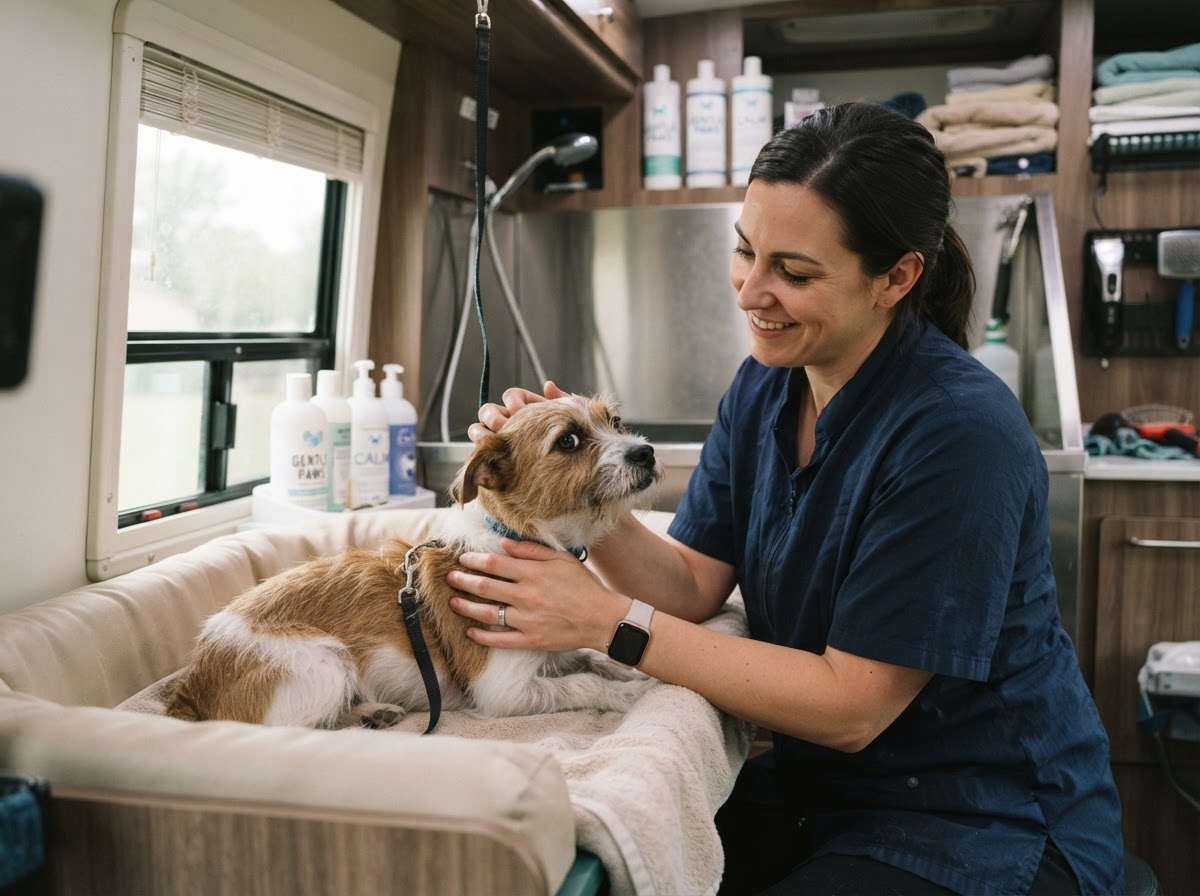
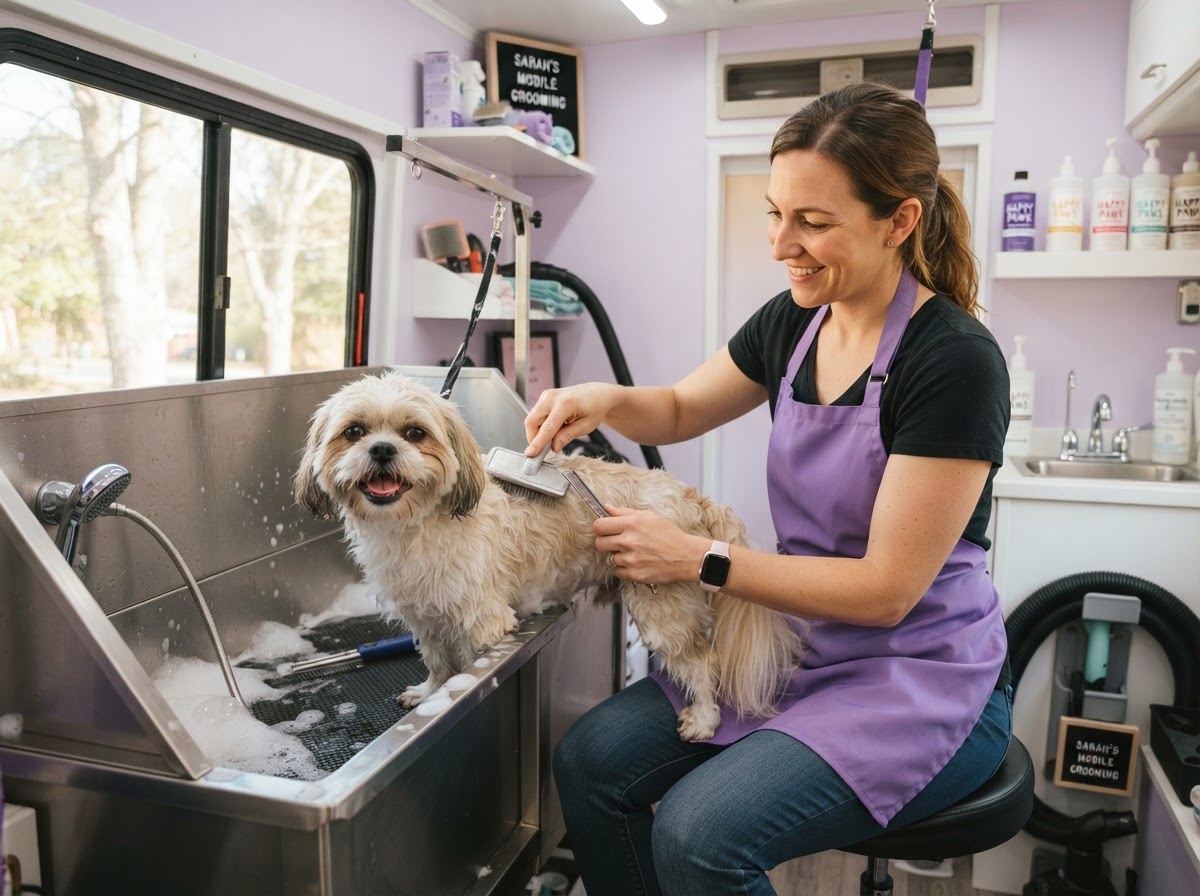
The mobile setting can be advantageous for some reactive pets. Your pet stays in their familiar home environment, which can reduce stress for some dogs. The one-on-one setting means no other animals, no busy salon, and the team can focus on your pet. The familiar environment and patient pace can help some reactive pets feel more comfortable.
However, the mobile setting doesn't change whether the team can safely accommodate a pet with significant aggression. A pet that bites or is dangerous to handle is a safety consideration regardless of setting. The mobile setting may reduce stress for some pets, but it doesn't make an unsafe situation safe. The team assesses your pet's needs honestly.
Muzzles and safety measures
For some reactive pets, safety measures like a muzzle may be appropriate. If your pet is muzzle-trained, mention it — a muzzle can allow safe grooming of a pet that would otherwise nip. If your pet isn't muzzle-trained, the team can discuss whether muzzling is an option or whether it would add stress. Safety measures are about protecting both your pet and the groomer.
The team may use other safety measures — gentle restraint, breaks, going slowly, or limiting the grooming to what your pet can tolerate. The goal is a safe, as-comfortable-as-possible experience. If your pet can only tolerate a partial grooming, that may be the right choice. Safety and welfare guide the approach, not completing every grooming step.
When grooming may not be possible
For some pets, grooming outside a veterinary setting isn't safe or possible. A pet with severe aggression, a high risk of biting, or that can't be safely handled awake may need veterinary grooming — grooming under sedation, supervised by a veterinarian. This isn't a failure; it's the safest option for some pets. The team can't provide sedation — that requires veterinary involvement.
If the team determines your pet needs veterinary grooming, they'll tell you honestly. Your veterinarian can provide sedated grooming or refer you to a practice that does. This keeps your pet safe and prevents a stressful, unsafe grooming attempt. The team's honest assessment is in your pet's best interest.
Nervous vs. aggressive: the distinction
The website also mentions accommodating nervous pets with advance notice. There's a distinction between nervous and aggressive. A nervous pet is anxious or fearful but not aggressive — they may shake, freeze, or try to escape, but they don't bite. Nervous pets can often be accommodated with patience, a calm approach, and the familiar mobile setting. Aggressive or reactive pets that bite or lunge need the special-handling approach described above.
If your pet is nervous but not aggressive, share that — the team can plan a calm, patient approach. The nervous-pet accommodation doesn't require the same safety measures as aggressive-dog handling. But if your pet's nervousness leads to defensive aggression — biting when scared — that falls under special handling. Share the behavior accurately so the team can plan appropriately.
Questions to ask about special handling
- Can the team accommodate my pet's specific behavior?
- What should I share about my pet's bite history and triggers?
- What safety measures might the team use — muzzles, breaks, etc.?
- Is the mobile setting appropriate for my reactive pet?
- When would my pet need veterinary grooming instead?
Aggressive dog handling is a special-handling service that requires advance notice and honest communication. It's not guaranteed — the team confirms whether they can safely accommodate your pet. Share your pet's behavior accurately, and the team will assess whether and how they can groom your pet safely and as comfortably as possible.
Quick questions
Ready to groom your pet?
Book an appointment or request a personalized quote with Fluffy Crew.